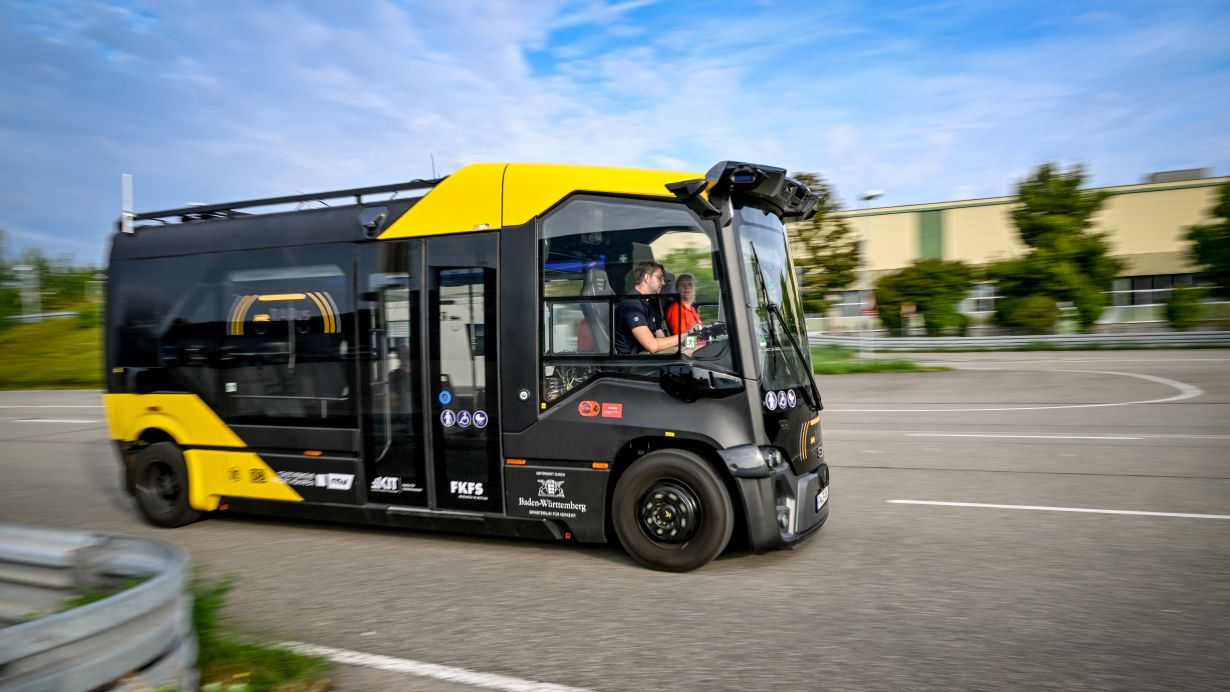
According to a study by the Karlsruhe Institute of Technology (KIT) involving more than 1600 passengers, autonomous minibuses can improve local public transport in Baden Württemberg and reduce the number of trips by car. The researchers investigated the reliability of autonomous shuttles in everyday service, the public's reaction to them, and the technical and organizational requirements to be met for their widespread use. In particular, residents of rural areas with limited bus service will benefit. Now KIT researchers have published the study's final report.
"Automated service can significantly improve mobility in rural areas, provided it works reliably and the users understand what the vehicles can do," said professor Martin Kagerbauer from KIT's Institute for Transport Studies (IFV). The results are based on the analysis of 430 test runs with passengers in Mannheim and Friedrichshafen, cities in Baden-Württemberg.
Users Open to Technology; Safety Crucial
The surveys showed that many people are open to the idea of autonomous vehicles - as long as they feel safe while traveling with them. "The safety of the technical systems is one aspect, while another is the possibility of aggressive or threatening fellow passengers," said the IFV's Christian Klinkhardt, adding that what mattered was good interior visibility, a direct connection to the control center, and clear information during a trip.
New Mobility Options for Rural Areas
Analysis of the test runs showed that autonomous shuttles can make everyday trips to train stations, schools, or stores easier, replacing trips that previously required a car. "This opens up new opportunities, especially in outlying areas," Klinkhardt said, noting that the shuttles had to drive reliably, be available on demand, and integrate easily into existing ticketing and information systems.
In addition, responsibilities need to be clearly defined. "Who operates the vehicles and the software? Who takes responsibility if the autonomous system is unavailable at some point? These are practical questions that don't play a role in conventional bus service," Kagerbauer said. Reliable everyday operation can only take place when these roles have been clearly assigned to vehicle manufacturers, software providers, or municipal transport operators, added Klinkhardt.
Other Shuttle Projects in Hamburg, Darmstadt, and Offenbach
Findings from the completed RABus (Real-life lab for Automated Bus service) are being incorporated into KIT's current projects, KIRA and ALIKE, in which autonomous vehicles are being tested in other regions including Hamburg, Darmstadt, and Offenbach.
Next Step: Shuttles without Human Supervision
The researchers see an officially approved vehicle allowed to drive without human supervision as the next important step. Only then can autonomous driving in larger model regions be implemented, as called for by German government policy. In the medium term, autonomous shuttles could improve mobility in areas that currently have limited public transport service or staff shortages.
Video
(FKFS/RABus/Fahrwerkfilm)