As a member of the Crew Operations Office, Erin Edwards and her team manage astronaut candidate training schedules, including field medical exercises, land survival, and underwater operations at NASA's Neutral Buoyancy Laboratory in Houston. She also develops and tests new training programs to keep crews mission-ready.
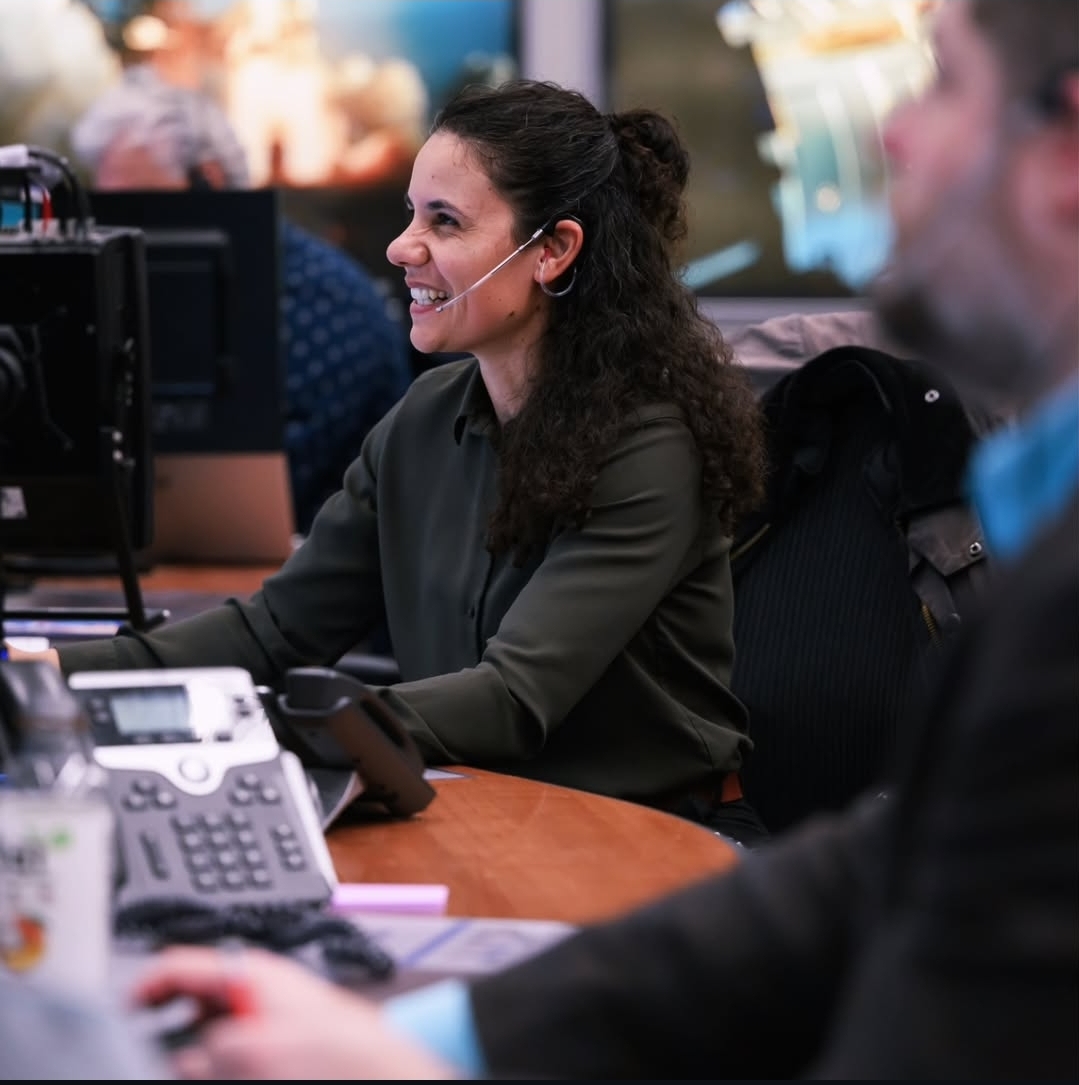
Along with her role as a crew operations officer, Edwards works in the International Space Station Mission Control Center as a capsule communicator, or capcom, and instructor. As a capcom, she must be fluent in the language of the spacecraft and its operations to clearly relay important information to the crew, especially during dynamic operations.
Read on to learn about Edwards' career with NASA and more!
Where are you from?
Port Moody, British Columbia, Canada.
How long have you been working for NASA?
I've been at NASA for two years. My term here with the military is three years.
What was your path to NASA?
Super random! I'm a Canadian military pilot, previously working in the Canadian Special Operations Forces Command as an aircraft commander on the CH-146 Griffon. While we use a lot of space-based assets in aviation, the leap to human spaceflight was unexpected.
An opportunity for an officer to work in the astronaut office as a capcom arose a few years ago. As a lifelong space nerd, I figured it would be an amazing opportunity. I applied and was interviewed, and before long, was posted to NASA's Johnson Space Center as the first Canadian non-astronaut to be posted as a capcom and later as an operations officer.
How would you describe your job to family or friends that may not be familiar with NASA?
My team and I organize the unassigned crew and astronaut candidates' work lives! As a capcom, I help translate what the engineers are saying in the flight control room for the astronauts aboard the station, and I help with the station activities as call sign Houston. More recently I've been assigned as the TH57 Helicopter Project Pilot at AOD to help get that fleet integrated for more lunar-focused Space Flight Readiness Training.
What advice would you give to young individuals aspiring to work in the space industry or at NASA?
Just go for it! You miss 100% of the shots you don't take, as Wayne Gretzky said. My background as a military helicopter pilot, Navy diver, and mining engineer may appear to have no relevance to NASA, but that diverse experience has turned out to be useful here as an operations officer for astronaut training. I wouldn't have known that if I hadn't thrown my hat in the ring. No matter your technical background, there's probably a place for it in spaceflight. Your experience has unique ways of benefiting such complex, multifaceted programs like spaceflight-so give it a shot!
Is there a space figure you've looked up to or someone that inspires you?