
As people in war-torn Ukraine face the coldest winter in more than a decade, authorities and humanitarians are working to help them stay warm, particularly the most vulnerable residents.
Russian forces continue to attack Ukraine's energy grid, leaving families without electricity and heating as temperatures plummet to -20° Celsius.
Since 2022, the Government has established so-called "Invincibility Points" - located in tents or public buildings such as schools and libraries - where people can go to escape the cold, charge electronic devices and receive basic support.
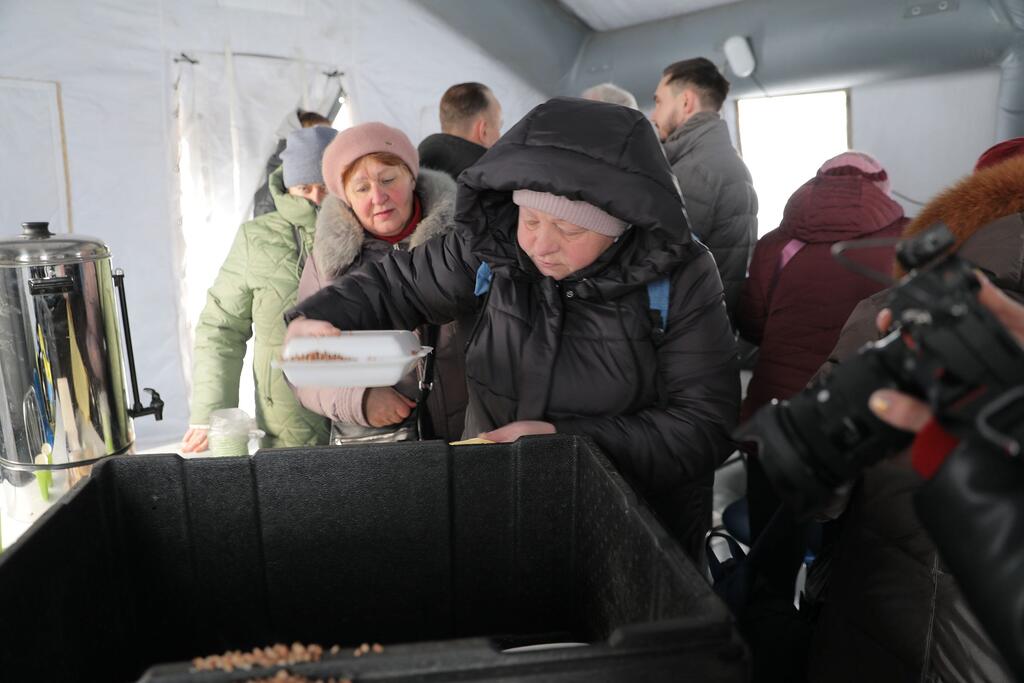
Additional initiatives have also been launched, including mobile heating points operated by the State Emergency Services and Ukraine Red Cross Society. Humanitarian partners have supported these efforts with equipment, hot meals and technical assistance.
A 'very tough' winter
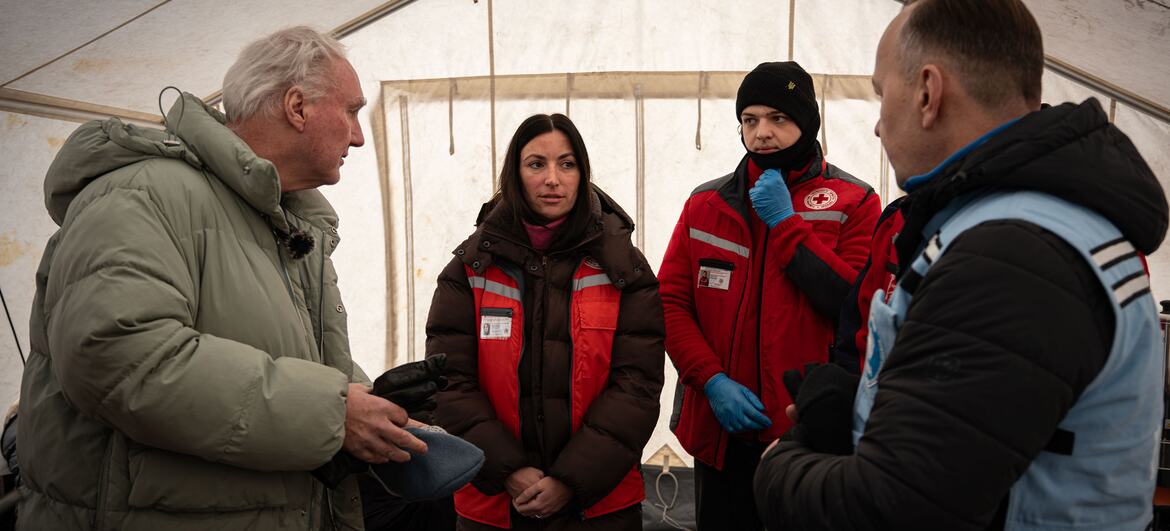
A UN team led by the Humanitarian Coordinator in Ukraine, Matthias Schmale, recently visited various heating points and mobile kitchens in Boryspil, a town in the Kyiv region.
They met residents, authorities, first responders, as well as aid organizations, at an Invincibility Point in a tent.
"This winter has been very tough for us," said Kateryna, a mother of two young children who lives on the outskirts of the town.
"We have no electricity at home. We came here to warm up, charge our phones and the children's devices. It was very cold in our house."
Food, warmth and support
A large food truck was set up near the tent where the NGO Food Without Borders prepared hot meals in a mobile kitchen so that people affected by the cold and power outages could get something to eat.
The group provided similar services after attacks last November in Shostka, located in the Sumy region.
"This is one of many remarkable initiatives supporting people across Ukraine during this harsh winter," said Mr. Schmale.
"As attacks on energy infrastructure continue, many people face prolonged outages of electricity, heating and water, as well as limited ability to prepare hot food."
Falling temperatures
Mr. Schmale also visited a heating point set up by the Ukrainian Red Cross in Boryspil town. Viktor, a volunteer at the site, described the harsh conditions many people there are facing.
"In some apartments, the temperature drops to as low as five degrees Celsius," he said.
"People spend long hours in our warm tent, especially in the evenings, when temperatures fall even further at night."
Families left freezing
Humanitarians are also carrying out activities under a winter response plan launched last year which aims to reach 1.7 million people across Ukraine between October and March.
Despite these efforts, the rapidly evolving situation - including large-scale and sustained attacks on energy infrastructure - has caused service disruptions that far exceed the scenarios the plan anticipates.
Frequent power disruptions leave many families in freezing conditions. Many older persons and people with disabilities are often stuck in their homes, in high-rise apartment buildings, without electricity and heating, unable to cook hot meals or recharge their devices to stay connected.
Families with children are also left wondering how to keep them safe and healthy.
The UN and partners are seeking $2.3 million to help 4.1 million of the most vulnerable people in Ukraine this year.
For families contending with the harsh winter weather, having a place where you can warm up, eat a hot meal and recharge a phone can mean the difference between coping and serious health risks.


