
InFocus: Queer and Disabled Story by PWDA member Tee
InFocus: Queer & Disabled is a digital storytelling campaign led by PWDA, centring the voices and lived experiences of LGBTQIA+ people with disability.
It's just a line at the bottom of my corporate email signature. Easy to miss if you're not looking for it. Easy to remove, if I ever changed my mind.
But I remember how long I thought about adding it.
My queerness is intrinsic and sacred to my sense of self; I hold it with delight and pride. In a corporate environment, I can be easily camouflaged. I'm a cis woman who presents femme. It would be easy not to make my queerness visible at work, not because I'm not proud of who I am, but because I understand what visibility can come with. Assumptions. Judgement. Being read differently, sometimes in ways you can't predict or control.
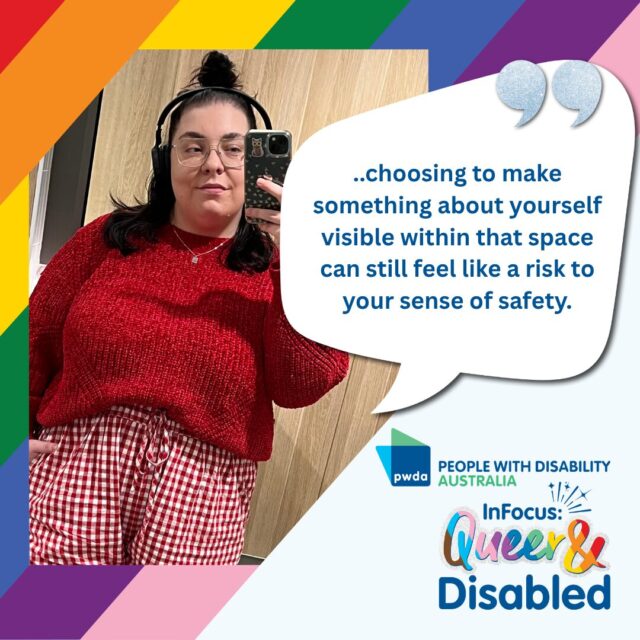
Workplaces – particularly in the public sector, from my experience – talk a lot about inclusion. The language is there, as is the intent. But choosing to make something about yourself visible within that space can still feel like a risk to your sense of safety.
Adding that line to my email signature felt small, but it didn't feel insignificant. I thought about who would see it, how it might be interpreted, and whether it might even be challenged. Whether it would change how I'm perceived – as a colleague, as a professional, as someone people take seriously.
I thought about not adding it at all. That would have been the easier option. Safer, in a lot of ways. Nothing to explain. Nothing to navigate. Nothing to potentially be misunderstood.
But I also thought about the people receiving and reading my emails. The ones who might be quietly questioning where they fit. The ones weighing up their own decisions about what to share, and when. The ones who don't often see themselves reflected in the spaces they're part of.
So I added it.

At the time, that was the language I had. It reflected what I understood about myself, and what I wanted to make visible – not for my own benefit, but to signal to others that there could be safety, even in spaces that don't always feel that way. That someone was willing to be visible, in the hope of contributing to something better.
What I didn't expect was what would happen next.
That line didn't stay mine.
It started appearing in other people's email signatures across the department. Colleagues, many I'd never spoken to, had copied it, adopted it, and made it part of how they showed up at work.
It felt like a win. A quiet kind of legacy. One that would remain largely unspoken but still brings a small sense of pride each time a new email lands in my inbox with it sitting there at the bottom.
Seeing that adoption of allyship encouraged me to feel more confident in my own visibility. It reminded me that even small actions can contribute to meaningful change.
After later being diagnosed as AuDHD, I updated my signature to reflect more of who I am - the intersection of my identities, and the language that now feels right to me.
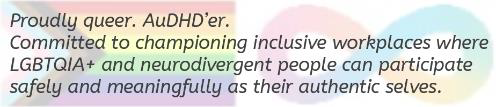
LGBTQIA + and neurodivergent people can participate safely and meaningfully as their authentic selves over pride flag and rainbow infinity sign
But the original version hasn't disappeared.
I still see it. In emails from people across the state. People who don't know me. People who won't ever know that the line sitting quietly under their name started with me.
It exists now, without me attached to it.
And there's something strangely wonderful about that, to see your words travel further than your name ever does. Because the reason I added that line in the first place wasn't to be recognised. It was to make something visible. To create a signal that people like me exist in these spaces – and belong.
And in a way, that's exactly what it's doing.
I still think about visibility in the same way I did then. I'm still aware of the risks, the assumptions, the quiet calculations that come with choosing to be open about who you are. But I also know now that small things can travel.
A line in an email signature. A quiet statement. Something that doesn't ask for attention, but still makes itself known.
Sometimes, that's all it takes for someone to pause and think, maybe I can be a little more open here too.
And even if you never see the impact of that – it's there.
Find more InFocus: Queer and Disabled stories:


