
- Kiana Dominique Cezar is a supply chain data analyst from the Philippines working with a global energy and petrochemicals company.
- She completed the 2025 UNITAR programme "SDGs and Digital Futures: Changemaking Through AI and Digital Storytelling," funded by City of Hiroshima and Hiroshima Prefectural Government.
- Through the programme, she learned how to use AI and digital tools for storytelling, connecting technology with history and peacebuilding.
- Kiana created an interactive digital story on fishing livelihoods in the Philippines, for which she won a prize at the end of the programme.
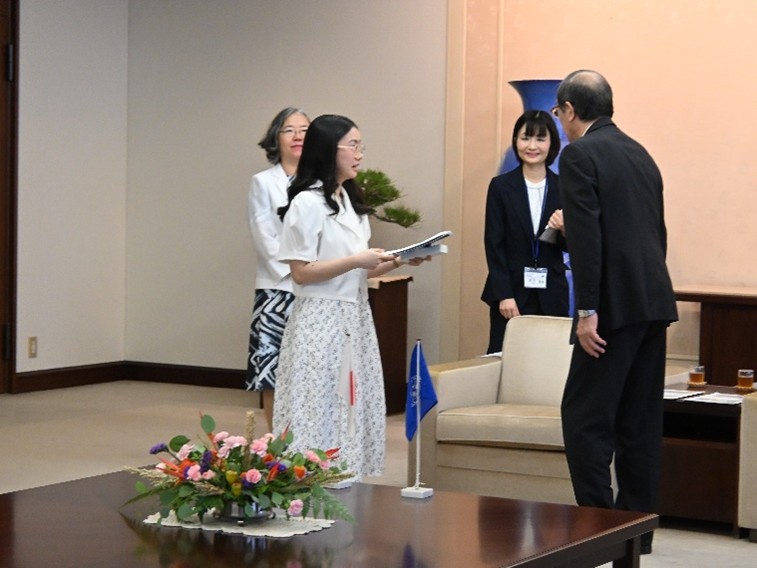
28 January 2026, Hiroshima, Japan - Kiana Dominique Cezar is a supply chain data analyst from the Philippines, working in a global energy and petrochemicals company, and previously volunteered with a Europe-Asia youth think tank. In 2025, she joined the United Nations Institute for Training and Research (UNITAR) programme "SDGs and Digital Futures: Changemaking Through AI and Digital Storytelling", where she explored how AI and digital technologies can be used to tell stories that connect sustainable development, history and peacebuilding.
From Energy Sector to Sustainable Development
Kiana regularly uses digital systems in her work, and her company, like many private-sector organizations, has been exploring AI systems to improve efficiency. While she loves trying digital tools and creating online materials, Kiana had no formal training or professional exposure to AI or storytelling. When she discovered the UNITAR programme that combined AI, digital storytelling, and the Sustainable Development Goals, she saw it as the perfect opportunity to connect her interests in digital technology and in sustainable development, which she had majored in at university.
It connects to the Sustainable Development Goals, which I've been wanting to be more active about. It's a perfect experience to combine all those interests into a training programme." - Kiana Dominique Cezar, UNITAR Training Participant, Philippines
Connecting Digital Technologies and Peacebuilding in Hiroshima
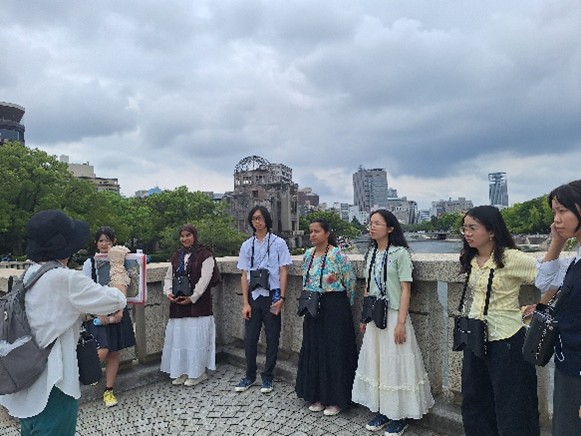
The UNITAR SDGs and Digital Futures: Changemaking Through AI and Digital Storytelling programme brought together youth participants from Asia and Hiroshima to learn how to use AI and digital tools to tell stories that advance the SDGs. Organized to commemorate 80 years since the atomic bombing, the programme took place between June and November 2025, funded by City of Hiroshima and Hiroshima Prefectural Government. It combined online learning with a study tour in Hiroshima , Japan, and participants developed individual digital storytelling projects that they presented in a public workshop in November .
For Kiana, the visit to Hiroshima was a rare opportunity to learn in a place where history is deeply present. Kiana and her peers learned about the city's history through visits to the Peace Museum, tours of the city, and meetings with Japanese companies like SPINGLE Co., Ltd. , that connected their histories to Hiroshima's story.
Being there in Hiroshima was eye opening, seeing how peacebuilding is ingrained in everything and how resilient the place is and the people are."
Experiencing virtual reality (VR) and a session with Microsoft on Minecraft also showed Kiana how digital tools can be used responsibly to communicate history, preserve memory and support dialogue around peace and sustainable development.
Telling the Stories of Fisherfolk in the Philippines
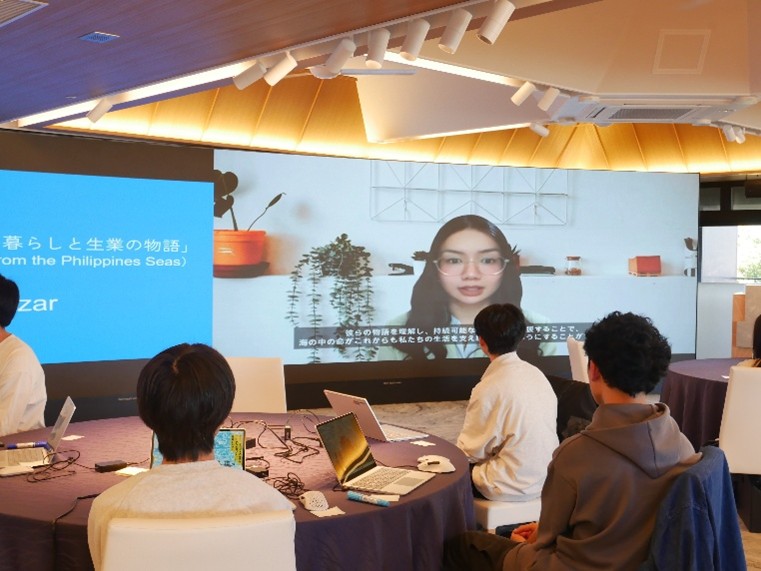
For her digital storytelling project, Kiana created an interactive, scrollable web-based story about fishing livelihoods in the Philippines, combining visuals and Geographic Information System (GIS) mapping, and using the AI tools she learned about in the programme. Kiana had initially intended to focus on agriculture, which seemed like the obvious choice for someone from her country. But after hearing the ideas of her fellow participants, she realized she wanted to tell something more personal. She asked herself, "do I have something more close to the heart that I can share?", and found her answer in her grandfather.
Kiana's grandfather was a fisherman. He passed away before Kiana experienced coastal life or the tough lives of fisherfolk, but she remembers her mother's stories how he would get up very early every day to sail, despite hardships and the little income it would bring. Through the project, she wanted to explore and share the stories of fisherfolk that are often overlooked, especially by younger audiences.
I realized, why not expose myself to more of those stories and share those stories to others. Right now, especially for youth, you don't really see those stories anymore, even if it's a very important part of our economy."
Through her project, Kiana wanted to highlight not only the environmental challenges like pollution and depleted fish stocks, but also the economic structures, lack of government support and territorial disputes that threaten fishing livelihoods. She included stories of women in fishing communities, who handle post-processing and are essential to the industry, challenging the perception that fishing is only men's work.
The programme's mentoring sessions played an important role in helping Kiana shape her project. Every week, she shared her ideas and progress with her mentor and received feedback that helped her decide on the final direction of the story. The hard work paid off: Kiana was able to present something that she was very proud of and won a prize for it at the final public presentation in November.
A Future to Create Community Impact
The Hiroshima experience has influenced how Kiana thinks about her professional future. She plans to consider opportunities in international development or renewable energy initiatives - fields closer to her background in development economics and her desire to create community impact.
Kiana is grateful to Hiroshima Prefectural Government and City of Hiroshima, as well as to UNITAR and UNITAR Association, for bringing together youth across a wide age range. She says it allowed her to "see the differences in how youth think and how youth engage with other youth."
This programme presented a unique opportunity to international participants to learn about AI digital storytelling and connect that with history, with peacebuilding. It's a great overall programme that showed us a lot of perspectives in life."


