
Smallholder farmers are critical to the global food supply in Southeast Asia. Yet these traditional farming arrangements are facing pressure on multiple fronts. Immediate risks, like labour shortages as youth migrate, declining productivity and rising exposure to climate and market shocks, are compounded by limited access to finance and social protection.
Two ACIAR projects in Laos and Vietnam are striving to understand the pathways for farmers to transition, adapt and transform for sustainable livelihoods into the future.
'More than 9 million Vietnamese smallholder households are at a critical turning point,' said Vietnamese research partner, Dr Tran Cong Thang, Director General of Institute of Strategy and Policy on Agriculture and Environment (ISPAE).
'While major reforms are underway to accelerate economic development, ensuring that these efforts are designed inclusively will be important so that the benefits can reach even the most vulnerable farmers.
'But this transition period also presents an opportunity for transformational policies that can help avoid stagnation traps and shape a more inclusive and prosperous future,' added Dr Thang.
Developing future-focused scenarios
In both Laos and Vietnam, researchers have surveyed more than 600 farmers to better understand their livelihood models and the barriers and opportunities they face.
'Based on these findings, we are working with experts to develop scenarios that help initiate policy discussion for future farmers' development,' said Associate Professor Leonie Pearson, the project leader from University of Canberra.
'This approach encourages decision makers to move beyond a single policy trajectory. We believe that the future of farmers is not fixed and there is more than one possible pathway for building an inclusive, sustainable future.'
Technology and policy working together in Vietnam
In Vietnam, scenarios are built on two main drivers: technological innovation and empowering policies.
While technology can transform productivity, cost and competitiveness, unequal access to technology risks marginalising smallholders.
Similarly, strong land management policies can help ensure equity in the modernisation process. However, uneven implementation can undermine the benefits, even widen inequalities.
The most promising scenario combines supportive policies with a suite of technologies such as precision agriculture and automation to increase productivity, biotechnology for climate resilience and environmental benefits, and digital advisory services to expand access and literacy.
Together, technology and policy can enable farmers to strengthen their business models, scale up production or transition into skilled non-farm work.
Climate change and policy driving scenarios in Laos
In Laos, climate change and policy support are major drivers of the scenarios. Future government support is expected to focus on climate mitigation and improved access to finance, enabling farmers to strengthen their cooperatives and meet international standards.
'We recommend priority actions to unlock rural finance and reduce credit barriers-making formal credit accessible to all Lao smallholders, including women and youth, through credit schemes tailored to their specific production systems,' said cross-country coordinator, Ms Sengphachanh Sonethavixay.
Practical support includes enhancing the banking structure, simplifying banking protocols and providing agriculture insurance for climate-vulnerable areas.
'Working with Australian and Vietnamese partners have allowed us to learn from each other and understand what works in different contexts. This helps us adapt research results more effectively to the needs of our farmers' said Dr Phetmanyseng Xangsayasane, Director General, National Agriculture and Forestry Research Institute (NAFRI), Ministry of Agriculture and Environment of Laos.
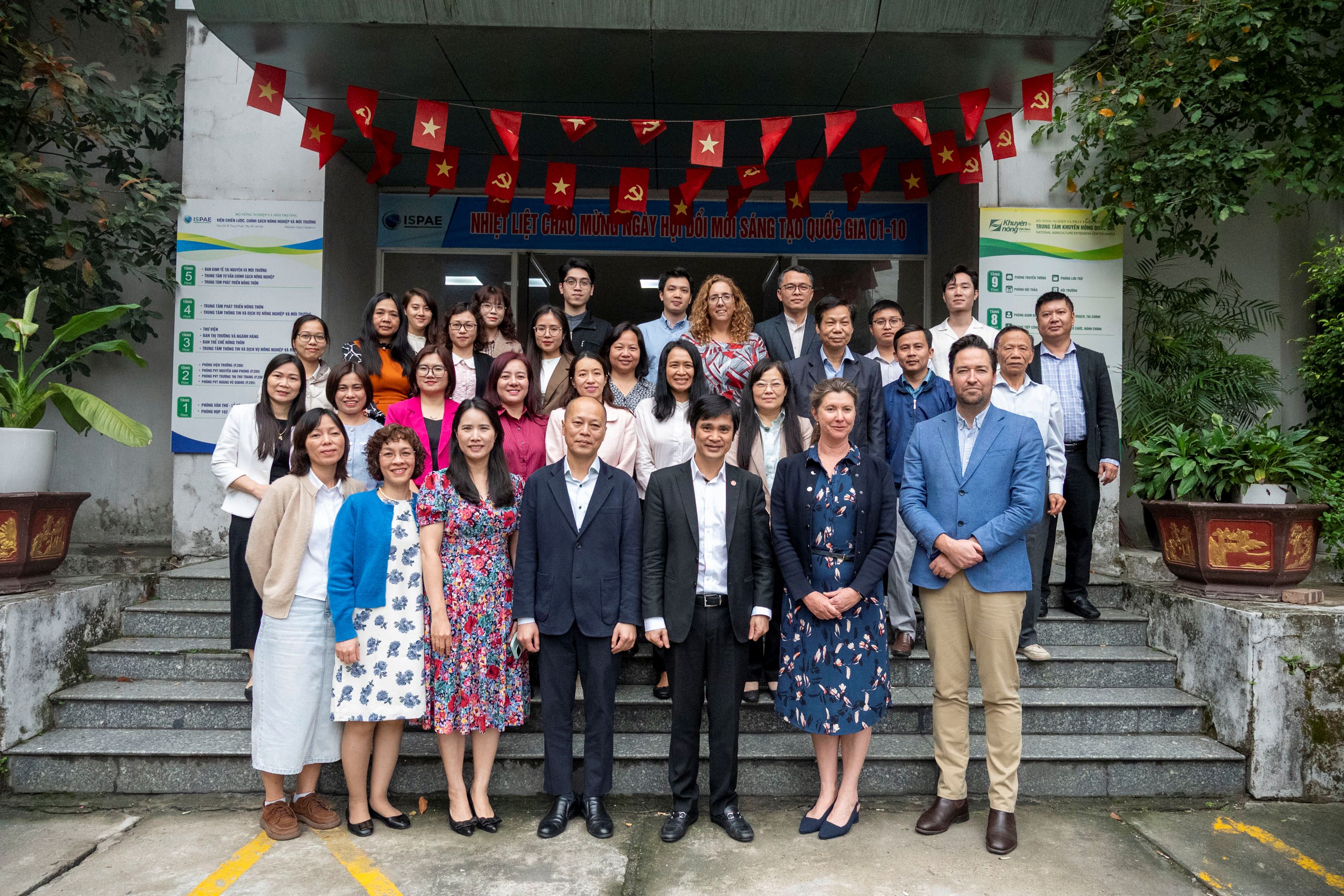
Clearer understanding for better decision-making
As a next step, the research partners will refine these scenarios and engage better with policy experts to deepen insights for policy development.
'I am excited to see the project's initial but significant findings, which helped us better understand the nature of ongoing change and, more importantly, start the policy conversations to address the key challenges and opportunities facing farmers,' said Dr Todd Sanderson, ACIAR Research Program Manager, Social Systems, Policy and Economics.
'There is often a gap between research and practical adoption. For ACIAR, a clearer understanding of plausible long-term development pathways will help guide the research investments we make today.'


