
The entirety of the Grampians Peaks Trail has officially reopened to through-hikers once again this week, marking a major milestone in recovery from the devastating 2024-25 bushfire season.
While most of the trail reopened by July last year, the remoteness and extent of the damage meant parts of the central and southern sections of the trail were closed to overnight hikers while extensive rebuilding was completed.
In total, six hike-in campgrounds were damaged in the fire, while kilometres of track required repairs.
In exciting news, five hike-in campgrounds at Barri Yalug, Duwul, Durd Durd, Yarram and Wannon reopened to hikers this week. Bugiga hike-in campground was reopened last year.
This marks the first time since the fire, which consumed more than 135,000 hectares of the Grampians National Park, that hikers will be able to walk the full 164-kilometre trail, stretching from Mount Zero (Mura Mura) in the north to Dunkeld in the south.
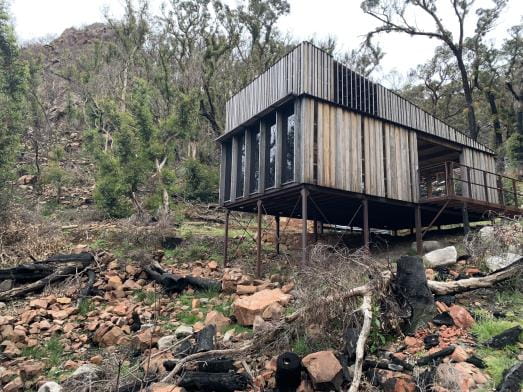
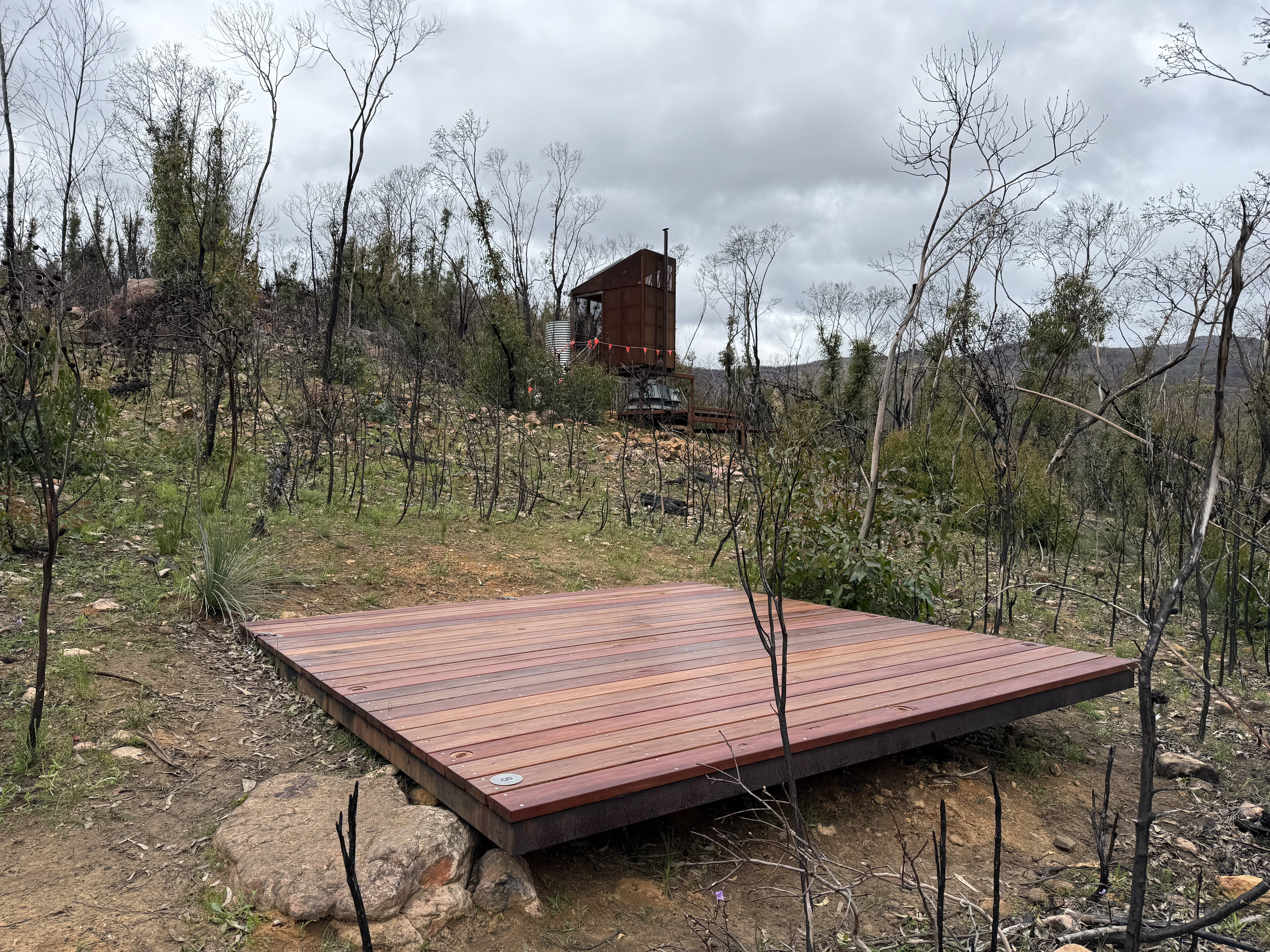
Images: The repaired camp shelter at Yarram hike-in campground (left), and replaced tent pads and toilet at Barri Yalug hike-in campground (right).
Kyle Hewitt, Recovery Project Officer – Assets, said rebuilding the campgrounds and track was a challenge.
"The post-fire inspections of the track quickly identified large sections which no longer had the cut-vegetation corridors which once guided people on their journey - it was like the track had disappeared," Kyle said.
"A lot of work has occurred to deliver stabilization and definition works on approximately 20km of track to allow a safe and sustainable opening of these sections. Works included machine/hand benching and reprofiling focussing on sediment removal, drainage, and track definition."
"To date there has also been approximately 100 stone steps installed to protect steeper gradients in what is now a fragile environment."
To further improve wayfinding the local Grampians Peaks Trail team have replaced all directional, warning, regulation and information signage, including gluing more than 600 yellow wayfinding triangles to rocky sections to better mark the way.
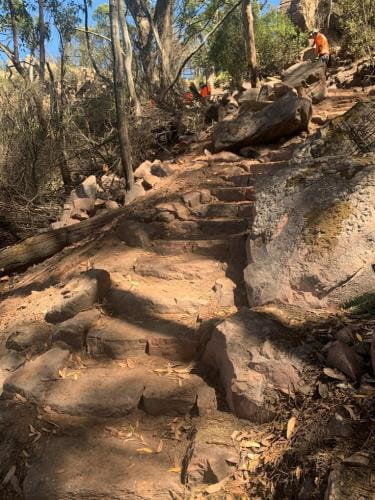
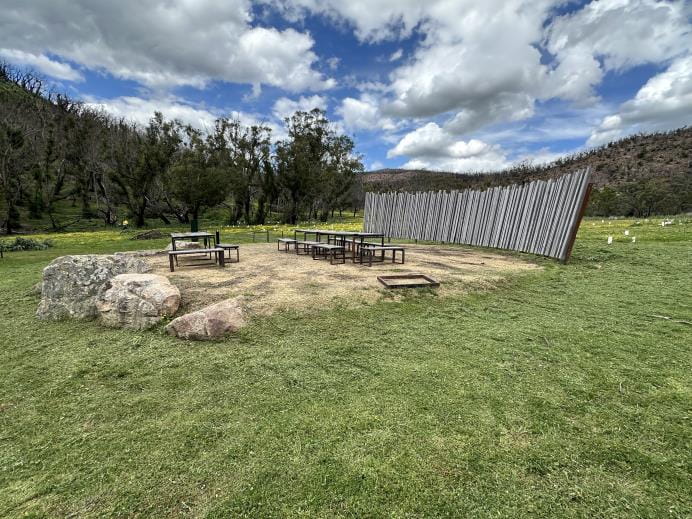
Images: New stone steps have been laid along parts of the GPT (left), and the Wannon hike-in campground's open communal area.
Regarding the five hike-in campgrounds that were hit, Kyle said the fires had well and truly left their mark on the landscape, but that the damage could have been a lot worse.
"There was varying levels of damage to the campgrounds with Barri Yalug and Duwul being the most affected, although none of them were completely destroyed."
Repair works included new timber tent pads, replacing FRP tank-landings and tanks, new windows at the Yarram shelter, replacing all exposed PVC plumbing, and minor repairs to solar power systems to enable phone charging, among other items.
"The remote nature of some of the camps required two single-day helicopter sling-load operations to transport tools and new materials in, and the old, burnt materials out. The height of the windows on the Yarram shelter required professionally-erected scaffolding up to 7m tall."
And while Parks Victoria staff and contractors were busy repairing the man-made assets of the GPT, Kyle said nature was busy repairing itself.
"There's lots of epicormic shoots coming back, and some of the ground cover has returned, but in some areas like Barri Yalug and Duwul it's still very difficult to find decent shade."
Recovery efforts began as soon as possible following the fire, supported by significant $36 million funding from the Victorian and Commonwealth Governments. Work has focused on critical biodiversity protection and visitor site recovery, including repairs to roads, walking trails and campgrounds.


