
World Oceans Day (8 June) highlights shipping's responsibility to protect the marine environment.
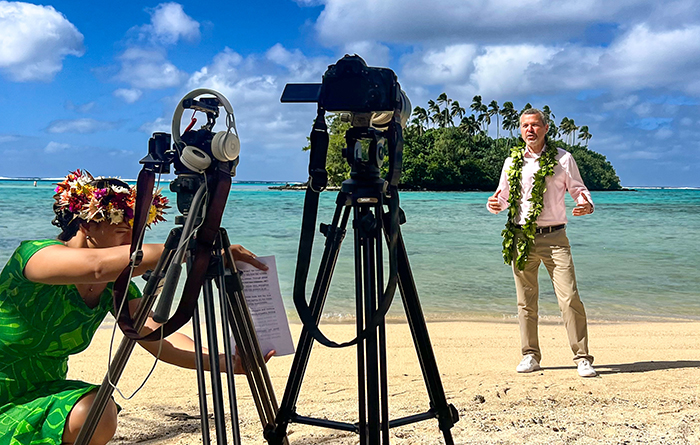
In his message for World Oceans Day 2028, IMO Secretary-General Arsenio Dominguez emphasizes the shipping sector's responsibility to protect the ocean, as one of its main users.
To mark World Ocean Day on 8 June, the International Maritime Organization (IMO) is calling on its 176 Member States and the global shipping industry to step up implementation of measures to protect the marine environment.
In a video message for World Oceans Day, IMO Secretary-General Arsenio Dominguez said:
"At IMO, we take our responsibility to protect the ocean seriously. With shipping being one of the main users of the ocean space, it is the reason why we focus on enhancing our regulatory framework to reduce pollution and address new challenges, such as underwater radiated noise and transboundary species."
"Beyond setting the rules, we must put policy into practice," he added, reflecting the IMO World Maritime Day theme for 2026-2027: 'From Policy to Practice: Powering Maritime Excellence'.
IMO's regulatory framework for ocean protection
Over many decades, IMO has established a robust set of international instruments to prevent pollution, protect marine life, and support safer, more sustainable shipping.
Global treaties such as the MARPOL Convention on the prevention of marine pollution from ships, Ballast Water Management Convention and Anti-Fouling Systems Convention to limit the spread of invasive aquatic species, the Hong Kong Convention on ship recycling, and the London Convention and Protocol on dumping of wastes at sea, all work to safeguard the marine environment.
Progress on pollution, biodiversity and climate action
Tackling marine plastic litter
Adoption of the 2026 Strategy and the Action Plan to Address Marine Plastic Litter from Ships, reaffirming IMO's goal of zero plastic waste discharges to sea from ships by 2030.
Reducing underwater radiated noise (URN)
Extension to 2028 of the trial phase for IMO's revised Guidelines for the reduction of Underwater Radiated Noise from shipping to address adverse impacts on marine life (URN guidelines), with plans to commission an IMO study to inform future measures.
Combatting ships' biofouling
Agreement among Member States to develop a standalone legally binding instrument for the control and management of ships' biofouling to minimize the transfer of invasive aquatic species and protect biodiversity.
Climate and ocean nexus
Ongoing discussions on regulations to reduce greenhouse gas emissions from ships.


