
PULLMAN, Wash. - In times of economic upheaval, investors can get a clearer picture of the stock market's future performance if they tune into how corporate insiders are trading stocks in their own companies.
That's a key finding from a new study of investor behavior during the COVID-19 pandemic from Washington State University researchers. The study, which was published in Pacific-Basin Finance Journal, examined the trading choices of insiders during the unprecedented market shocks of the COVID-19 pandemic - finding they often zigged when the market zagged.
When most investors were selling stocks during the early days of the pandemic, many corporate insiders were buying more. And when most of the market began to recover, a lot of insiders sold. And their trades turned out to provide excellent forecasts of how the market behaved over the following year.
"The insider trades actually correlated with the subsequent stock performance - when they bought, the stock performed better, and when they sold, the stock performed poorly, in a one-year period beyond the Covid period," said lead study author George Jiang, professor and Gary P. Brinson Investment Management Chair in the Department of Finance and Management Science in the Carson College of Business.
Because legal trades by company insiders must be reported to the U.S. Securities and Exchange Commission and are publicly available on searchable databases at the SEC website and other sources such as Barchart - watching their choices during moments of market shock can help investors separate the signal from the noise, Jiang said. While insiders are prohibited from trading based on private information, they are permitted to make other trades - and their knowledge of their firms' fundamentals and the overall market conditions give them a definite advantage.
"Markets will be volatile once in a while, so uncertainty will come," he said. "The results from this study will present some interesting lessons for the future - for investors and for regulators."
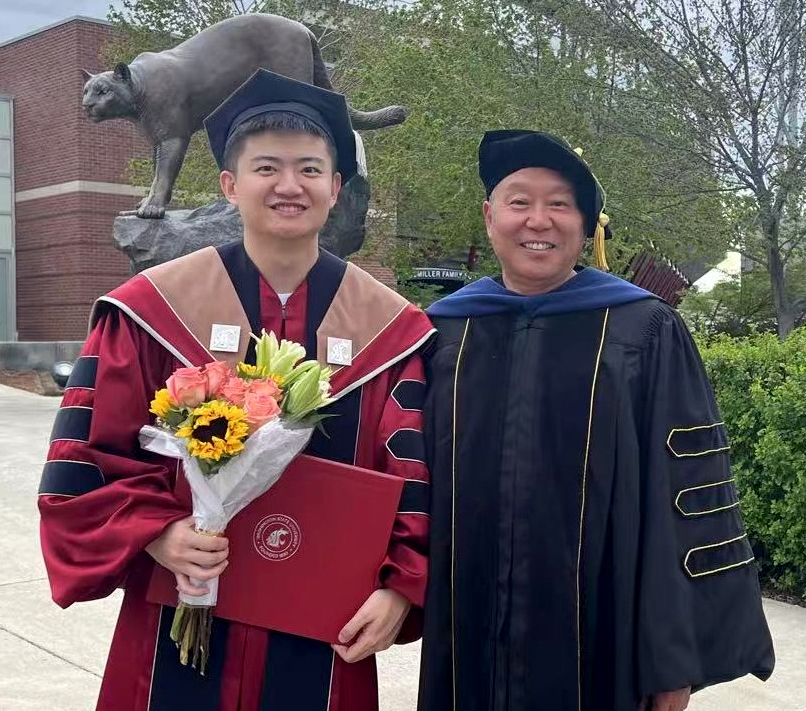
Jiang's co-authors were PhD student Xiaoli Ma and former PhD student Yun Ma.
The pandemic presented a "natural laboratory" for studying insider behavior and the effects of their information advantage, the authors said. In early 2020, as the global pandemic took hold, financial markets saw their most turbulent period in decades. The market crisis was uniquely uncertain, as countries responded to the pandemic in varying ways and supply chains were disrupted, and so it gave researchers a chance to examine how the advantages of insiders played out in unpredictable times.
"As we looked into the data, we realized there was actually way more insider trading than usual, which was surprising to us," Jiang said.
The team found a significant increase in insider purchases occurred from late February to early April 2020, as the market sank. Over the rest of the year, there was a fourfold increase in insider sales. Regression analysis showed that insiders' contrarian trading resulted in them buying undervalued stocks and selling overvalued ones, actions that predicted future market activity - highlighting the fact that insider trading became more informative during the pandemic and reinforcing concerns about information asymmetry between insiders and other investors.
"When there is volatility, this is the time when investors need more from insiders," Jiang said. "For insiders, this is a case where investors pay more attention to whatever you do, so if you send signals to the market, it's probably a good thing to improve market efficiency. For investors, paying attention to what insiders do can help them during times of unprecedented uncertainty."


