
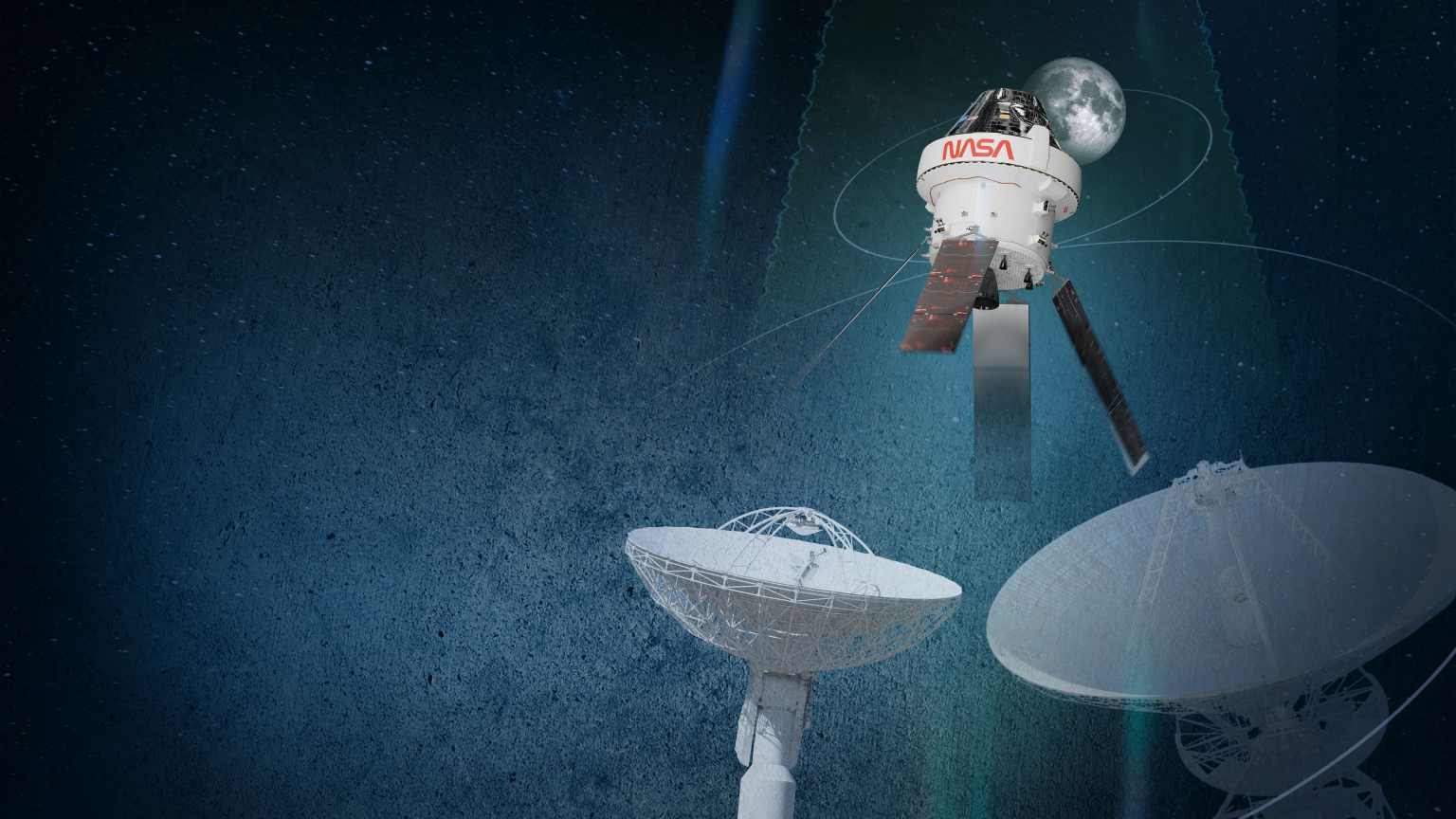
NASA's Artemis II mission will transport four astronauts around the Moon, bringing the agency one step closer to sending the first astronauts to Mars. Throughout Artemis II, astronaut voice, images, video, and vital mission data must traverse thousands of miles, carried on signals from NASA's communications systems.
Through Artemis, NASA is establishing an enduring presence in space and exploring more of the Moon than ever before. To achieve this, Artemis missions rely on both the Near Space Network and the Deep Space Network. These networks, with oversight by NASA's SCaN (Space Communications and Navigation) Program office, use global infrastructure and relay satellites to ensure seamless communications and tracking as Orion launches, orbits Earth, travels to the Moon, and returns home.
"Robust space communications aren't optional; they're the essential link that unites the crew and the exploration team on Earth to ensure safety and mission success, as I learned firsthand living and working aboard the International Space Station," said Ken Bowersox, associate administrator for NASA's Space Operations Mission Directorate at the agency's headquarters in Washington. "From real-time conversations with mission controllers, to the data that drives critical decisions and research, and even calls home - space communications keep astronauts connected to mission managers, technical experts, loved ones, and everyone on Earth who wants to share in the excitement of our exploration missions. As we push farther into deep space, reliable communications links will enable more challenging missions and maximize the benefit for all of us on Earth."


