
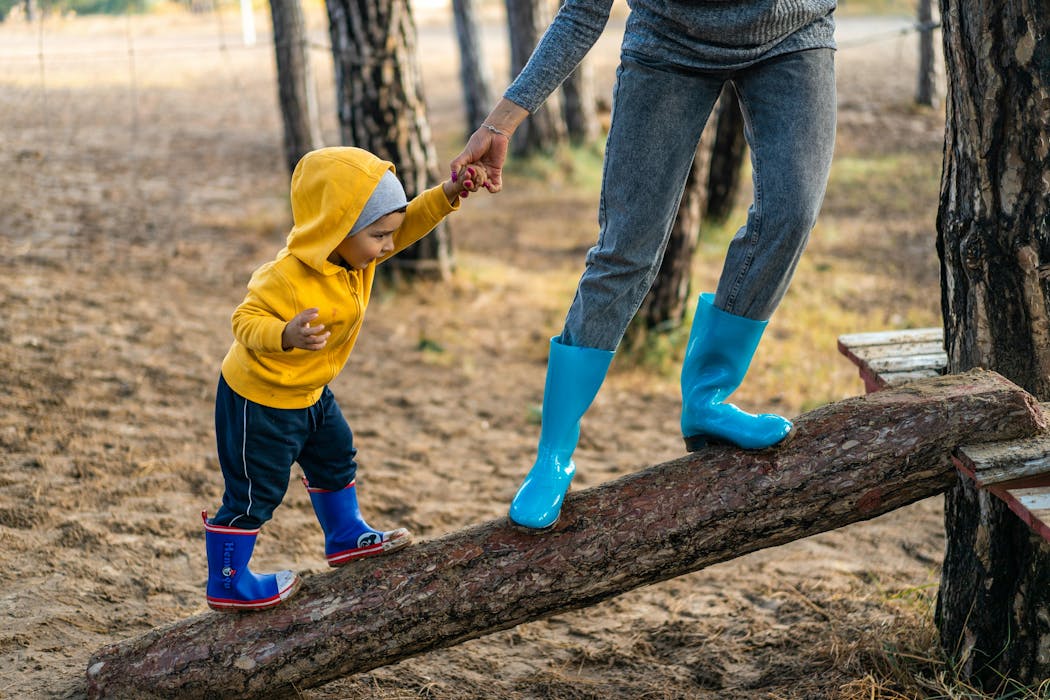
It happens in slow motion. Your six-year-old daughter is sprinting across the playground at school drop-off time when her toe catches on uneven ground. She goes down hard.
Author
- Joshua Pate
Senior Lecturer in Physiotherapy, University of Technology Sydney
The playground goes silent. She freezes and looks up, straight at you. In that split second she scans your face for data. Should she be terrified?
I've been there. I'd like to tell you that my pain scientist brain kicks in immediately. But honestly it's usually my panicked parent brain that gets there first. My stomach drops and my instinct is to gasp, or rush in to fix it.
This reaction is typical because we want to protect our kids. However, these moments are opportunities to teach children that their bodies are adaptable. Our reactions teach them whether pain is a disaster to be feared, or a feeling that's safe to feel.
Adults as the volume knob
Children look to adults and even borrow our nervous system to gauge danger. They read our tone and posture as clues to determine how worried they should feel.
Research into everyday pain shows incidents such as bumps, cuts and scrapes happen frequently. For active toddlers in daycare, they occur about once every three hours . In these moments, adults often respond to the child's distress, such as crying, rather than the actual severity of the injury .
When we panic, we turn the child's pain volume knob up. When parents are highly distressed and protective about their child's pain, it can make children more fearful. They may avoid activity or have more trouble with pain over time .
On the other hand, remaining calm helps children turn the volume down. We teach them that the alarm can be loud without the threat being catastrophic.
Two phrases that can backfire
It's tempting to try to switch the alarm off immediately. However, two common phrases can shut down a child's signal for help too quickly.
"You are OK"
It's a common assumption that pain is only real when there is visible damage . Telling a child they're fine when they're clearly hurting can feel dishonest. It suggests their internal signals are wrong.
"Don't cry"
Crying is a healthy signal for help. Asking a child to suppress it suggests the sensation is too scary to be acknowledged , cutting communication without resolving the underlying feeling of threat.

The internal scan versus the spoken message
A better approach is to separate what you do in your head from what you say out loud. Staying calm doesn't mean ignoring genuine warning signs. The goal is calibrated concern, which is a middle ground between panic and dismissiveness.
Before saying anything, do a rapid risk scan . If they're safe, responsive and breathing, you have confirmed it's not an emergency. (Parents should still watch for red flags such as vomiting, confusion, unusual sleepiness, or pain that worsens rather than improves.)
If the injury is a minor scrape, you can shift to validation: "that looked sore", "you got a fright", or "I am here". You are confirming verbally that they're safe.
Age matters
Toddlers (2 to 5 years) rely on your facial expressions to know how to feel. Keep words simple and use physical comfort .
Primary school-aged kids (6 to 12 years) may want to be more involved in the solution, such as helping clean a scrape.
Teens can need a mix of validation and space. Ask what they need from you instead of doing everything for them.
From protection to movement
Once the tears settle, the recovery phase shapes the child's relationship with movement. For years, the standard advice was RICER (rest, ice, compression, elevation, referral). Now, emerging evidence suggests that complete rest may delay healing.
Updated guidelines have shifted to PEACE & LOVE . PEACE applies immediately: protect, elevate, avoid anti-inflammatories, compress, educate. LOVE follows after a few days: load, optimism, vascularisation (promote blood flow via cardio), exercise.
The big shift here is optimism and load. This approach teaches children their bodies are designed to heal, and guides them back to gentle movement.

Three tiny experiments to try
1. Name it to tame it
Help your child turn a scary feeling into a piece of data. We found that even children without chronic pain have average pain ratings that fluctuate by up to 6 points out of 10 over six weeks . This volatility is typical. For tweens and older, you can ask , "What number is your pain right now on a scale from 0-10?". This implicitly shows them that pain is changeable and usually drops quickly.
2. Calm then choose
Your calm nervous system helps soothe theirs . Try getting down to their level and take three slow breaths together. Depending on their age, you can then offer a choice to regain control: "Do you want to sit with me a bit longer or try walking to the slide?"
3. Retell the story later
Research confirms children can change their concept of pain through stories . Later that night, try parent-child reminiscing, which is where you retell the story of the fall together . Focus on personal strengths: "You were brave. You took deep breaths and then you got back up and played again". This accurately reframes the memory from "I got hurt" to "I got hurt and I coped".
Good enough is enough
If you overreacted to a recent mishap, be kind to yourself. Kids benefit from "good enough" patterns where their pain is taken seriously and their bodies are seen as capable.
So, let's take a breath when bumps happen. Your child is looking at you. You have an opportunity to show them they're safe and that their capable body knows how to heal.

Joshua Pate has received government funding for his research. He has received speaker fees for presentations on pain and physiotherapy. He receives book royalties.


