
Summer update
This summer there has been a mammoth effort of work done by our passionate staff, dedicated community groups and Traditional Owners. Together, we are taking steps to ensure that the Prom Sanctuary is conserving nature and fighting extinction at Wilsons Promontory.
Here are some more of our recent highlights:
Bushbank: We've started the second season of seed collection, resulting in a bumper yield of Tasmanian Blue Gum (Eucalyptus globulus) seed, an endangered species listed under the Flora and Fauna Guarantee Act 1988 (VIC). We worked with the Bunurong Land Council Aboriginal Corporation to source the seed on the ground. Seeds are then dried and go into long-term storage, until it can be used for reseeding burnt areas post wildfire. In wet forests, aerial reseeding would enable us to restore landscapes with Tasmanian Blue Gum and other fire sensitive, endemic, or threatened eucalypt species.
Kanowna Island weed works: Staff from the Bunurong Land Council Aboriginal Corporation, weed control contractors and Parks Victoria were flown out to Kanowna Island via helicopter to complete a two-day operation. While this was primarily to treat woody weeds, the team was also joined by a botanist and a zoologist to undertake flora and fauna species surveys. Kanowna Island is a significant breeding site for migratory seabirds and threatened plant species, such as the Island Everlasting (Xerochrysum papillosum) and Coast lily (Bulbine crassa), which the woody weeds displace.
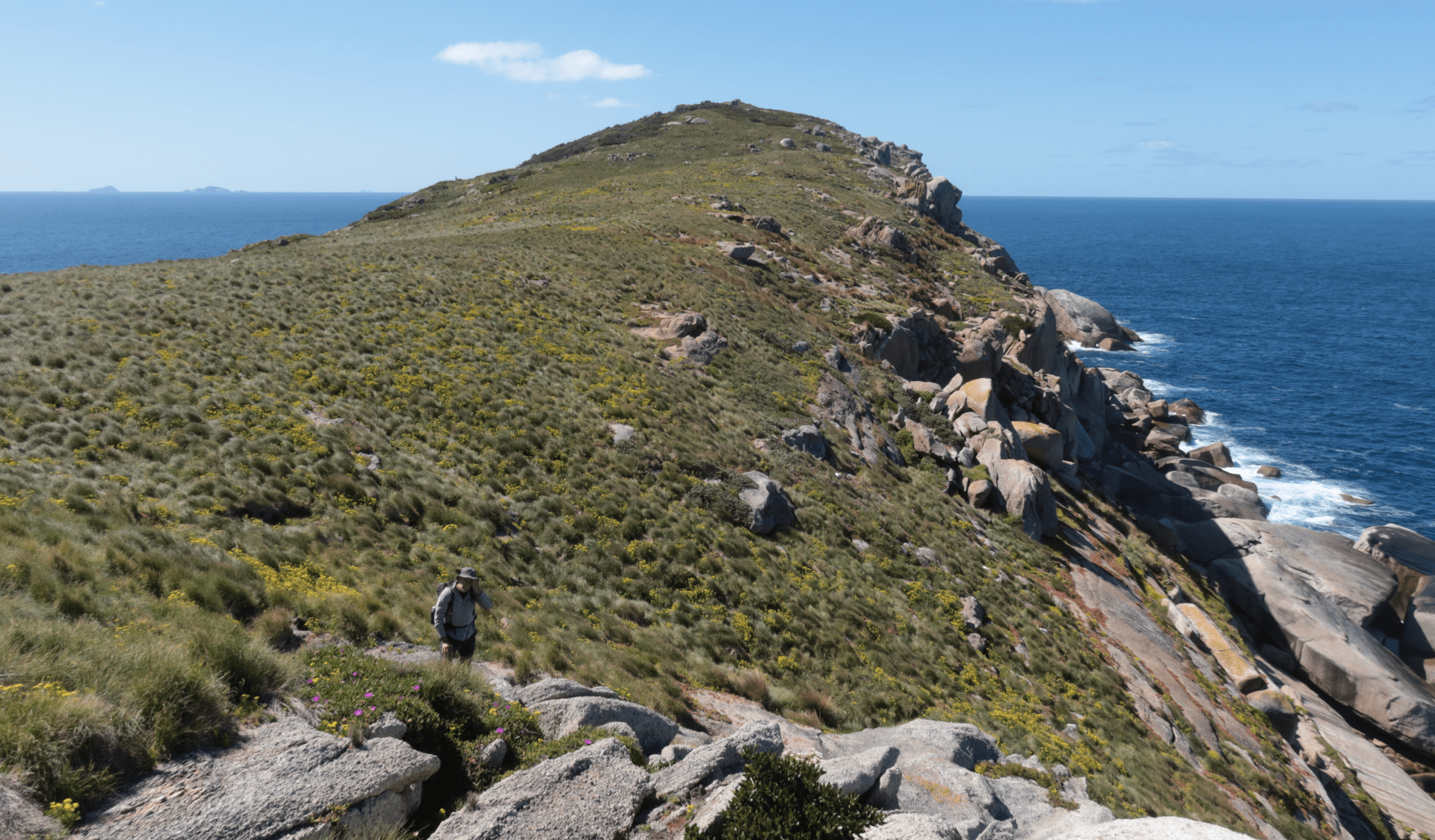
Caption: A researcher on Kanowna Island. Credit: Parks Victoria
Restoration works: There has been significant work undertaken in the restoration space. We've:
- Mulched invasive coast tea tree in the grasslands, heathlands and manna gum woodlands – including critical remnant koala habitats.
- Collected seed from grass species – which is made easier with brush harvesters, both a hand pushed one and one that fits on the front of our side-by-side vehicles. Enough Kangaroo grass (Themeda triandra) seed was collected with the harvester to reseed 12 hectares of grassland, which will be used to bolster the existing Themeda populations in these areas.
- Reseeded areas where previous ecological burns have taken pace to remove Coast tea tree (Gaudium laevigatum).
- Collected seeds from other grassland species, such as sedges, banksias and wildflowers for broad-scale direct seeding.
- Scheduled further mulching, plot installation, seed collection, and ecological burning for the new year.
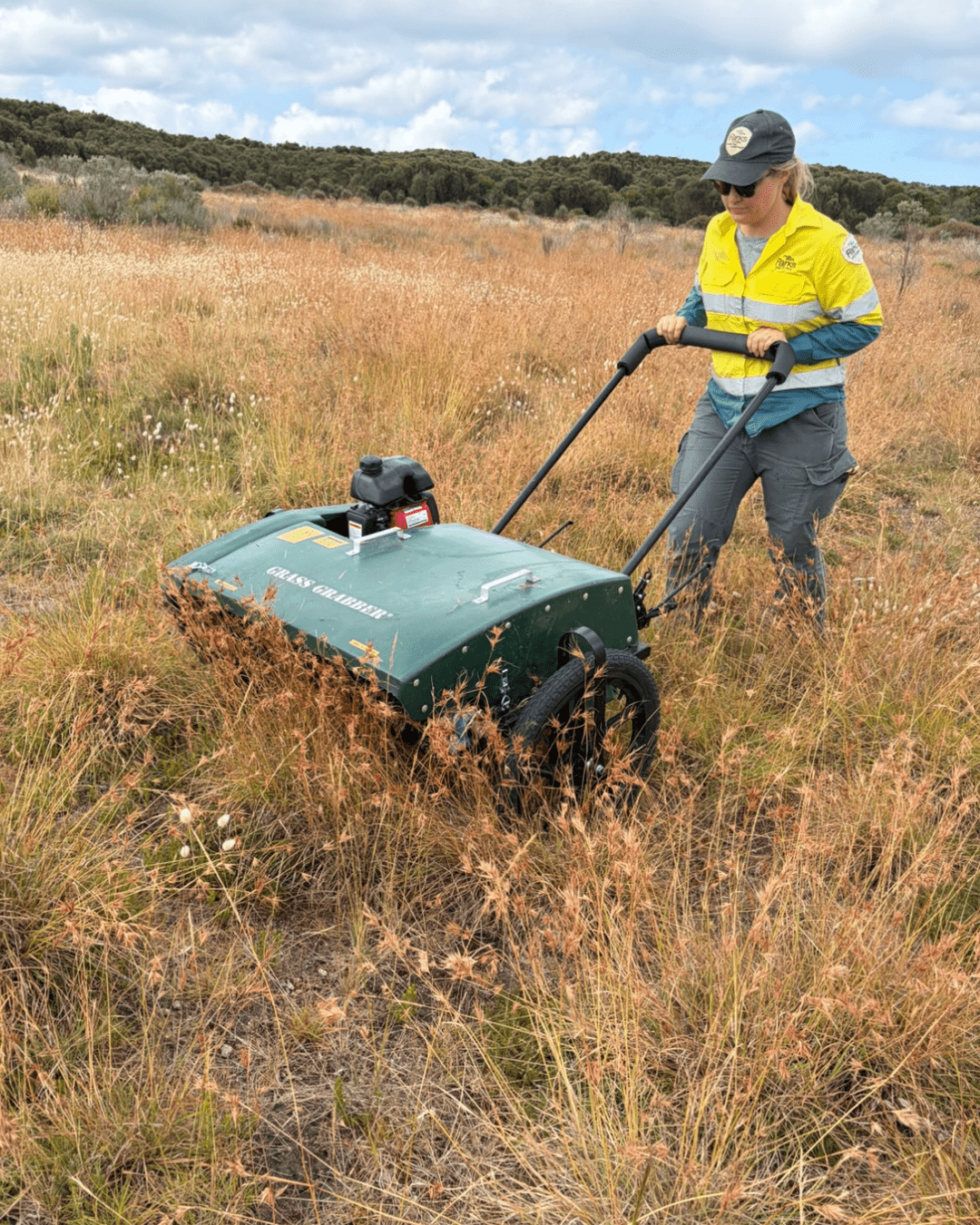
Caption: Brooke, a Parks Victoria Ranger, harvesting seeds. Credit: Parks Victoria
Community engagement: We were recently joined by Mike Clarke, Professor of Zoology at La Trobe University, who presented a series of talks and walks over the summer. This was part of our interpretation and education holiday program (Junior Rangers), for visitors and staff at Wilsons Promontory. The popular presentations included:
- An introduction to the changing wildlife of Wilsons Promontory: Introducing the natural history of the plants and animals that live at the Prom, how they have changed and will continue to change over time.
- The impact of the 2005 Prom fire – twenty years on: Sharing how some of the Prom's animals and plants have recovered and changed since the fire, based on his 20 years of research.
Mike's twilight wanders through the heathland, and up Mt. Oberon gathered many people interested in hearing from the zoologist about some of the unique birds, mammals, insects, and plants that make this fire-prone part of the park their home.
Invasive species – Protecting Biodiversity
Currently, a particular focus has been on protecting our Broad-toothed Rat habitat. This endangered, fluffy, plant-eating, Australian equivalent of a lemming, hadn't been seen scampering around the Prom for 32 years until it was rediscovered in 2022!
Additionally, work is being delivered by a team of Parks Victoria staff and contractors to treat a variety of pest plant species across the park. This includes:
- treating Blue Periwinkle (Vinca major) in endangered swamp communities
- targeting various weed species before they establish in recently burnt or mulched areas
- continuing the ongoing work to eradicate Blue Hound's-tongue (Cynoglossum creticum) from around Tidal River
Other pest animal control works for foxes, cats and deer have continued across the park.
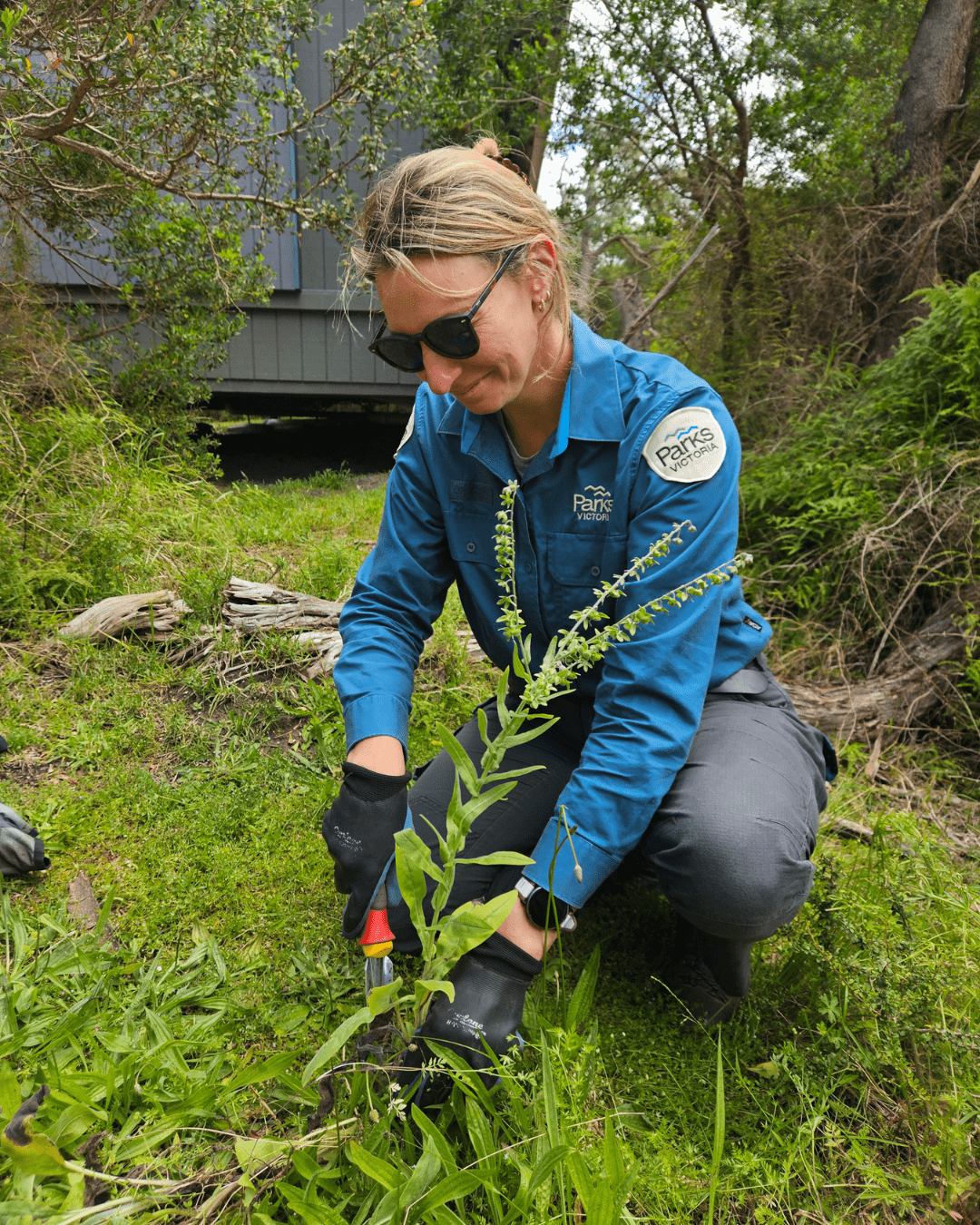
Caption: Lucy, a Parks Victoria Ranger treating Blue Hound's-tongue (Cynoglossum creticum)
About Prom Sanctuary
Spanning 50,000 hectares at the southernmost tip of mainland Australia, the Prom is home to more than 150 threatened species of native plants and animals, encompassing 10 major ecosystem types. Valued and cared for over tens of thousands of years by Victoria's Traditional Owners and protected as a national park for more than a hundred years, it has survived the scale of disruption and land clearing that occurred elsewhere around the state and nation.
This unique location, its cultural significance, history, geography and natural beauty make it an ideal refuge for wildlife. As a beloved destination for around half a million Victorian, interstate and international visitors each year, it is also an ideal place to deeply connect people with nature and build support, advocacy, action and champions for nature's needs in challenging times.
Watch the video below to learn more about Prom Sanctuary.


