
Nearly three years into Sudan's war, violence is intensifying, famine conditions are looming in parts of the country, and civilians remain trapped between shifting front lines, senior UN political and humanitarian officials told the Security Council on Thursday, warning that the risk of further mass atrocities remains alarmingly high.
"Just over a month ago, Sudan reached a horrific milestone: 1,000 days of a brutal war that has nearly destroyed the third largest country in Africa," Rosemary DiCarlo, Under-Secretary-General for Political Affairs said .
It has been "1,000 days of staggering violence and unimaginable suffering" and "1,000 days of total impunity for the perpetrators of a long list of atrocities and war crimes."
As the conflict approaches its third anniversary in April , fighting continues to spread. Ms. DiCarlo said front lines have fluctuated in North Darfur, North Kordofan, South Kordofan and Blue Nile states, with drone attacks and aerial strikes by both the Sudanese Armed Forces (SAF) and the Rapid Support Forces (RSF) becoming "a defining feature of this conflict."
Severe consequences for civilians
"The consequences for civilians and civilian infrastructure are severe. No corner of Sudan is safe from the threat of attack," Ms. DiCarlo warned.
In North Kordofan, the state capital El Obeid is besieged from three sides by the RSF, while the SAF have sought to reassert their presence in and around the city. "Ground fighting inside El Obeid would have catastrophic consequences and deal a significant blow to the prospects for a ceasefire," she said.
South Kordofan has also seen intensified fighting around Kadugli and Dilling. Although recent announcements suggested sieges there had been broken, humanitarian access remains uncertain.
Humanitarian crisis relentless
Edem Wosornu, Director of the Crisis Response Division at the UN Office for Coordination of Humanitarian Affairs ( OCHA ), said the situation in much of Kordofan and Darfur has deteriorated since the start of the year.
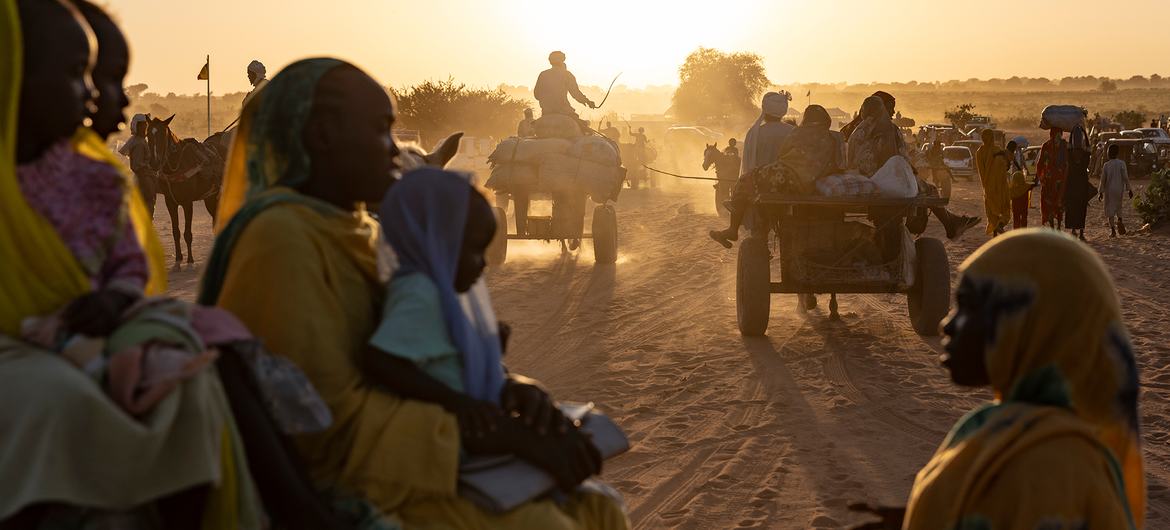
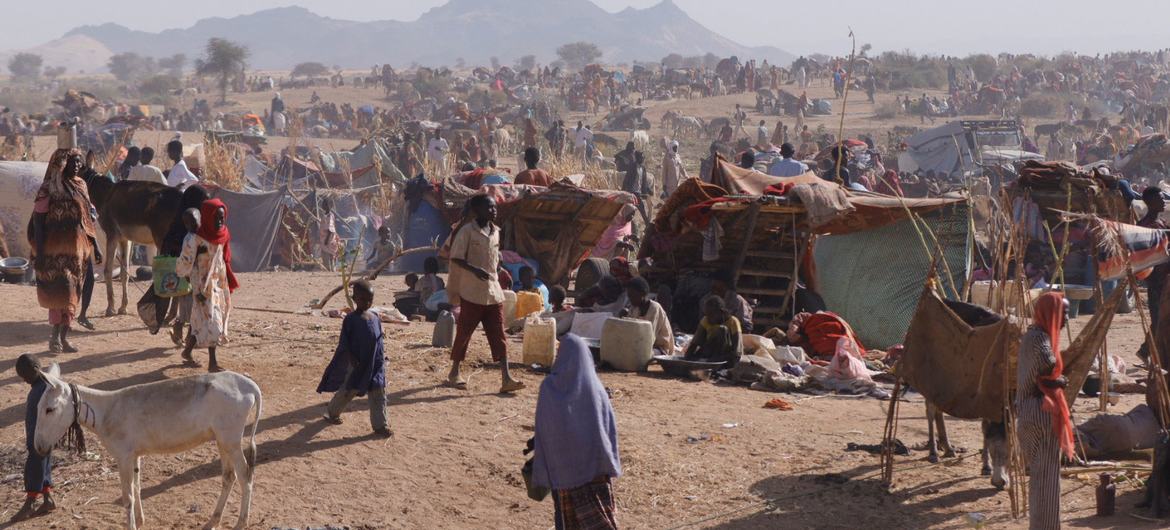
"In recent weeks, we have seen an alarming escalation of drone attacks across the three Kordofan states , leading to more civilian deaths and injuries and forcing families to flee their homes," she said. Over one million people are now displaced in the region alone.
Food insecurity is deepening. UN-backed food security analysis indicates that famine conditions "may be prevalent" in Kadugli and Dilling . In North Darfur, acute malnutrition rates in Um Baru and Kernoi localities exceeded famine thresholds in December .
Toll on aid workers
The toll on relief workers is mounting . Since the conflict began on 15 April 2023, some 130 humanitarian workers - nearly all Sudanese - have been killed.
"Aid workers and humanitarian assets must never be targets," Ms. Wosornu stressed, noting that four incidents in 10 days recently left humanitarian personnel killed or injured while delivering food.
The World Health Organization ( WHO ) reported that in one week this month, three health facilities were attacked in South Kordofan, killing 31 people, including children and health workers.
Violence against women and girls has reached "catastrophic levels," Ms. Wosornu said. Demand for prevention and response services has surged by 350 per cent since the war began, and documented cases of sexual violence have nearly tripled.
'Indicators of a genocidal path'
The briefing came hours after a UN human rights fact-finding mechanism warned that atrocities committed by the RSF in El Fasher in October 2025 were "indicators of a genocidal path," raising fears of similar patterns elsewhere.
Ms. DiCarlo said the events there were preventable. While the city was under siege for more than a year, UN officials "repeatedly sounded the alarm about the risk of mass atrocities. But the warnings were not heeded."
High Commissioner Volker Türk has now warned of the possibility of similar crimes in Kordofan, where civilians face risks of summary executions, sexual violence, arbitrary detention and family separation.
Need for international resolve
Concluding her briefing, Ms. DiCarlo urged stronger international resolve.
"Unified messaging and strong action by the Security Council is more important than ever," she said. "Pressure must be brought on the parties and those who back them to end the war now."
Ms. Wosornu echoed that appeal, calling on Council members to use their influence to protect civilians, ensure humanitarian access and "work together in pursuit of an immediate stop to the fighting, to stem the flow of weapons into Sudan, and to press for the lasting, inclusive peace that the people of Sudan so desperately need."


