
As the world prepares to mark Human Rights Day on 10 December, the UN is warning that war-torn Sudan is in the midst of arguably the gravest human rights crisis of our time.
Fighting erupted between rival militaries in April 2023 following a breakdown in the transition to civilian rule, following the overthrow of longtime former President Omar al-Bashir four years earlier.
The army of Sudan's military government has been battling the formerly allied fighters of the Rapid Support Forces (RSF) militia for control of the vast country, where more than 12 million people have been uprooted.
Millions have fled across the border in what is the world's largest displacement crisis.
In an in-depth interview with UN News, the UN human rights office's ( OHCHR ) top official in Sudan, Li Fung, outlines the scale of violations unfolding, the urgent need for accountability, and why the courage of Sudanese communities remains a vital source of hope.
This interview has been edited for length and clarity
UN News: As we mark Human Rights Day, how would you characterize the current human rights situation in Sudan?
Li Fung: It remains extremely grave. The situation is first and foremost a human rights and protection crisis driven by two and half years of conflict and widespread violations of international humanitarian law and international human rights law across the country.
This has triggered the world's largest humanitarian emergency, mass displacement and shocking levels of hunger.
The scale and brutality of violations we continue to document reflect a crisis that has shattered the lives of millions, and stripped countless Sudanese of the basic protections every human being is entitled to.
The devastating impact of the conflict on the civilian population is hard to put into words. Cities reduced to rubble, families torn apart overnight, and civilians forced to make impossible choices just to survive.
But in this context, OHCHR continues to stand with the people of Sudan, to bear witness and document violations, to advocate for actions to protect human rights and to support the UN and humanitarian response.
On Human Rights Day, our message is clear: the human rights of the Sudanese people must be upheld. All parties must respect their obligations under international law, and they must protect civilians and ensure accountability for violations. The people of Sudan deserve peace, justice and full respect for their basic human race.
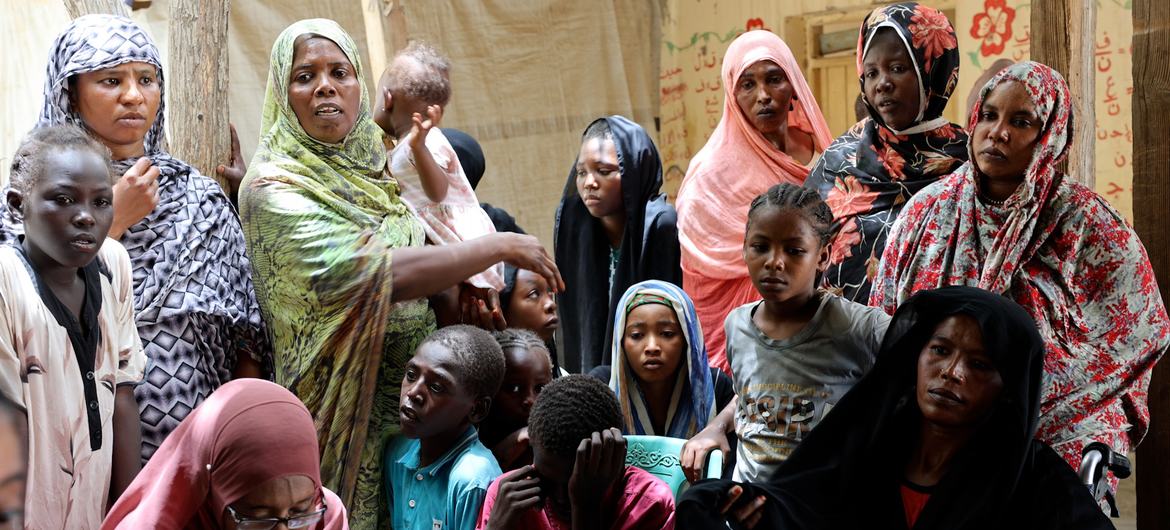
UN News: Many Sudanese fear that the ongoing violations will go unpunished. What accountability mechanism currently exists and what role can OHCHR play in ensuring justice for victims in Sudan?
Li Fung: Accountability does remain one of the most urgent challenges in Sudan, but despite the challenges of the current situation, there are various mechanisms.
OHCHR, and particularly our country office in Sudan, have a very important role to play in advancing accountability. We are continuing to document and verify violations of international law in extremely challenging conditions, from the perspective of preserving what has happened on the ground, giving a voice to survivors, victims and witnesses and ensuring that this can feed into accountability processes.
We also report to the High Commissioner [Volker Türk], who reports to the Human Rights Council , and this ensures that the situation in Sudan remains on the international agenda. Furthermore, we engage with survivors, we advocate for their rights, for their inclusion, and we support efforts to rebuild and strengthen rule of law institutions that can deliver justice.
At the international level, there are several important mechanisms as well, including the International Criminal Court [ICC], who has a mandate to investigate international crimes.
Also, the ICC has established an international, independent fact-finding mission on Sudan, whose role is complementary to our role as a country office, and they are documenting the violations, looking at responsibility and the international crimes that may have been committed.
But in amongst all these international efforts, it is important to highlight domestic accountability; and that is why we are working with different rule of law institutions looking at capacities to advance accountability and justice for the people of Sudan.
UN News: As we all know, the access to the affected areas in Sudan and especially Darfur is extremely limited. How can the international community meaningfully support the documentation of human rights violations in these areas?
Li Fung: In terms of the response to the crisis in Sudan, the support of the international community is vital in many ways. Firstly, funding the human rights response, the humanitarian response requires resources to be able to meet the dire needs and the priorities of the people of Sudan.
Secondly, political action. Member States have got an incredibly important role to play in upholding international law, using their influence to press for dialogue, for peace, to reach a ceasefire, to really end arms flows, to advance on accountability and justice for the people of Sudan.
Documentation of the violations on the ground is critical for all these efforts because it really informs the efforts in response to the humanitarian needs, the priorities of the population, to advance the protection of civilians through very concrete, measurable actions.
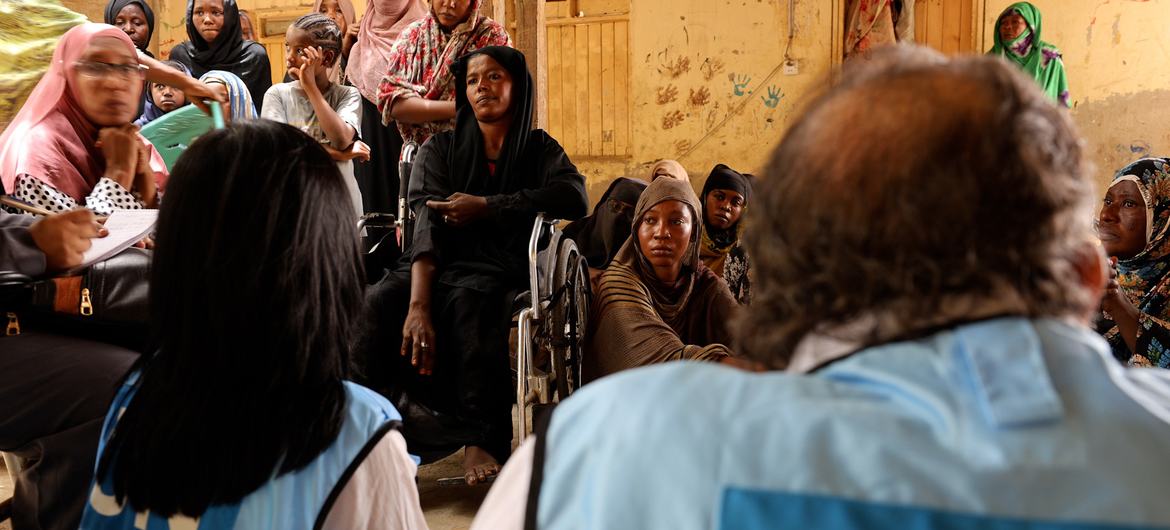
UN News: This is not the first time that Sudan has witnessed such violations in human rights - and many attribute this to decades of impunity. What concrete actions must the international community take to finally break this vicious cycle of impunity?
Li Fung: Impunity feeds persistent cycles of violence and violations. Concrete actions can be taken including supporting all efforts to seek accountability, supporting fact-finding, monitoring and documentation, which will lead to accountability processes to really call for the protection of civilians and for investigation.
It is also key to include accountability on the pathway towards peace for Sudan, as well as to advocate for inclusion of all the voices of the Sudanese people from across the country, to achieve a sustainable, peaceful future for Sudan.
UN News: Finally, is there any light at the end of the tunnel regarding the human rights situation?
Li Fung: Yes, despite the immense suffering that we see and the scale of the violations that we continue to document, there is light, and it comes first and foremost from the Sudanese people themselves.
Despite enormous challenges, Sudanese human rights defenders, local humanitarian volunteers and community groups and networks continue to demonstrate extraordinary courage and persistence.
Their resilience and their initiatives to support their own communities underscore the urgent need for sustained international retention, for stronger protection measures and for unimpeded humanitarian access. Their determination, even in cities scared by conflict, is a powerful reminder that the foundations of a just and sustained future still exist.
I think there's also hope in the renewed attention on the situation in Sudan. It is unfortunate that despite many warnings about the risks of atrocities and widespread violations, it was only once this occurred that international attention started to be paid to Sudan. But now we need to seize on this moment. We will continue to stand with the people of Sudan.


