
Advanced practice providers help expand access to care, meet growing demand
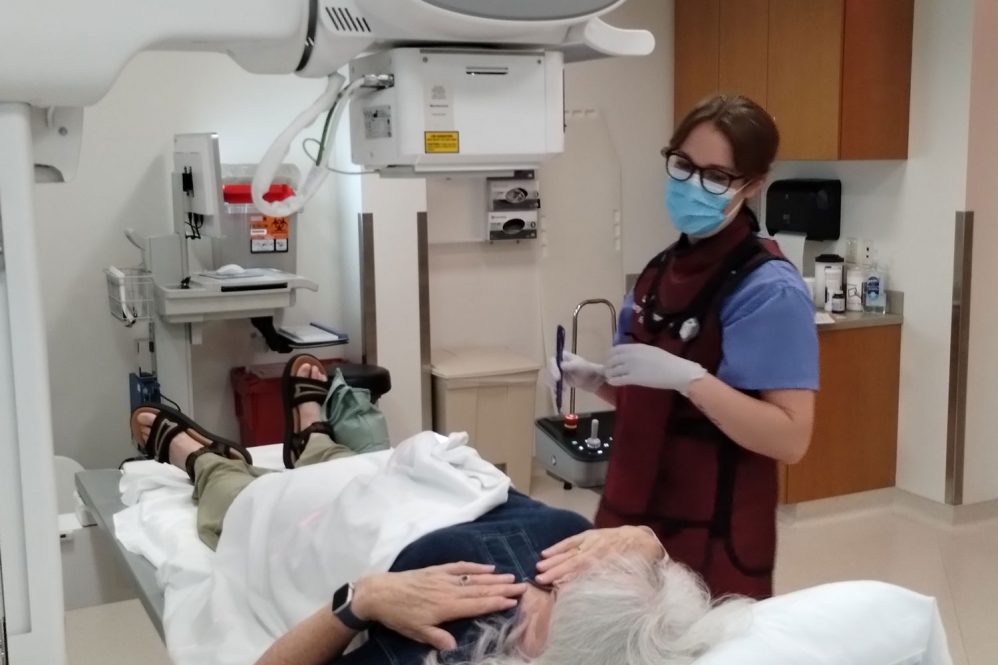
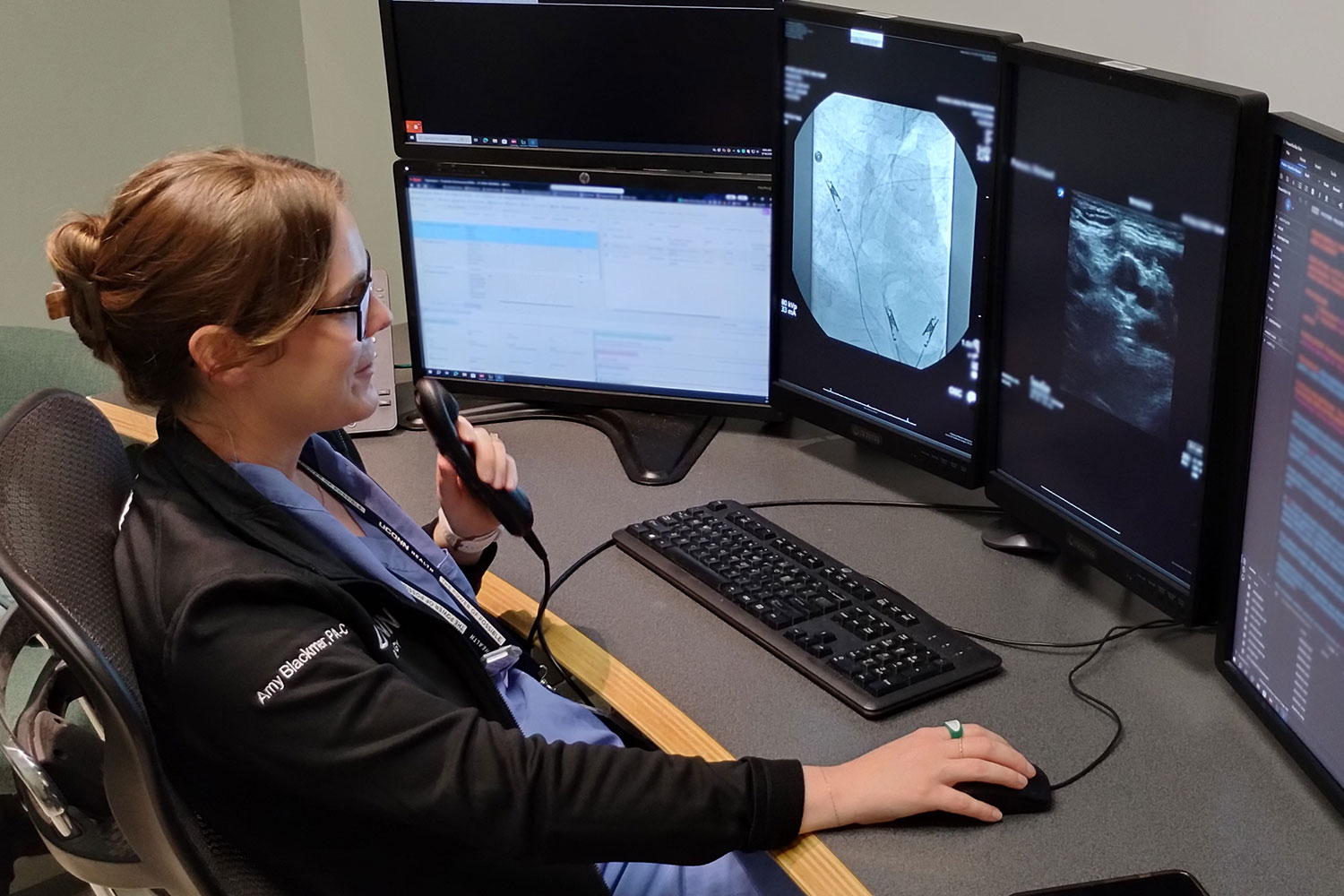
Physician assistant Amy Blackmer brings her expertise in fluoroscopy procedures to UConn Health's interventional radiology service. (Photo by Chris DeFrancesco)
As demand for clinical services at UConn Health continues to grow, so does the demand for clinical experts.
Advanced practice providers, as the name implies, make up a category of clinical providers with advanced degrees and training, giving them license to do many of the tasks physicians do, such as diagnosing and prescribing. Common examples of APPs include physician assistants, nurse practitioners, and nurse anesthetists. By some estimates APPs represent 40% of the diagnosing and prescribing providers in U.S. physician practices. At UConn Health, it's about 23%.
UConn Health employs 230 advanced practice providers, in addition to a few dozen per diem staff. Many have been in UConn Health's hospital units and outpatient practices for years, but in some areas it's a new concept as demand for clinical services continues to grow.
One such area is interventional radiology


