one in five people who dealt with a public official were asked to pay a bribe, according to a UN report. The world is doing something about it.
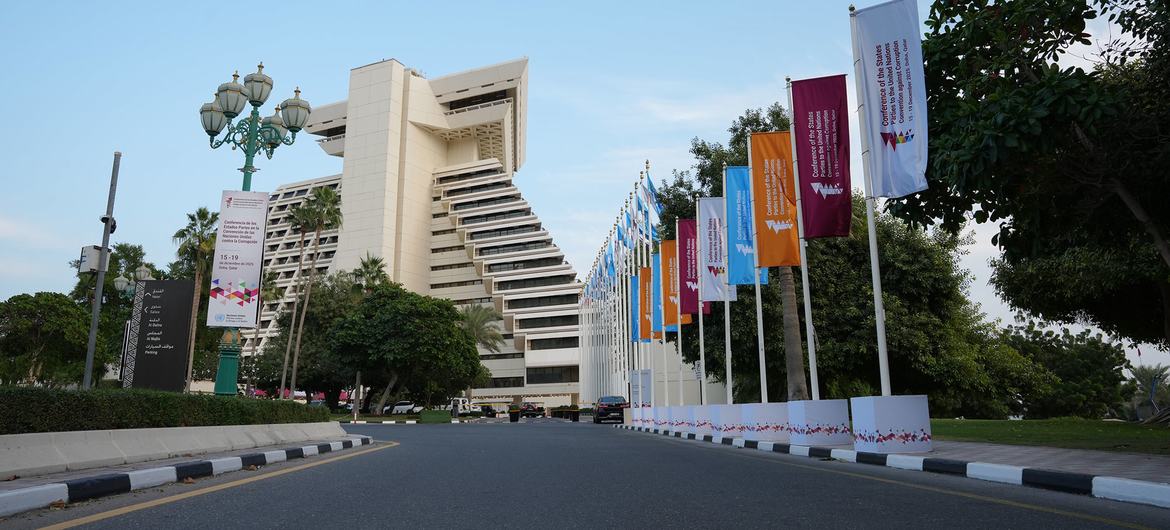
Heads of State, civil society and private sector leaders will be discussing the most pressing issues surrounding corruption and how to tackle the scourge, at a UN anti-corruption conference (COSP11) this week in Doha, Qatar.
"When corruption infects the legal system, cases are mishandled, justice is delayed or denied, and victims are silenced," General Assembly President Annalena Baerbock said at the opening of the conference.
What is COSP?
Taking place from 15-19 December this year, COSP is the world's largest international gathering dedicated to combating corruption and economic crime.
It is the main decision-making body of the UN Convention against Corruption - the only legally binding universal anti-corruption treaty.
This session, entitled Shaping Tomorrow's Integrity, will address the role of AI and new technologies to match the realities of today's complex crime patterns.
The links between corruption and financial and organized crime will also be in focus, as well as measures countries can take to improve the transparency of their public financial systems and anti-corruption efforts in the private sector.
Tech can help or harm
"The swift advance of technology presents corrupt actors with new tools to hide assets, forge documents and hop between jurisdictions," cautioned John Brandolino, acting executive director of United Nations Office on Drugs and Crime ( UNODC ).
He recognised, however, that technology can also be a "transformative" force against corruption, especially in aiding investigations.
"Governments need to work on reaping the rewards of groundbreaking solutions," said Mr. Brandolino, adding that these tech solutions must respect human rights and close loopholes that allow criminals to misuse digital tools.
Why COSP matters
Corruption strips people of basic needs such as education, healthcare, clean water and infrastructure.
The conference aims to turn international commitments into action by evaluating how countries apply the anti-corruption treaty and by strengthening cooperation across borders.
COSP decisions have led to real change, including the creation of a peer review system that has helped 146 countries improve their anti-corruption laws and policies.
"Shaping tomorrow's integrity is about safeguarding people from being exploited by crime and corruption," said Mr. Brandolino. "And it is also about safeguarding our shared aspirations for the future."