
A new study by Victoria University (VU) reveals volunteers involved in community sport need more support when recognising and responding to disclosures of abuse in sport (psychological, physical, sexual and neglect).
The research, The Capabilities, Opportunities and Motivations of Sport Volunteers to Respond to Child Abuse: Results From a National Survey in Australia led by VU's Dr Mary Woessner and Dr Aurélie Pankowiak (a VicHealth Early Career Research Fellow) aims to assess how prepared volunteers are to respond to and report abuse in community sport.
The research - published in the Journal of Interpersonal Violence - details how community sports grassroots community sporting clubs would not exist without the support of thousands of volunteers who dedicate their time and expertise encouraging children to participate. However, the findings highlight that many do not feel capable or supported to recognise or respond to psychological, physical, and sexual abuse of young people.
More than 200 volunteers involved in 50 sports around the country took part in the survey. It detailed sport volunteers' capabilities and support to act, when a child/children share their experiences of abuse. Recommendations were made for the sector, co-developed with people who experienced abuse in sport (Lived Experience Committee), together with the input of community sport volunteers. The group are calling for the recommendations, funded by the National Centre for Action on Child Sexual Abuse to be implemented immediately.
Research co-lead, Dr Pankowiak said the survey is the first step in building knowledge and evidence of what volunteers need to be appropriately equipped and supported with, to act on disclosures of abuse.
"It is clear from the data and the input of those with lived experience, that key-decision makers must strengthen volunteers' capacity to support children who have been harmed and report abuse," Dr Pankowiak said.
"This is crucial for young people's wellbeing and to keep sport safe. Clubs and volunteers have a role but cannot do this alone. We need sport governing bodies at all levels to step up and implement change."
Key findings:
- Most (55%) volunteers were not confident in their abilities to respond in a trauma informed way to a child disclosing their experiences of psychological, physical, or sexual abuse in sport.
- Just over half (55%) of respondents understand that responding to abuse is part of their role.
- 20% feared repercussions by their club if they raised an incident of child abuse.
- Less than 40% of respondents agreed the current system for reporting abuse in sport is effective.
- A number of respondents still believe kids do sometimes lie about abuse, when the broader evidence suggests it is extremely rare.
- Similar trends were noted across all sports indicating a broader issue, rather than a problem isolated within a single sport.
The survey recommends radical reforms, specifically a strategic investment in child safety, and leadership modelling of safe behaviours.
- Practical initiatives including
- Ensuring volunteers have the right skills to recognise all forms of abuse
- Helping them to navigate complex reporting scenarios and the existing power dynamics that exist within sporting clubs and institutions
- A national campaign featuring first-hand experience of abuse to challenge harmful misconceptions as children rarely lie about being abused by someone.
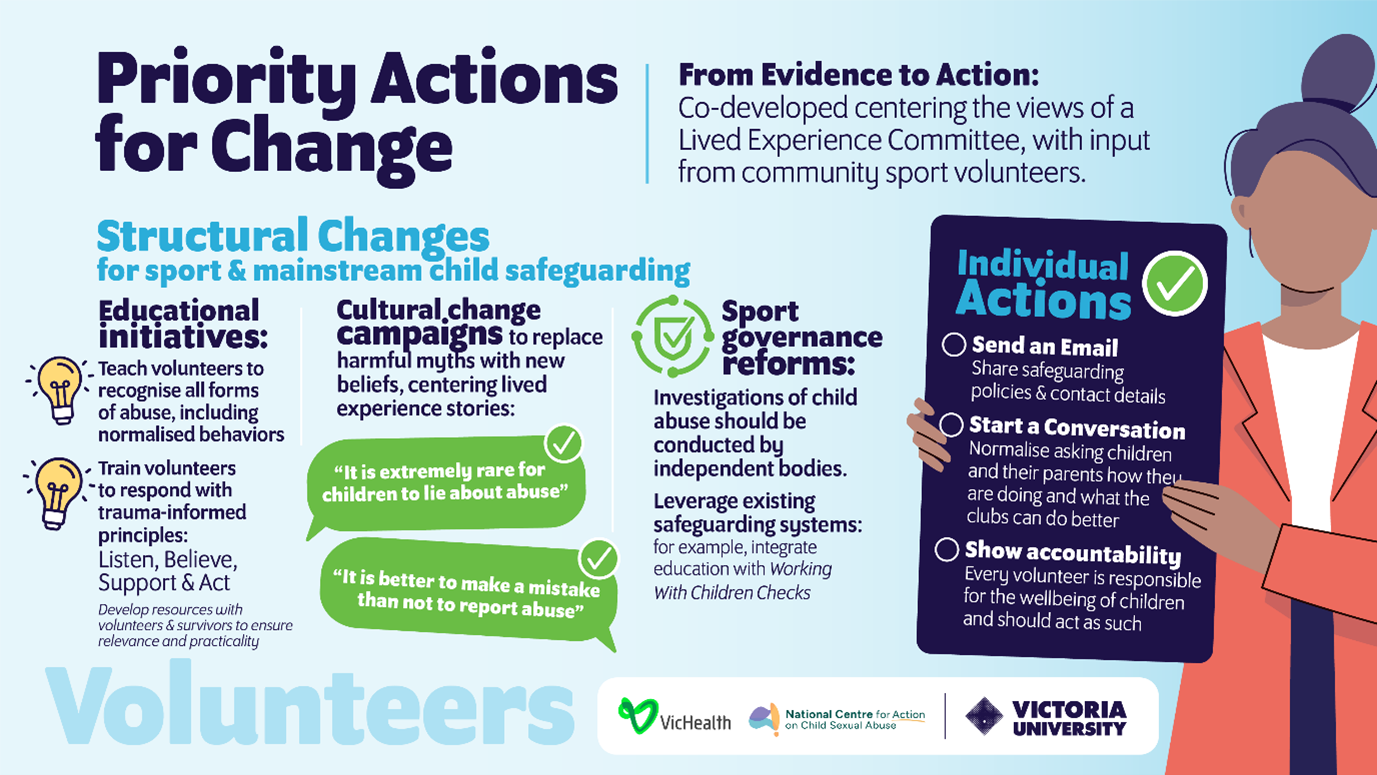
In response to the survey, the Lived Experience Committee collectively stated: "Reading the report brought up many emotions. Overall, we're surprised, frustrated and disappointed about the lack of progress on child safeguarding practices in sport, in light of the learnings from the 2017 Royal Commission on Institutional Response to Child Sexual Abuse."
"We want to see sporting associations and national organisations foster educational opportunities for volunteers to ensure they can access guidelines and training around how to recognise all forms of abuse and inappropriate behaviour," Dr Woessner said.


