
Representatives from Ministries of labour, Foreign affairs workers and employers' organizations in East and Horn of Africa States, reaffirmed their strong commitment to advancing fair, rights based and gender responsive labour migration governance following an intensive five day regional training on Bilateral Labour Agreements held from 8 to 12 December 2025.
The training was convened by the IGAD secretariat and International Labour Organization through the European Union funded project on Support to Free Movement of Persons and Transhumance Phase II (FMPT (II) and the United Kingdom Foreign, Commonwealth and Development Office funded Better Regional Migration Management (BRMM) programme, in collaboration with the International Training Centre of the ILO. The event brought together experts from ministries of labour, employment and foreign affairs across the region, representatives from the Intergovernmental Authority on Development and the East African Community and representatives of the Confederation of IGAD Employers and the Horn of Africa Confederation of Trade Unions.
The programme focused on strengthening institutional and technical capacities to draft, negotiate, implement and monitor rights-based and gender-responsive bilateral labour agreements that safeguard rights of migrant workers.
Labour migration remains a major livelihood pathway in the region. Yet many migrant workers face a wide range of violation of their rights, including but not limited to unsafe recruitment practices, weak protections, and limited access to justice. Several Member States in the region have entered bilateral labour arrangements with several countries of destination particularly in Arab States. However, the effectiveness of these instruments are often undermined due to unequal bargaining power, competition among countries of origin, fragmented negotiation practices, and operational gaps in implementation, monitoring and evaluation of BLAs.
To address these challenges, the five-day programme offered practical tools, negotiation simulations, case studies, and peer learning sessions grounded in the global and continental normative frameworks as well as the IGAD Regional Guidelines on Rights Based Bilateral Labour Agreements. Participants deepened their understanding of international labour standards and explored approaches to strengthen coordination among national institutions and social partners involved in labour migration governance while also identifying areas for a regional common approach to avoid "race to the bottom" when it comes to safeguarding rights of migrant workers from the region.
ILO: "This work is central to social justice and fair labour mobility."
Speaking on behalf of the ILO, Khumbula Ndaba, Country Director for Ethiopia, Djibouti, Somalia, South Sudan and Sudan and Special Representative to the AU and ECA, emphasized the importance of the initiative for the region.

© ILO/Homa M. Ejeta
"This gathering could not be timelier. Our region has made important strides, but much remains to be done. Rights based bilateral labour agreements, grounded in international human rights and labour standards, are essential to ensuring fair, safe and decent labour mobility for all migrant workers."
EU: "We are proud to support Member States in building stronger migration governance systems."
Lubomira Mieresove, Program Manager at the Delegation of the European Union to Ethiopia, representing the EU reaffirmed their continued support for strengthening rights-based labour migration frameworks in the region.
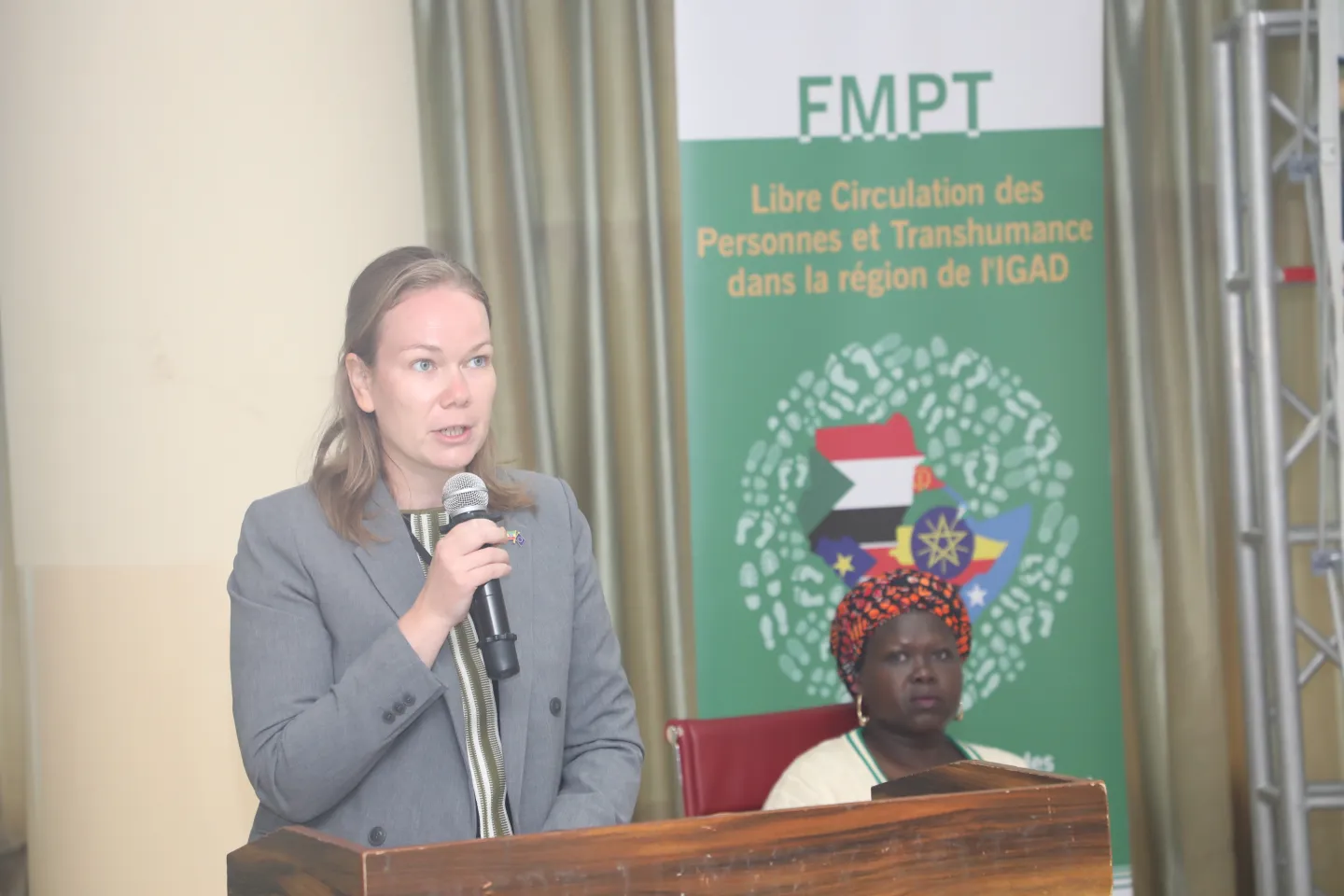
© ILO/Homa M. Ejeta
"The European Union believes strongly in the importance of gender-responsive, rights-based approaches to labour migration. We are proud to support Member States in developing the capacity and tools needed to ensure that migrant workers move through fairer, safer and more dignified labour migration pathways."
IGAD: "Regional unity is essential for achieving better outcomes for migrant workers."
Representing IGAD Secretariat, Lucy Daxbatcher, Senior Program Coordinator, underscored the importance of collective action.
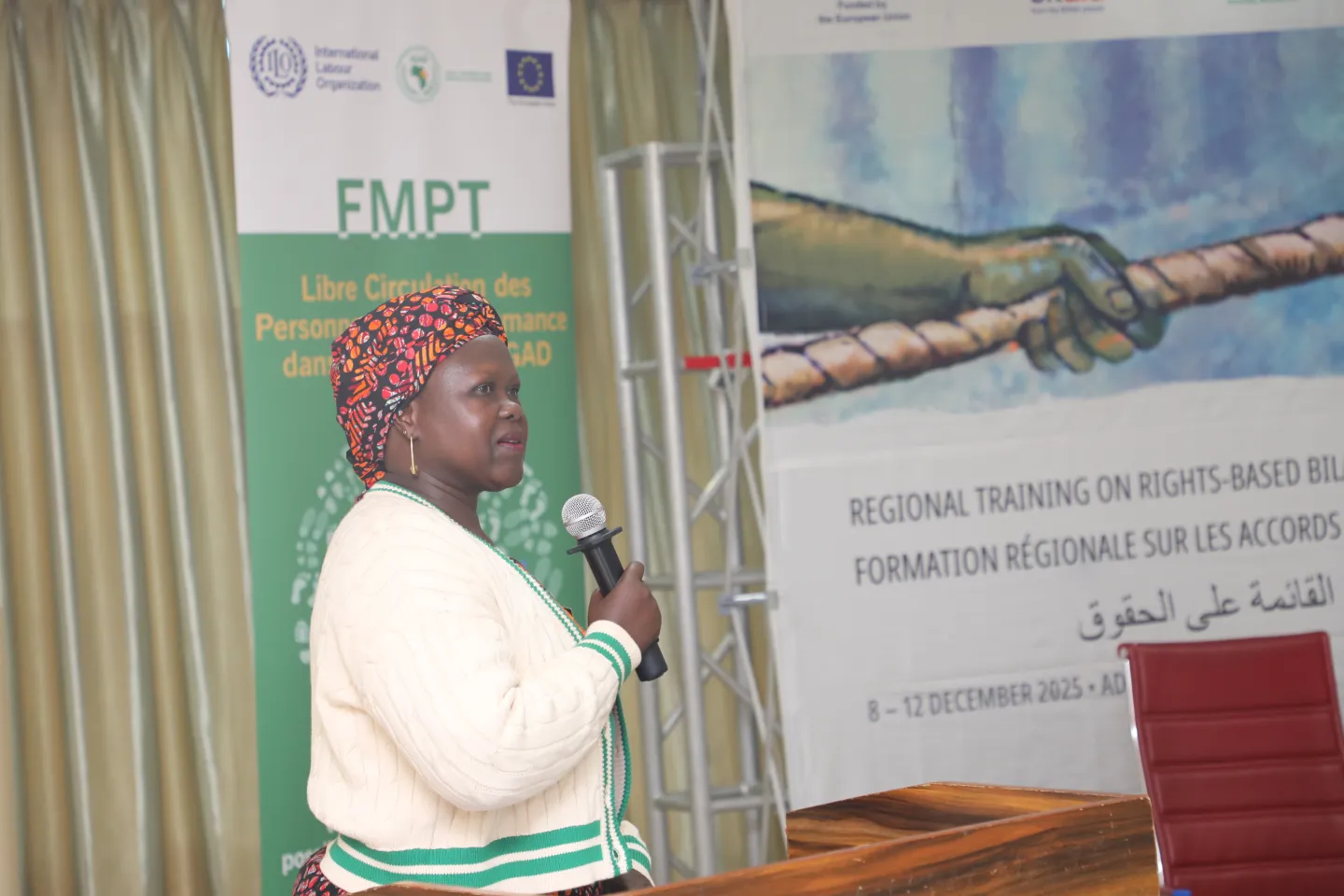
© ILO/Homa M. Ejeta
"Bilateral labour agreements are most effective when countries negotiate from a position of unity. Through this training, Member States from the region are strengthening both their technical capacities and their collective voice. A coordinated regional approach means stronger protections and more consistent outcomes for migrant workers."
Participants also emphasized the added value of cooperation between Member States of the region, noting that shared learning, harmonization of approaches, and common regional positions are essential to achieving stronger and more equitable labour migration governance.
The training directly supports the implementation of the IGAD Regional Guidelines on Rights Based BLAs and contributes to broader continental objectives under the African Union Migration Policy Framework. It also builds on earlier initiatives to strengthen the work of labour attachés, improve fair recruitment practices, and advance the protection of migrant workers in countries of origin and destination.
As the week concluded, participants reaffirmed their collective commitment to promoting decent work, strengthening rights-based labour migration governance, and safeguarding the dignity and wellbeing of all migrant workers across the East and Horn of Africa.


