
A URochester expert on international conflict warns that regime change rarely brings stability.
The US seizure of Venezuelan leader Nicolás Maduro stunned people around the world-including political scientists who study regime change.
"I was surprised," says Hein Goemans, professor of political science and director of the Peter D. Watson Center for Conflict and Cooperation at the University of Rochester. "Going in the middle of the night, taking the leader of the country and his wife out of the palace, and saying, 'That's it, we're running the country now.' That's extraordinary."
For many Venezuelans, particularly those who fled repression and economic collapse, the news sparked celebration and hope. But Goemans urges caution, arguing that removing a dictator rarely dismantles the power structures that kept him in place.
The Venezuelan military still holds power
"The military propped up Maduro," Goemans says. "The whole system of bribery and corruption revolves around the support of the armed forces. There's no reason to believe that they're now suddenly going to give up power."
He compares the situation to previous US-led interventions.
"We've seen this in Iraq, we've seen it in Afghanistan," Goemans says. "Decapitation-taking out one leader-doesn't change the apparatus of the state. Post-regime change almost never works the way people hope."
Goemans points to research by political scientist Alexander Downs showing that foreign-imposed regime change frequently leads to instability or renewed conflict, not democracy. "The new regime you install has its own interests," Goemans says.
"They don't necessarily align with the interests of the United States, or with democratic reform."
Why motivation matters-and how neighboring Guyana is in play
There are somewhat conflicting statements coming out of Washington as to the motivation for the American intervention.
House Speaker Mike Johnson has cast the operation as one that aimed "to bring justice to a criminal" in Maduro, who was "duly indicted under American law." Energy Secretary Chris Wright has said the United States intends to control the flow of Venezuelan oil into the marketplace.
Meanwhile, Secretary of State Marco Rubio has laid out a three-step plan that includes the United States stabilizing the country by seizing and selling up to 50 million barrels of oil and ensuring "American, Western, and other companies have access to the Venezuelan market in a way that's fair." He has called the third step "one of transition," including the integration of opposition political parties."
Goemans says motivations matter enormously.
It is possible, he says, that different actors inside the US administration are pursuing different goals-from energy interests, to immigration enforcement, to regional dominance-without a coherent long-term plan for Venezuela itself.
"That's problematic," he says, "because it means there's no clear, overarching goal. If you don't know what comes next, you're almost guaranteeing trouble."
There is one other possible motivation that Goemans sees for the US intervention that he says he has been surprised no one in the Trump administration has invoked: freeing the oil-rich Essequibo region of neighboring Guyana from Venezuelan rule.

"That's a motivation, which, in my opinion, could have kind of legitimized overthrowing Maduro," Goemans says.
In 2023, Venezuela resurrected a long-festering claim to Essequibo, which is nearly the size of Florida and makes up half of Guyana's territory. Maduro unveiled new maps displaying it as part of Venezuela, named a military general as its governor, and issued Venezuelan identity cards to people living there.
"Guyana has serious worries about Venezuela," Goemans says. "It's a real threat to the sovereignty of Guyana and it's surprising that nobody in the Trump administration has invoked that."
"There was no claim that this was about restoring democracy," he continues. "That was never raised as one of the motivations. That should concern people."
A dangerous precedent for world order
Beyond Venezuela, Goemans warns that forcibly removing heads of state undermines long-standing international norms.
He explains this using a classic political science concept: cooperation only holds if countries believe rules will be enforced over time.
"If you treat this as a one-shot game that says, 'We can do this once and nothing follows,' that's very dangerous," he says. "Other countries will respond eventually. Maybe not immediately, but the system will unravel."
He argued that even US allies may feel compelled to push back if territorial integrity and sovereignty no longer carry weight.
"If the United States defects from the rules, others will have incentives to defect too," he says. "In the long run, that's not in America's interest."
Can the US try Maduro?
Another uncertainty is whether US courts can legally prosecute Maduro if he is considered Venezuela's legitimate president, which Maduro insists he is despite doubts by many world leaders.
"This is going to be fought out in court," Goemans says. "Judges will have to decide whether he is head of state, and that's not a simple legal question."
Unlike Panama's Manuel Noriega, who was never an elected president but was that country's de facto ruler before the United States seized him with an invasion in 1989, Maduro originally came to power through constitutional succession before consolidating his authority through a series of widely condemned elections in 2018 and in 2024.
What are the alternatives?
If US military intervention is unlikely to produce a stable democracy in Venezuela, what could?
Goemans points to historical examples in Eastern Europe and elsewhere, where authoritarian regimes collapsed after mass domestic mobilization, sometimes with outside support and an independent media.
"The only way the masses can overcome a repressive elite is if they successfully organize," he says. "That means supporting opposition groups, election monitoring, information access. Not sending troops through jungles to Caracas."
But he acknowledges how grim that sounds to Venezuelan people suffering now, whether in the country or living abroad.
"I understand the desperation," he says. "People have had their lives stolen from them. Of course they want immediate change."
Still, he warns that celebrating too early could result in disappointment.
"People were very happy when Saddam's statues came down," he says, speaking of the former president of Iraq, Saddam Hussein. "Then came the question: What comes next?"
Meet your expert
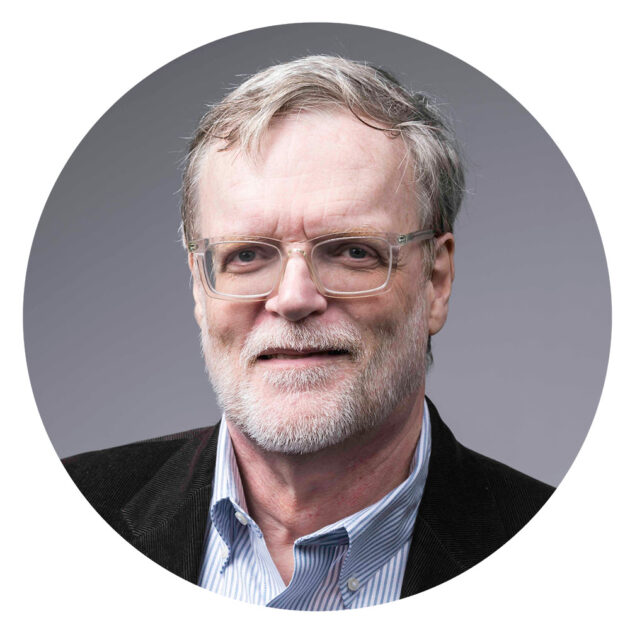
Hein Goemans
Hein Goemans, a political science professor and the director of the University of Rochester's Peter D. Watson Center for Conflict and Cooperation, is an expert on international conflict-how wars begin and how they end. He is the author of War and Punishment (Princeton University Press, 2000) and coauthor of Leaders and International Conflict (Cambridge University Press, 2011).


