
A new method of using microwave vacuum drying can create crispy beet snacks - a potential alternative to traditional drying or frying that could preserve nutrients while yielding shelf-stable products.
"Available products are baked or deep-fried, processes that decrease heat-sensitive nutrients," said Chang Chen, assistant professor of food science at Cornell AgriTech and corresponding author of a study detailing the method, published Dec. 5 in Innovative Food Science and Emerging Technologies. "We wanted to produce a healthy snack from whole vegetables, with all-natural ingredients and high fiber. We said, what if we can engineer the process and achieve the same texture without adding any oil?"
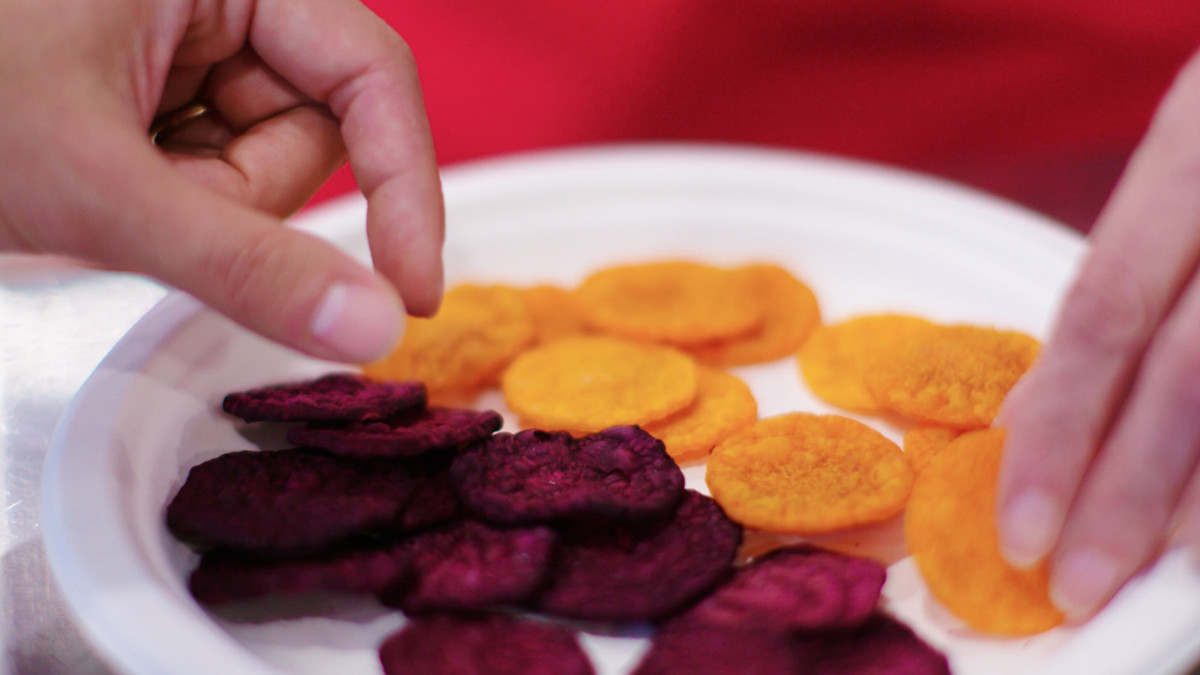
Microwave-vacuumed crispy beet snacks
The new technology comes as the humble beet gains traction with health-conscious consumers and processors alike, becoming a booming agricultural success in New York state. According to agricultural data, New York now produces more beets than any other in the nation, supplying more than one-fifth of all acreage devoted to the root crop. Farmers and food companies in western New York owe that distinction in part to improved varieties, market demand for healthier foods and decades of collaboration with agricultural scientists at Cornell.
Microwave vacuum drying, or MVD, combines reduced pressure with microwave energy to remove moisture from food more quickly and at lower temperatures than conventional drying. Because heat-sensitive nutrients and pigments can degrade during long drying cycles, MVD offers the promise of retaining flavor, color and nutritional quality while producing products, like beet chips, that are crisp and appealing.
The researchers tested the MVD process on thin beet slices to explore how it might yield a snack with better texture and nutritional value than potato chips or banana chips. Initial results suggest that the technique can produce beet snacks that are dry and crispy with less energy input and shorter processing times than many existing methods.
"We have achieved a good puff, usually only seen in deep-frying," Chen said. "And they are even crispier than fried chips."
Starch is key to good puffiness, according to Diane Makovic, currently a doctoral student in the field of food science. Makovic did her thesis work on making beet chips with this MVD technology while in the Master of Food Science program, which she completed in May 2025.
"To get the crispy and puffed shape, you need a starchy vegetable," she said. "You need a thin layer of gelatinized starch. The puffs form when you use high heat and interior water evaporates and creates the puff. This could work with potatoes, butternut squash or other starchy tubers."
MVD could be applied to other vegetables and fruits that are difficult to dry, without quality loss, Chen said, potentially helping regional producers diversify their offerings and reduce waste.
"From a product line perspective, yams and sweet potatoes are high in nutrients and with natural sweetness," Chen said. "Down the road, that's what we are going to do. And we've hired a new student to work on apples. It's all about balancing the food's properties."
For New York's beet growers, who harvest the root vegetable for a range of markets - from fresh consumption to processing into nutritious beverages and health supplements - such innovations could expand opportunities for the crop beyond traditional uses. In recent years, beets have appeared in sports drinks, nutrition bars and supplements like "Super Beets," reflecting a shift in consumer tastes toward functional foods that provide fiber, antioxidants and micronutrients.
This research was funded by the U.S. Department of Agriculture National Institute of Food and Agriculture, Federal Capacity Funds Multistate Project NC1023 and Cornell AgriTech Director's Venture Fund.


