
It is now less than six years until the Brisbane Olympic and Paralympic Games.
Author
- Alexander Rolfe Best
Lecturer, Sport Business, Edith Cowan University
Hosting the games will be a multi-billion dollar investment , with organisers committed to a participation legacy to encourage more people to play sports and be active.
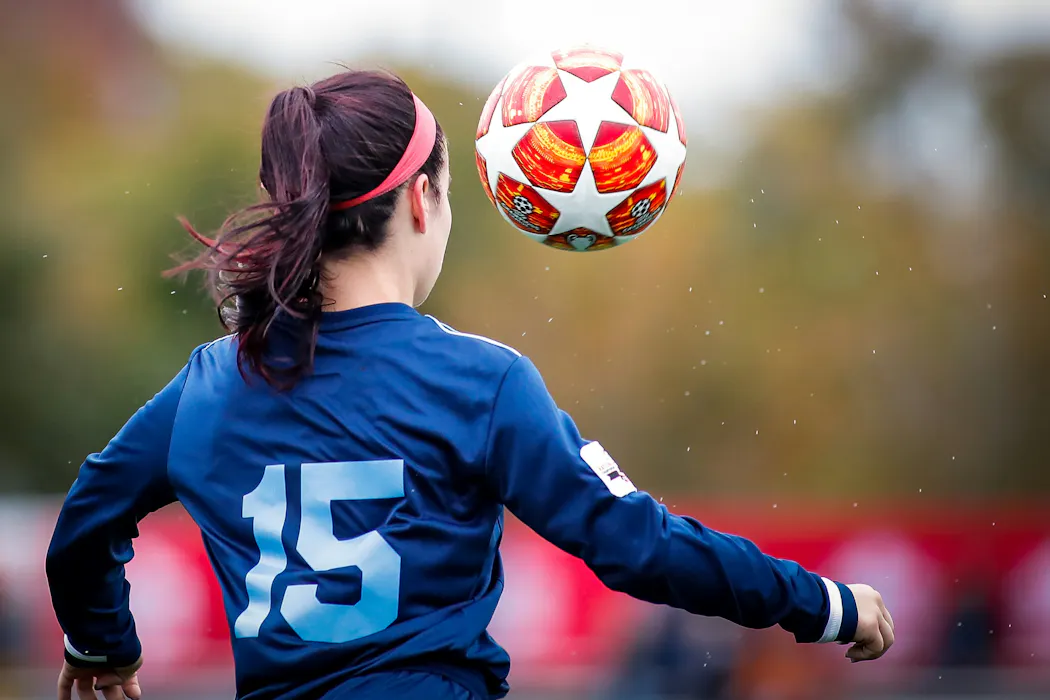
However, Australian girls and women are dropping out of organised sports at alarming rates , especially around the ages of 14-15. These teenagers today will be 20 or 21 when the Brisbane games begin.
So, why is this happening and what can be done to reverse the trend?
What's the problem?
As far back as 2016, research has shown almost two-thirds of Australian girls leave sport by 15, compared to just under half of Australian boys.
However, dropout can mean anything from switching sports, swapping to informal sport, or stopping altogether.
A more recent 2020 study tracked 29,225 girls and women who participated in Victorian organised sport for seven years. It found 55% of girls aged 4-14 dropped out of sport and never returned.
Australian Sport Commission research from 2025 lists girls aged 15 and older as the third least likely group to play organised sport (behind people 18 and older with a disability, or those with home duties).
More broadly, Australian sport is shifting , as informal and casual sports such as walking and working out at the gym become more popular.
But numbers in organised sport appear largely flat, or even slowly shrinking .
An eye to 2032
The Brisbane games are a huge investment: the Queensland and Australian governments are investing up to a combined A$7.1 billion , largely for venue infrastructure.
But the games aren't just about stunning venues and sparkling medals.
The vision for the event is: " Believe. Belong. Become. ". This echoes Australia's national sport strategy (2024-34) that seeks to prioritise inclusion and participation.
Organisers have also committed to a participation legacy , including a goal to ensure girls remain connected to sport .
A small number may believe they will be wearing green and gold in Brisbane. Many more may become administrators, coaches, leaders, officials and volunteers.
But the likelihood of many of these women getting involved in Brisbane 2032 appears to hit a roadblock when they reach age 15. So can Australia better support these future leaders and athletes when many are not sure they belong?
How to keep girls in sport
Many girls report they lack role models in sport , do not always feel they belong, and face issues with body image and gender stereotypes .
This sits in a wider sporting culture where women face three times as much online abuse as men, including many women athletes .
Retention has also failed to attract a great deal of concern or investment: researchers believe there are only five identified studies worldwide that have offered meaningful data into how to keep girls and women involved.
Researchers describe this area as " woefully under-researched ".
Work is being done though, with targeted programs aimed at finding out how to make sport more welcoming and fun for Australian girls and women.
Fair access to facilities and resources is needed: too often, the high-performance pathways for boys or men's games take centre stage and pride of place on pitches, ovals and changing rooms .
More also needs to be done to develop, encourage and support women coaches, officials and administrators to design and run sport for girls at community levels and beyond.
The Australian government's Play Our Way program is aimed at resolving these problems.
This will help ensure better representation of women in all roles and as leaders in organised sport environments.
More research is definitely needed .
All is not lost
Australia is fresh off a record-breaking haul of 171 medals, 70 of them gold , at the Glasgow Commonwealth Games.
Australia's women athletes won more than half of the medals.
So at the elite level, the pipeline looks healthy, especially after an uptick of investment in women's sport that is going some way towards addressing decades of under-funding.
Beyond the government's Play Our Way program, it is also working toward professionalising women's sport and ensuring equal pay .
However, the picture could be even rosier if fewer girls dropped out of organised sports.
Much more needs to be done
As we have done with Glasgow, we should continue to celebrate Australia's best and brightest athletes. But women's sport needs better support at community and junior levels
Participation and retention need to be better understood, with a clearer picture of if, where, and how girls enter and leave organised sport.
If Australia doesn't support girls of all ages, they might walk away before they get the chance to reach their potential.
Monica Beazley of Monarch Management contributed to this article.

Alexander Rolfe Best has an ongoing research collaboration with Monica Beazley of Monarch Management, a leadership and culture consultancy that delivers programs in women's sport. The collaboration relates to a separate research project on intervention design. Beyond this, no conflicts of interest are declared.


