In July this year, a delegation from Ghana and Nigeria travelled to Nairobi for a week-long intensive training program at the International Centre for Insect Physiology and Ecology (icipe).
Brought over by ACIAR, who supported this training as part of the Australian Government's Africa-Australia Partnership for Climate Responsive Agriculture, the delegation aimed to learn both the science and practice of black soldier fly (BSF) farming to replicate them in their respective countries.
During their knowledge exchange, sessions included introductory information about identifying the insect, as well as more in depth topics like producing larvae, oil and organic fertiliser. They also visited young BSF entrepreneurs, including InsectiPro Limited and Zehunger Solutions.
In the months after their program, the Ghanaian and Nigerian delegations have not only identified BSF in their own countries, they have also reared flies and begun testing production models.
Why BSF matters
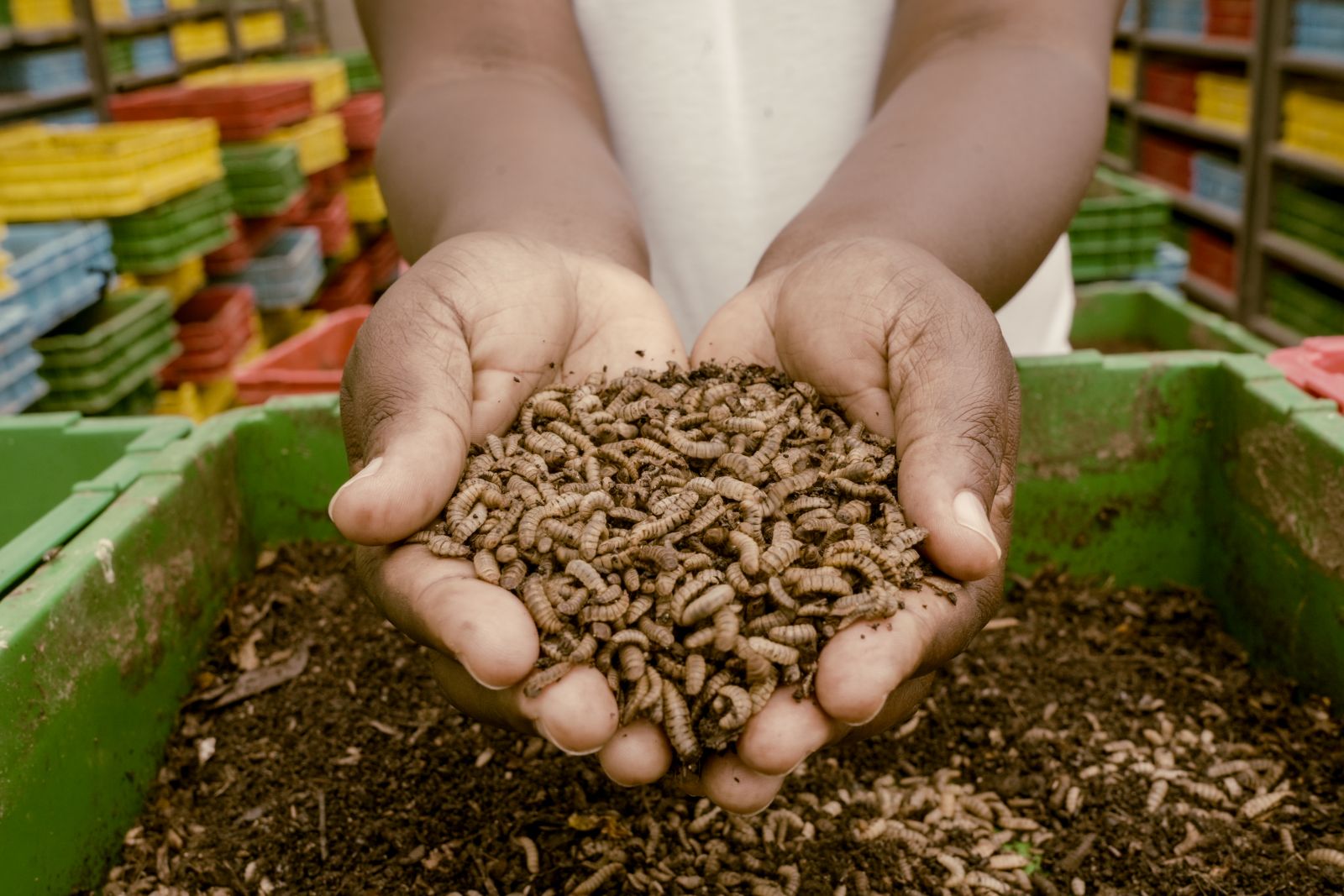
Able to transform organic waste into high-protein feed for livestock, poultry and fish, nutrient-rich frass fertiliser for crops, and other enriching bi-products, BSF is a solution to the more than over 1.3 billion tonnes of food that are wasted globally every year.
There is a huge opportunity for BSF to be a solution to food loss and waste in Northwest Africa. According to the United Nations Development Programme, Nigeria generates the highest levels of food waste per person in Africa, accounting for a third of its annual food production. Ghana, on the other hand, loses 3.2 million tonnes of food post-harvest each year throughout its supply chain.
Both nations also continue to grapple with food insecurity and malnutrition, heavy reliance on food imports, and rising fertiliser costs and food prices.
However, as nature's very own recycler, BSF helps address problems like hunger, waste and sustainability in a single, fortnightly cycle.
Ghana's bold move
In Ghana, the Food for All Africa (FFAA) team branded their project Okumkom BSF, meaning 'hunger fighter'. They are restructuring existing facilities, testing feed formulations and building a colony to scale BSF production.
The team conducted a feasibility study in Offinso, a Municipal District in the Ashanti Region of Ghana. This revealed abundant agricultural activity, plentiful organic waste, humid conditions, and ready markets for feed and fertiliser.
FFAA also identified key stakeholders, ranging from the Municipal Assembly, KITA - the College of Tropical Agriculture, the Grains and Legumes Development Board, waste crews, women and youth agribusiness groups, environmental protection institutions, the private sector, and farmer groups.
They have initiated partnerships with most of these stakeholders to secure a steady supply of organic waste.
The smallholder farmers approached by the FFAA team welcomed the fertiliser from BSF, especially given soaring prices of synthetic fertilisers.
However, the project faces several challenges. Poor road infrastructure causes up to 40% of harvests to rot on farms, and regulatory clarity on waste handling remains murky.
'Growing up, I knew I would become a doctor. But life had something different to offer, and in the process, it birthed a new desire to be the bridge between food produced and vulnerable individuals who had no means to access the same. This is how FFAA was born,' said Elijah Amoo Addo, Founder, FFAA.
'Each year, a third of all food produced is wasted; reducing food waste can help fight hunger and inequality. FFAA now wears a new mission; to tackle such huge levels of waste, and reduce carbon emissions, through this powerful insect.'
In collaboration with stakeholders along the food value chain, they hope to produce larvae for feed and sale, oil, and frass fertiliser.

Nigeria's leap
For Nigeria, the Lagos Food Bank Initiative (LFBI) will fly the BSF flag under the brand name InsectiFood, pivoting from being a food donation program to a circular model of waste-to-feed.
Starting with procured BSF larvae from a Lagos-based private company, LFBI reared them into pupae, built a locally crafted breeding cage, and watched in triumph as the first flies emerged.
The victory felt short-lived as the team encountered hurdles, including delayed pupation, maggot infestations and unpredictable humidity.
'It was discouraging when we didn't get even a single fly, and it had been four days since the pupae stage,' said Justina George, the Fundraising Officer at LFBI.
'We were sure we did everything by the icipe handbook, and yet, the outcome wasn't as immediate.'
Still, they bounced back with tighter waste pre-treatment, using wheat bran as a temporary substrate and stricter environmental controls.
'This process has been an eye-opener that it's never a one-size-fits-all; we have had to pivot on several occasions and tailor the approaches to suit our context,' said Ms George.
'Additionally, we are documenting every step to ensure that lessons are learned and banked for future cycles.'
Now, LFBI is preparing for its second generation of BSF larvae and planning to reintroduce market waste in carefully managed streams.
Public engagement through social media is one of the avenues the team plans to utilise to help demystify BSF farming, spark curiosity and support this innovative approach to hunger fighting.
ACIAR and icipe
ACIAR, in partnership with icipe, is investing in training to unlock local ingenuity and spark a ripple effect with enormous potential.
'ACIAR is continuously witnessing the ripple effects of evidence-based research and strategic partnerships. We have fantastic youth champions in Kenya, and through AAPCRA, we are fostering a new generation of creative minds and innovative approaches tailored for the West,' said Dr Steven Crimp, ACIAR Research Director.