
Step by step, mile by mile, Deo Kato ran his way across a continent - and beyond. After a year and a half on the road, the Ugandan British runner and campaigner has become the first person to run from Cape Town to London.
The 8,262-mile journey took him through 21 countries, transforming an extraordinary physical feat into a powerful act of activism, aimed at confronting racism and reshaping how migration is understood.
Born in Uganda and raised in the United Kingdom, Deo first took up running to manage his health. Over time, that personal discipline grew into a journey of purpose, connecting endurance with identity, protest and hope.
Turning point
In 2020, a moment of global reckoning around racial injustice - the murder of George Floyd in Minneapolis - became a turning point for Deo. He realised his running could serve a purpose beyond endurance.
"I thought, 'I have to do something about this. Whether it's small or big, I want to use my running to create change and speak out against racial injustice,'" he explained.
That conviction led him to run ten kilometres every day for 381 days, marking each day of the Montgomery Bus Boycott, a pivotal moment in the United States civil rights movement.
He told himself, "I'm going to keep doing this for as long as I can because this is how change happens."

Retracing migration routes
From this commitment, Deo set out to run from Cape Town to London, symbolically retracing humanity's earliest migration routes from Africa.
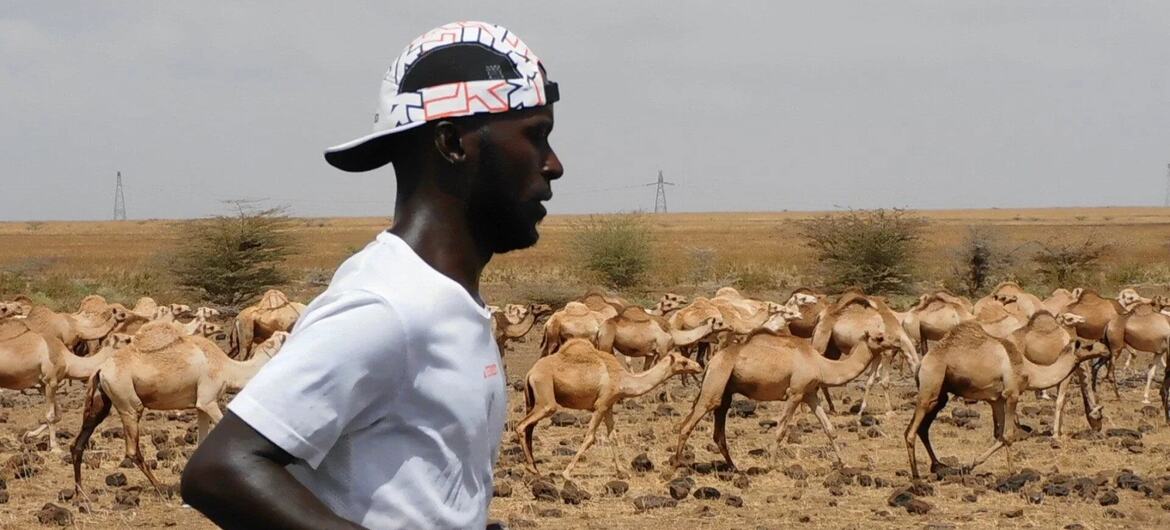
The road ahead was long and arduous. Scaling mountains, crossing deserts, and running through wildlife reserves, Deo moved through landscapes that constantly shifted around him.
"It feels incredible just to be moving. Then, suddenly, I see elephants and children start running beside me," he shared.
Barriers and restrictions
Along the way, Deo witnessed how complex and restrictive migration can be, particularly for people displaced by climate impacts, economic pressure, or conflict.
He saw how limited regular pathways and movement restrictions leave many people effectively unable to move within their own regions, trapping them in unsafe or uncertain situations and cutting off routes to safety.
"Some people end up detained simply for trying to flee conflict or because they are seen as outsiders. Even when they have the correct paperwork, they can still be held."
The further I travelled along the migration route, the more I was viewed as an irregular migrant.
Deo himself faced similar barriers. At one point, he was detained despite having the correct documents. In other areas, he was forced to reroute his journey because of conflict or restricted access.
As he travelled north towards Europe, the scrutiny intensified.
"The further I travelled along the migration route, the more I was viewed as an irregular migrant. People would call the police simply because they saw someone they thought didn't belong passing through their area," he explained.
Community support
Despite the challenges, Deo's journey was sustained by community support. Along the way, local runners, strangers, and online supporters joined him. Those moments of shared effort and solidarity kept him going.
"Without that community support, I would not have succeeded on this journey. It's what truly gave it meaning," he said.
His journey was never about endurance alone. It was about reclaiming the story of migration - a story rooted in resilience, human progress, and development.
"People move for so many reasons, and each journey tells a human story," Deo emphasised.
Looking ahead, he plans to keep using his platform as a form of activism, continuing to speak about migration, belonging, and shared humanity. As he puts it, "Don't limit yourself. Believe in your power to create change."


