
A recent WMO project mission to Djibouti highlighted tangible progress from CREWS Djibouti in advancing people-centered early warning systems and set priorities for the next phase of implementation with national partners.
Nearly two years after its launch in 2024, the US$ 3.6 million, four-year Climate Risk and Early Warning Systems (CREWS) Djibouti initiative is already delivering tangible results. Jointly implemented by the World Meteorological Organization (WMO) and the United Nations Office for Disaster Risk Reduction (UNDRR), the project is strengthening Djibouti's ability to anticipate and respond to flash floods, landslides and other hydrometeorological hazards.
By enhancing the capacity of national authorities to develop, deliver and disseminate Multi-Hazard Early Warning Systems (MHEWS), the initiative is turning climate and weather information into early action that protects lives, livelihoods and long-term resilience. Progress is already evident across all six project components, spanning institutional strengthening, technical modernization, capacity development and community preparedness.
Building stronger institutions and safer communities
At the national level, institutions have strengthened their observing and forecasting capacities, as well as their ability to communicate weather and climate information to the public, through the deployment of a new open-source, award-winning ClimWeb website established by the WMO Regional Office for Africa. In parallel, important steps have been made to improve institutional coordination, operational procedures and warning dissemination, as reflected in the forthcoming National Strategic Plan and the National Framework for Climate Services 2026-2030.
At the community level, the Djibouti Red Crescent Society (DRCS), with technical support from WMO and Conoscenza e Innovazione (K&I), has strengthened flood preparedness efforts and established Community-Based Early Warning Systems (CBEWS) in urban and rural flood-prone areas. Through participatory hazard mapping, community flood management planning, and first aid training for local authorities, emergency responders and volunteers, the initiative has enhanced local preparedness while placing a strong emphasis on the meaningful inclusion of women, persons with disabilities and other groups most at risk. The lessons learned, tools, and good practices emerging from these activities have been consolidated into the " Manuel sur la gestion à base communautaire des inondations en République de Djibouti ", a practical reference guide that brings together key principles, field experience and adaptable approaches to strengthen community-based flood risk management, preparedness, and resilience across Djibouti.
A key milestone of the WMO mission to Djibouti in early May was the community flood simulation drill in the Vietnam neighborhood of the capital. The exercise tested the entire early warning chain - from alert dissemination to evacuation and emergency response - bringing together the National Meteorological Agency (ANM), the Centre for Studies and Research of Djibouti (CERD), the Executive Secretariat for Risk and Disaster Management (SEGRC), municipal authorities, emergency services and community volunteers. The simulation demonstrated the strong trust built with the community, while also identifying practical areas for further improvement. In particular, it highlighted the importance of formalizing a national communication protocol for early warnings and further strengthening coordination and preparedness mechanisms ahead of future flood events.
Making early warnings inclusive
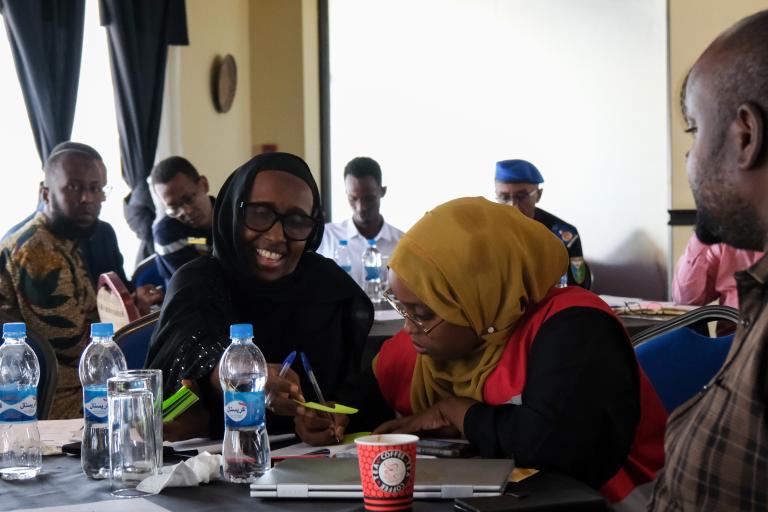
The mission also marked Djibouti's first national workshop on Inclusion for Better Alerts, which aimed to ensure that investments in early warning systems are not only technically robust but also accessible, people-centered and responsive to the specific needs of vulnerable populations. Participants from government institutions, civil society and local communities developed recommendations to better and more systematically integrate gender equality and social inclusion throughout the entire early warning chain. They also endorsed an ambitious call to action to ensure that warnings reach everyone, particularly those most exposed to climate risks.
Looking ahead
As the project reaches its midpoint, attention is now turning to long-term sustainability. Priorities for the coming years include completing upgrades to observation and forecasting systems, further strengthening the operational capacity of the relevant authorities, developing national warning communication protocols, and expanding community-based preparedness to additional vulnerable areas.
By strengthening national institutions while empowering local communities, CREWS Djibouti is helping build a more integrated and inclusive MHEWS. The recent mission confirmed that important building blocks are in place and that continued collaboration among national authorities, communities and development partners will be crucial to further strengthen resilience in a country increasingly exposed to climate-related hazards, including recurrent droughts, severe flooding and persistent heatwaves.


