
In January 2023, Judy Lines was diagnosed with neuroendocrine carcinoma, a rare and aggressive type of cancer. Understandably, she wanted to spend as much time with family as she could, including her three daughters and her grandchildren.
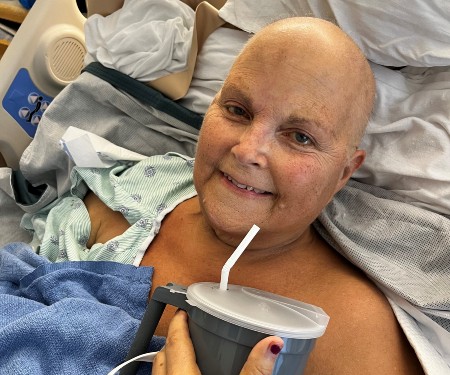
Over the Fourth of July weekend, Lines flew from her home in Southern California to Lake County in Northern California to visit her eldest daughter and her grandchildren.
The visit was going well, until Lines fell. She was taken to the local hospital.
Scans showed the cancer had progressed to her liver and bones. Lines was also experiencing compression on her spinal cord and needed specialty care, so she was airlifted to UC Davis Medical Center.
Lines' middle daughter, Christa Roberts, lives in Southern California, so UC Davis Medical Center was a long drive for the family. Despite that, Roberts said that she felt her mother was right where she belonged. That was thanks largely to the care and attention Lines received from a special program called The CARE Project.
"The long distance was difficult," Roberts acknowledged, "but because of the level of care she received, and sense of community as a result of The CARE Project, I knew my mother was in good hands at UC Davis Health."
What is The CARE Project?
The CARE Project supports patients, their families and caregivers, by providing them opportunities for self-expression, relaxation, and recreation. This includes therapeutic activities like art therapy, dog visits at the bedside, Reiki, and other recreational activities.
CARE stands for:
C – compassion and creativity
A – amenities and art
R – recreation and relaxation
E – education and exploration
"The goal is to enhance the health care environment through holistic and therapeutic interventions," explained Katie Lorain, creative arts and recreation therapy manager of The CARE Project.
In the past year, The CARE Project has provided over 1,400 sessions for patients including Reiki, touch therapy, art therapy, pet therapy, and more.
Personalizing the patient's therapeutic experience
Lines was referred to The CARE Project shortly after being admitted to the medical center.
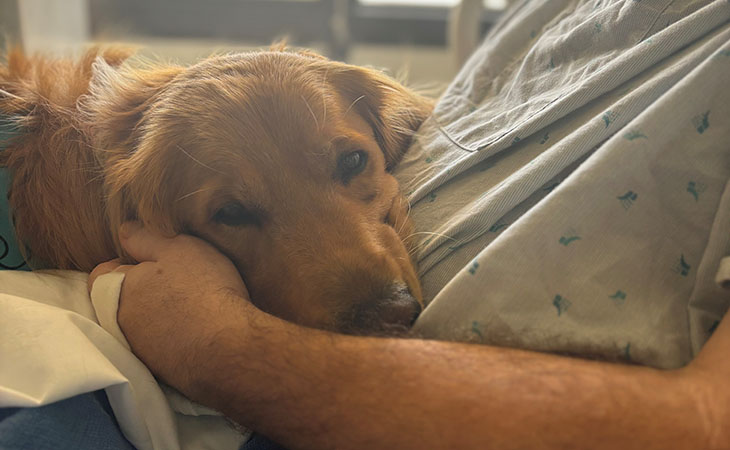
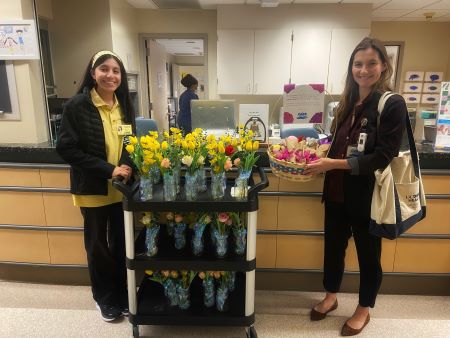
She received weekly Reiki sessions from a volunteer, doggie snuggles from the Canine CARE Program, and enjoyed a harp performance at the bedside from one of the hospital volunteers.
Roberts remembers frequent calls with her mom about how important Lorain and The CARE Project activities were to her.
"My mom would give us updates about what she had experienced that day," Roberts shared. "She often talked about this 'wonderful angel' named Katie, and the therapeutic services she received from The CARE Project's volunteers."
Making connections
Lines was known for her chatty and friendly demeanor. She made friends with everyone at the hospital, including the radiology technicians, The CARE Project volunteers, and Food and Nutrition Services staff.
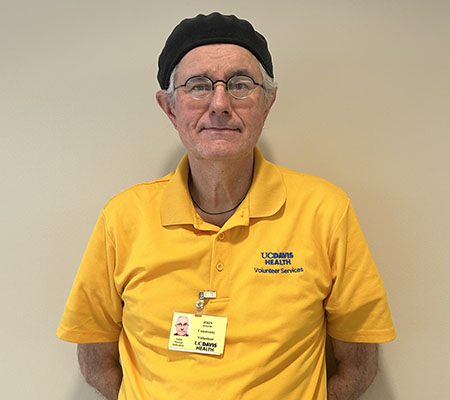
Lines also formed a strong connection with one of the volunteers, John Boone, who performed weekly Reiki sessions for her.
"We shared a love for music and dancing. We became dear friends and enjoyed conversing with one another," Boone said.
Several weeks after her admission to the hospital, Lines' health deteriorated, prompting her daughters to confront the difficult decision of arranging end-of-life care for their mother.
Katie and The CARE Project team gave to her what my mother so freely gave to others: compassion, connection and community. It was such a beautiful way for her to spend her last days receiving so much warmth and love from such kindhearted humans like Katie." -Christa Roberts, Judy Lines' daughter
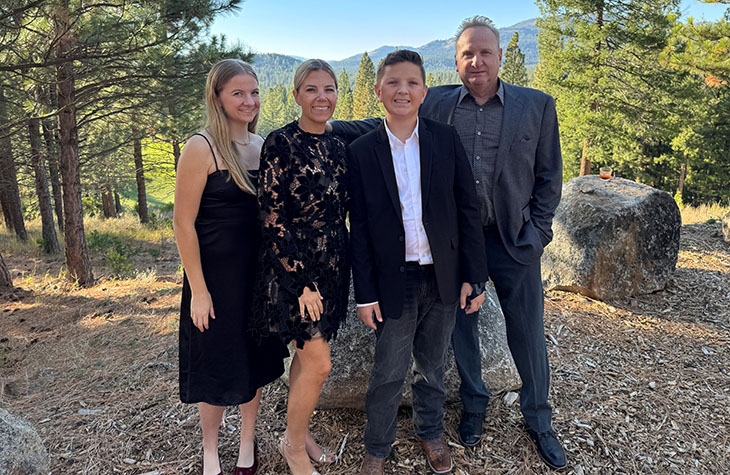
Preserving memories through art
While Roberts and her family members were focusing on decisions about hospice care, Lorain began an art project with the grandchildren during their visit to the hospital.
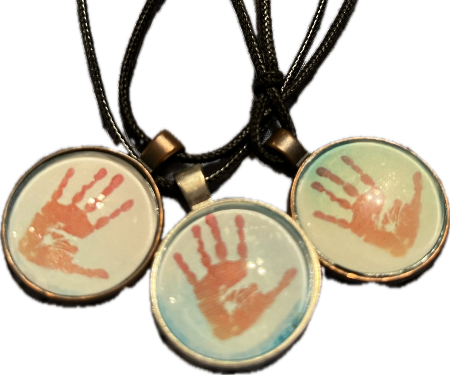
Using one of Lines' handprints, Lorain and the grandchildren decided to create a "family tree."
Lines' handprint formed the tree's trunk and branches, while each family member added their fingerprint to represent the leaves.
The handprint was then scaled down to create necklaces for each family member, so they could keep the memory of Lines close to their hearts.
"Lines' grandchildren wanted to find meaningful ways to connect with their grandmother and share joyful experiences. By making art together, they found a therapeutic way to create lasting, positive memories as a family." Lorain said.
A legacy of compassion
Lines was transported back home to Southern California to receive hospice care. Less than a week later, she passed away.
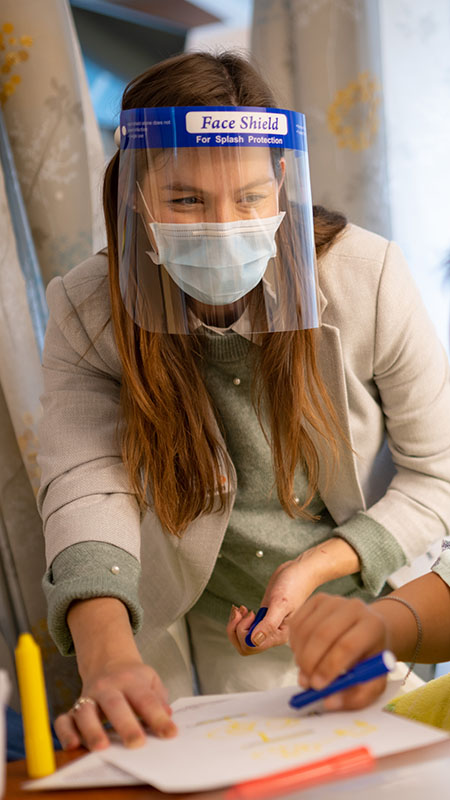
During the memorial service, one grandchild's speech included recollections of spending time with their grandmother at UC Davis Medical Center. They also talked about doing art projects with Lorain and their grandmother.
Because Lorain and The CARE Project volunteers made such a meaningful impact on the family's life, Roberts created a memorial fund for The CARE Project in honor of her mother.
"Katie and The CARE Project team gave to her what my mother so freely gave to others: compassion, connection and community," Roberts said. "It was such a beautiful way for her to spend her last days receiving so much warmth and love from such kindhearted humans like Katie."
Thanks to the generous donation from the Lines family, The CARE Project was able to train four practitioners in touch therapy, a palliative type of massage, and can now offer this to patients.
The charitable donations from community members keep The CARE Project running. To support the program, click here.


