
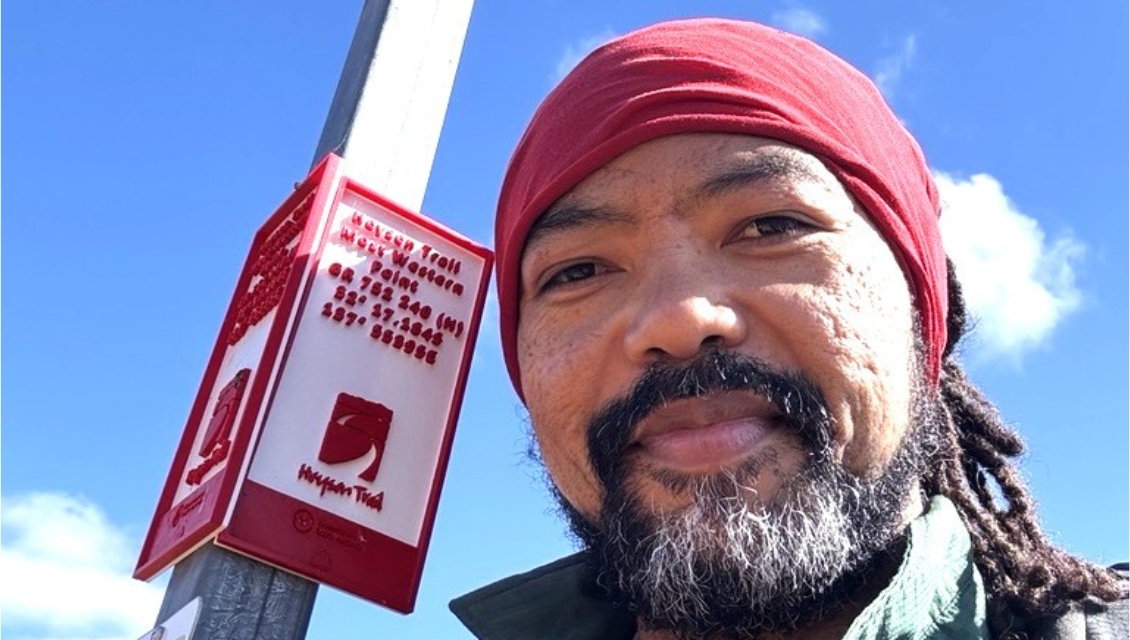
Genki Kondo remembers the day he knew he wanted to be a ranger.
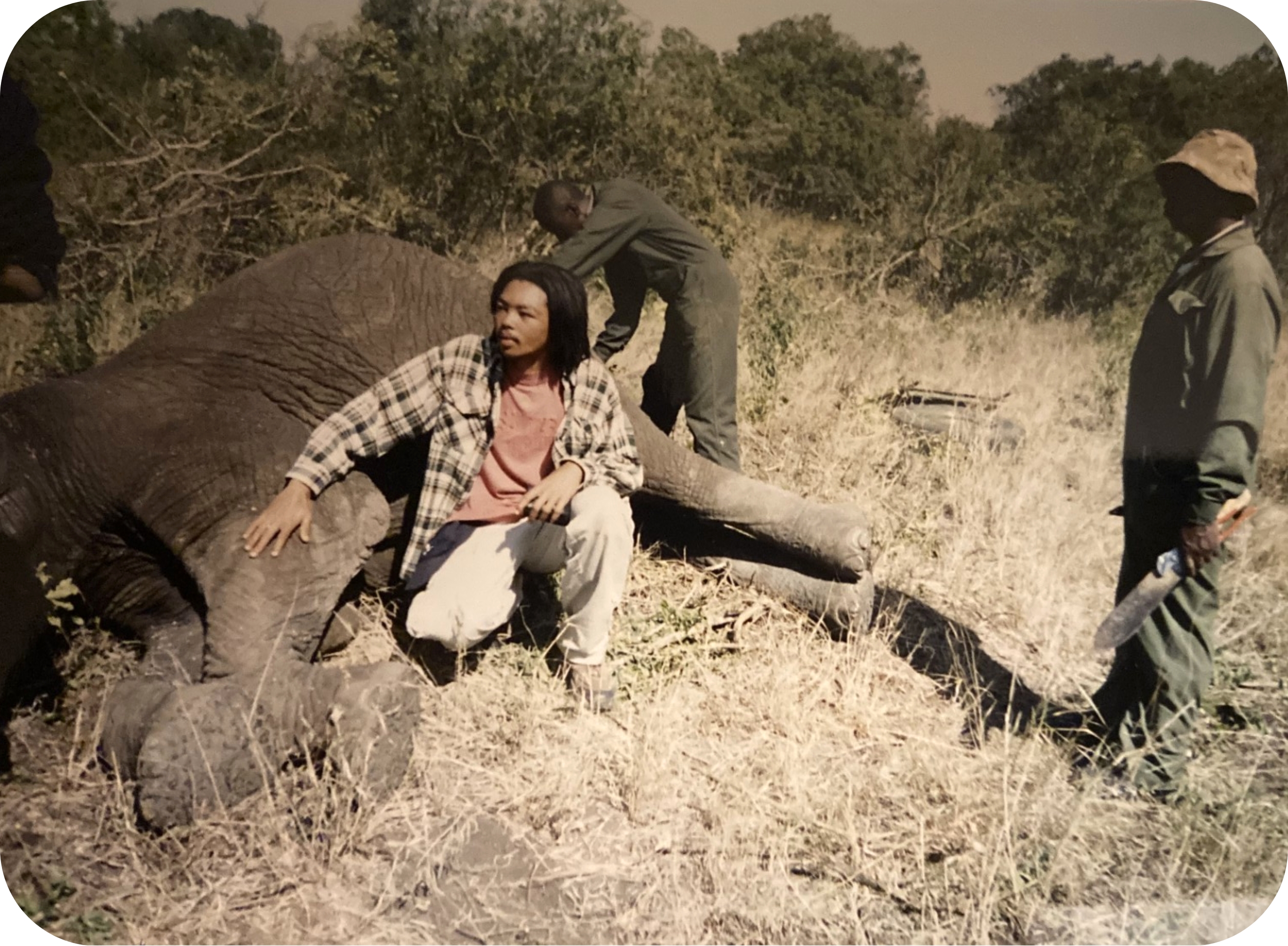
Born in Japan and raised in Kenya, the newly appointed Heysen Trail Coordinator was given the opportunity to take part in a complicated – but thrilling – elephant relocation operation.
The elephants and rhinos had been grazing the same grasslands, and it had become apparent that one species would have to move (and everyone knows how grumpy rhinos can get).
"So, the decision was made to move 56 elephants from that park to another one a little bit further down the line, and so they needed bodies on the ground," Genki, who was just 19 at the time, says.
"At that time, in 2001, it was the biggest operation of its kind, and it involved the Kenyan Wildlife Service, the Kenyan Army, and quite a lot of different conservation NGOs.
"I went to the director of the Kenyan Wildlife Service and said, 'I want to go'. And he showed me a map and said
 , "if you can get to this point, then the elephant camp is there and you can join."
So armed with little more than a deep enthusiasm to be involved, Genki hitchhiked and used whatever public transport he could find until he came to … the wrong side of Mount Kenya.
"This is the second-highest mountain in Africa – 5200m – so it was a bit of a problem," he laughs.
He eventually, with the help of local rangers, found his way to the camp and to an experience that would shape the course of the rest of his life.
"I was basically a wrangler amongst many people, doing whatever I was told to do," Genki recalls.
"This included securing elephants that had been sedated by helicopter – finding the downed elephants and tying them up until the vet came.
"Then we would physically drag a downed elephant on a massive canvas mat onto a trailer with a team of people and then, from there, move the elephant to another park.
"At the end of that I remember thinking, 'OK, now I know – I want to be a ranger'."
The next stop on Genki's path was Canada, where he managed to study wildlife biology at university and survive a couple of close calls with bears, before spending time in the incredible natural diversity of Costa Rica.
But, he says, Australia always called.
"I mean what other country is a continent in its own right?" Genki asks.
"Here we have everything from cold temperate and almost sub-antarctic regions, to fully tropical areas, to complete deserts and rocky outscapes that at the moment are verdant as any old moldy bathtub.
"That's exciting for somebody like me. That's my bread and butter.
"But long before I was paid to do what I do I would, at every border crossing I put down that my profession was naturalist.
"It answered that question of 'why on earth are you here?'. I would just say, 'I'm a naturalist'.
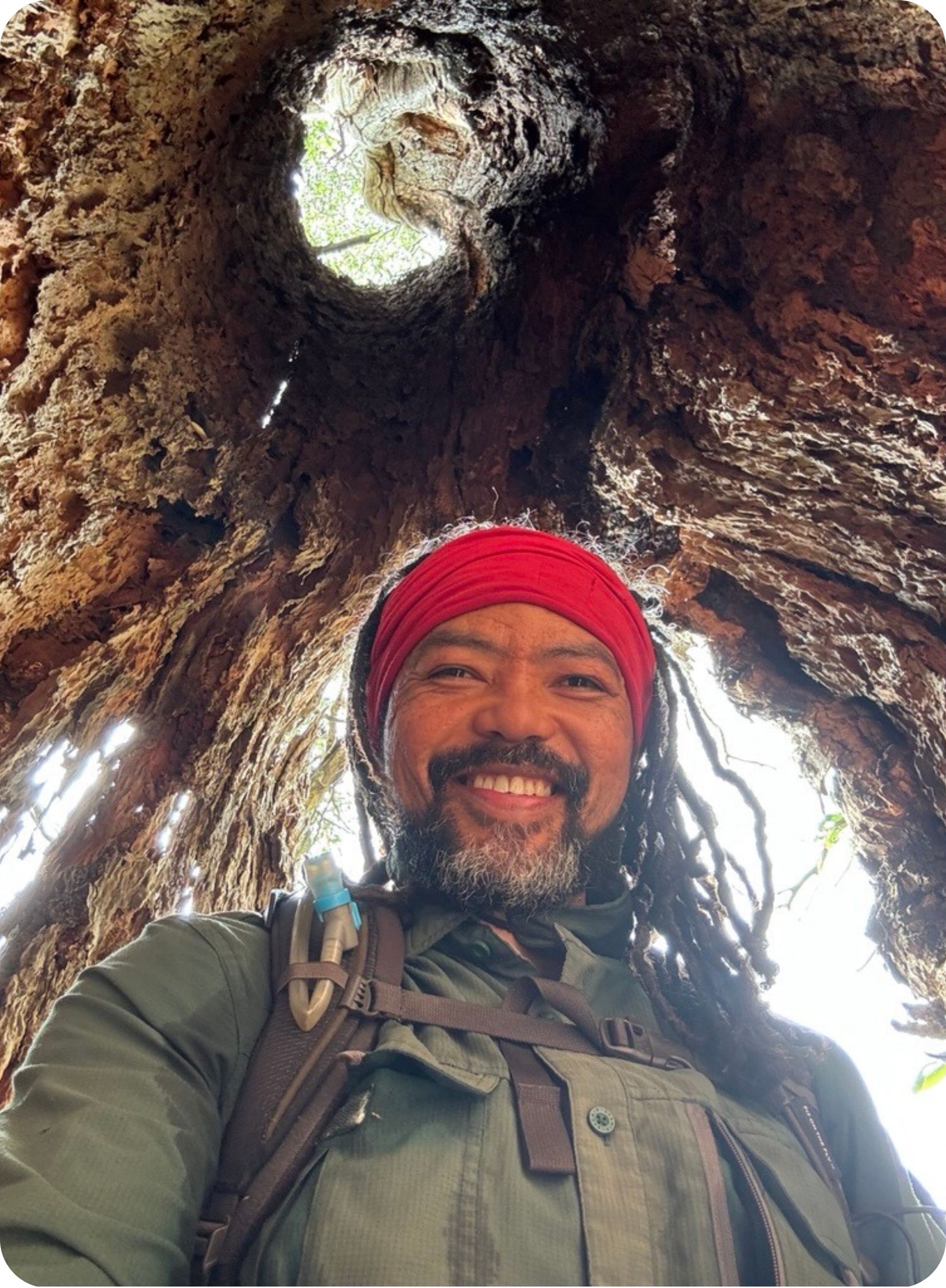
"And I think that what I'm doing now is a demonstration of the power of intention.
"You seek to identify, to find identity with, something that's deeper within you and I think this is a moment of validation where that intention is being actualised into a reality."
That reality took some hard work though, and Genki said it took three attempts before he became a park ranger.
"It was actually seven years ago – to the day – that I put on a ranger's uniform for the first time," he says.
"This was the first time that, you know, I was on the books, so to speak, in a way that the modern world understands it.
"But my earliest experiences, including the first time I met Jane Goodall in Kenya, were as valuable professional development experiences as any other, even if they didn't involve a pay cheque.
"I mean, what's a pay cheque beyond a means of paying the bus fare and the bills so that you can keep showing up?"
Genki says he sees a big part of his new role as Heysen Trail Coordinator as recognising, respecting and honouring the legacy of the 1200km walking track, the first sections of which opened in the late 1970s.
"The people who first envisioned the trail did all the work," he says.
"They were the ones who sat down with all the different partners – from the traditional owners to private landholders, government, councils, and groups like SA Water and ForestrySA.
"And then of course there is the Friends of Heysen Trail, who have consistently been there. They have a clear direction of what needs to be built upon, what may be lacking, what needs a little bit more focus, and there is a strategic management plan that was developed for the past five years that states a lot of those directions.
"So my role will be more on the coordination and execution of all these bits, and in and amongst that, along the span of my tenure, there'll be, I'm sure, the ability for me to introduce a little bit of creativity and a few new ideas.
 "This is a living piece of work, and I use that word deliberately because it has to live on beyond my tenure, beyond everybody around here's lifetime. It is a legacy piece."
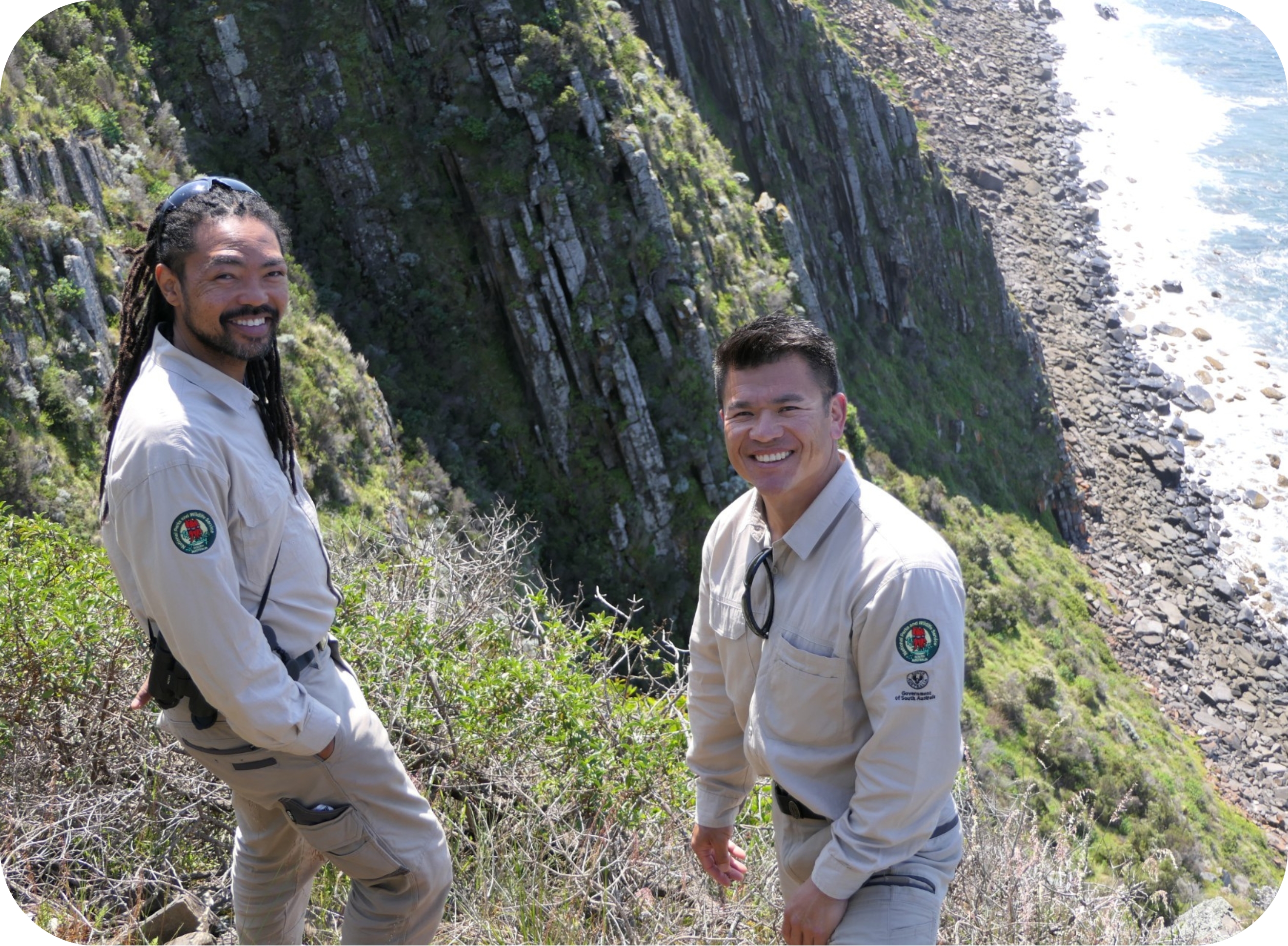
Genki, pictured left with District Ranger Seiji Iwao, says he hasn't yet walked the entire trail, which generally takes a fit hiker around 60 days to complete, and he's reluctant to choose a favourite part.
But he says he would encourage South Australians to get out and explore the track – which runs from the northern Flinders Ranges to the southern Fleurieu Peninsula – whether that be for a multi-day hike or a couple of hours strolling.
"Being in nature is a gift," Genki says.
"And experiencing this is really important. The Heysen Trail, because it's such a continuous network from north to south – or south to north, whichever way you look at it – it covers this incredible breadth of South Australia, and it's part of our backyard.
"And being in nature, taking the time to slow down, gives us the chance to understand the impact we have on this planet and how we can just keep contributing to slightly better place each time."
TRACK FACTS
- At 1200km, the Heysen Trail is one of Australia's longest and most spectacular hiking trails, extending from Cape Jervis on South Australia's Fleurieu Peninsula to Parachilna Gorge in the Flinders Ranges, traversing coastal areas, native bushland, rugged gorges, pine forests, vineyards, rich farmland and historic towns.
- The trail attracts tens of thousands of visitors each year and passes through 23 national and conservation parks, including Ikara–Flinders Ranges and Mount Remarkable.
- To cover the entire trail in one trip you'll need to be an experienced hiker as it takes 50 to 60 walking days and parts of the trail are very remote, with little or no phone signal.
- Most people choose to walk the trail in sections, and there are many options for day, weekend or week-long walks.
- A swag of resources, including maps, trail reports, accommodation and transport options, hiking tips and more can be found at the Friends of the Heysen Trail website


