
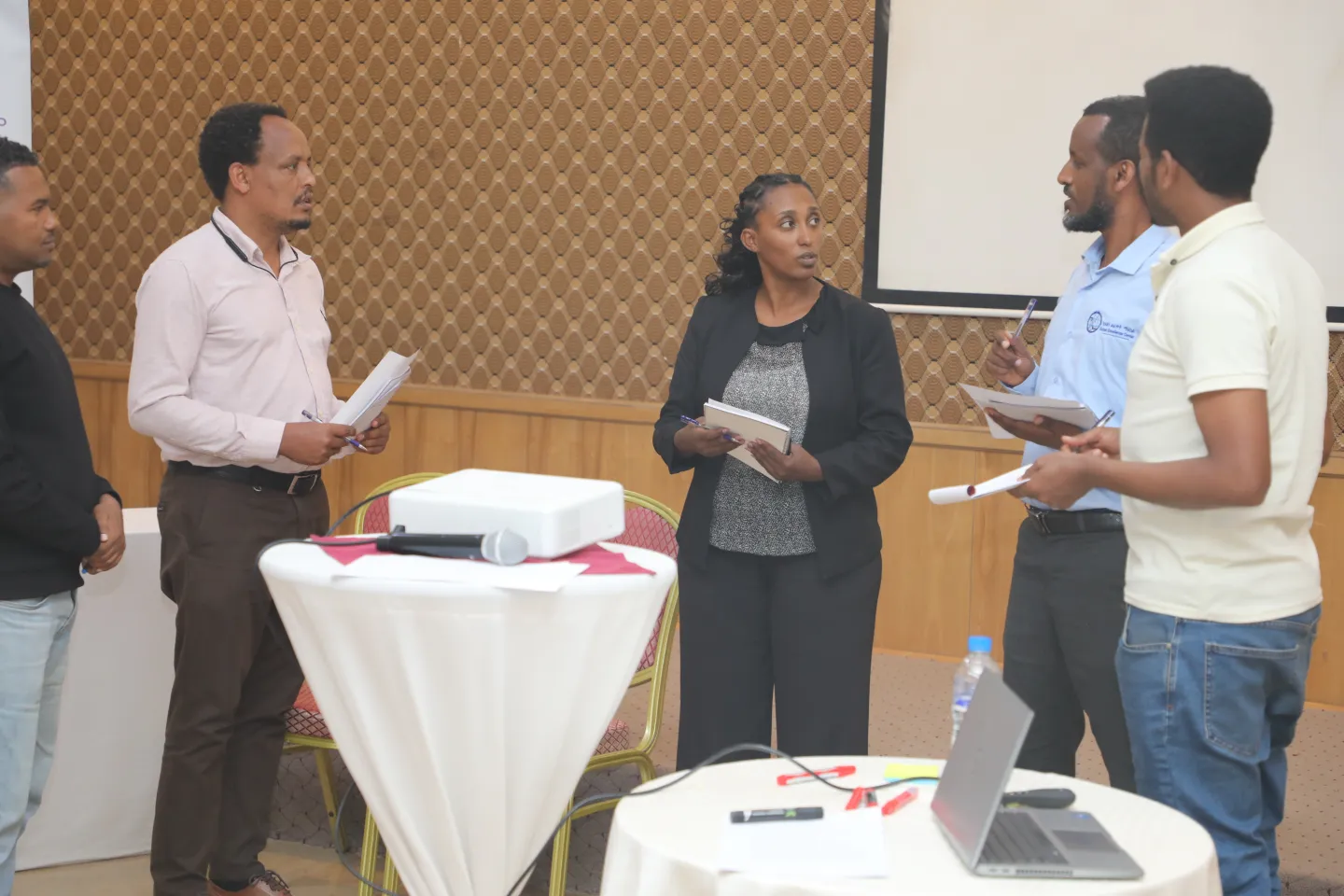
More than 650 managers and supervisors, alongside workers including workers with disabilities, across Ethiopia's leather, textile and garment enterprises are set to strengthen their leadership skills and awareness following the completion of a three-day Training of Trainers for 23 SCORE trainers in Adama.
Held from 7 to 9 September 2026, the training equipped SCORE trainers with practical tools and facilitation approaches to support managers, supervisors and workers at enterprise level. The rollout will strengthen managers' and supervisors' capacity to lead teams and address workplace challenges, while enabling workers to build awareness of key leadership skills and practical approaches to addressing challenges in their workplaces.
© ILO/Homa M. Ejeta
Workers with disabilities will be intentionally included in the enterprise-level capacity building, reinforcing the programme's commitment to more inclusive and disability responsive workplaces. This reflects the broader project objective of strengthening leadership skills among managers, supervisors and workers, including workers with disabilities.
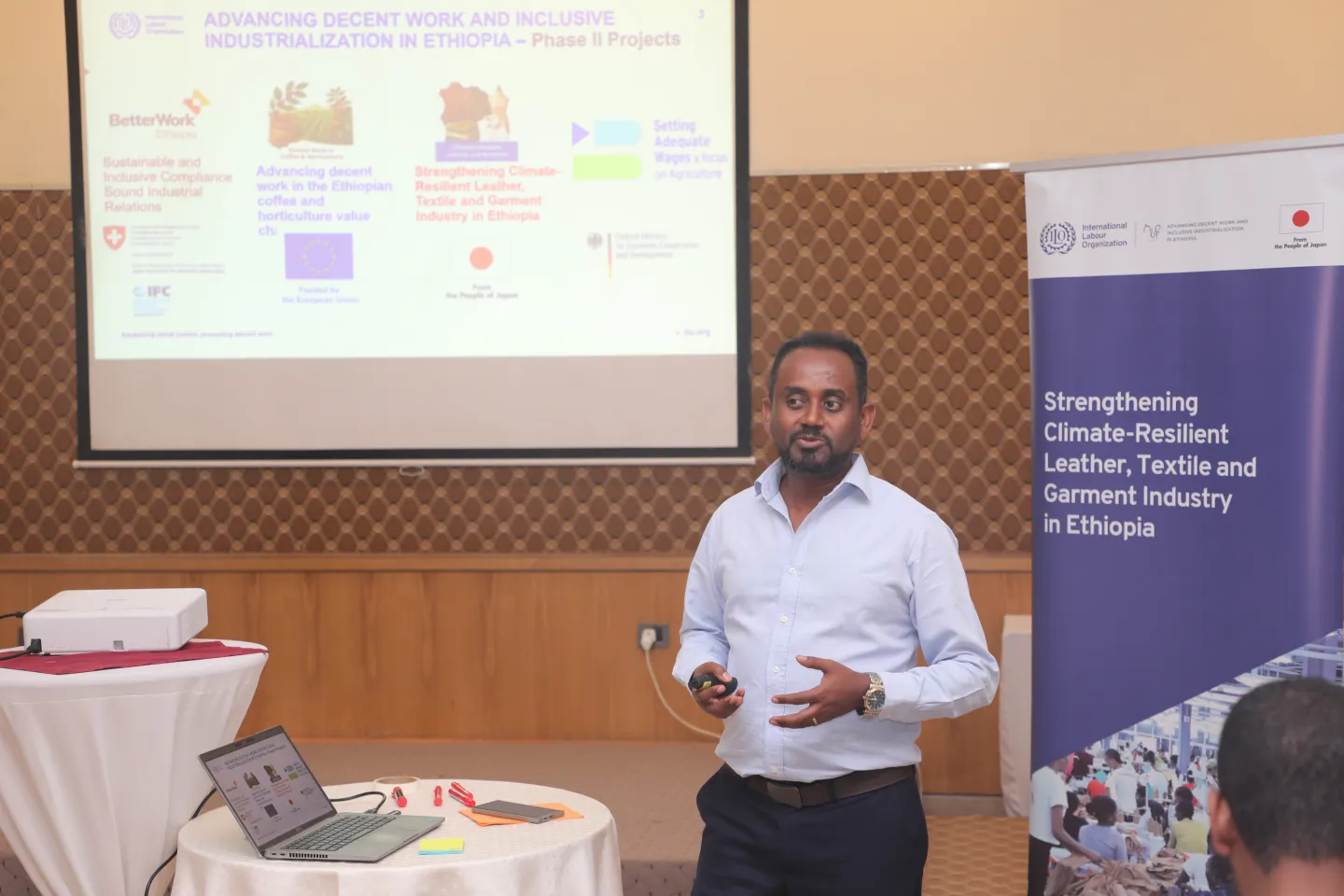
The training was organized under the One ILO programme "Strengthening Climate Resilient Leather, Textile and Garment Industry in Ethiopia", funded by the Government of Japan. The programme supports enterprises to strengthen climate resilience, occupational safety and health, workplace practices and productivity.
Tackling leadership bottlenecks with practical solutions
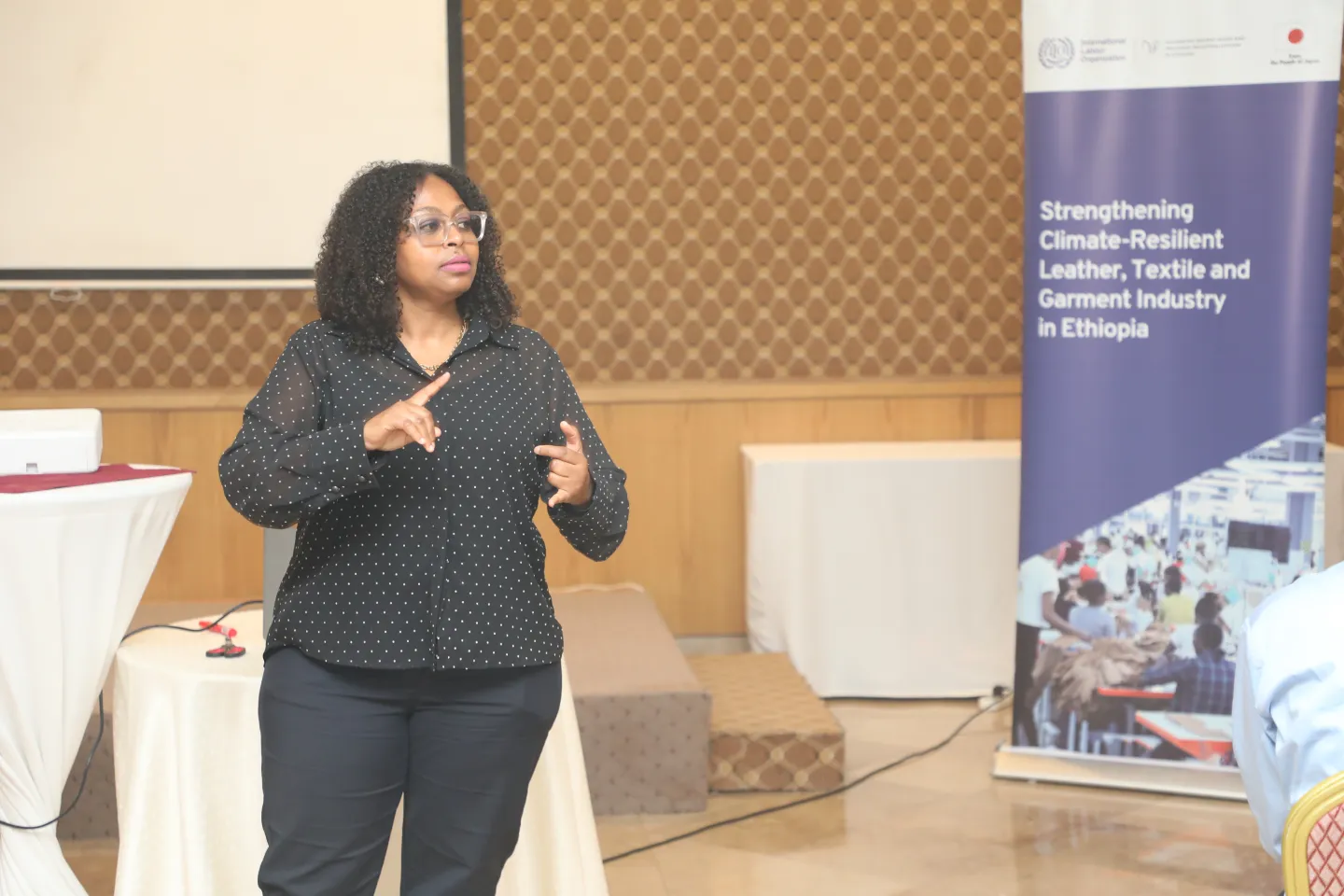
Rather than focusing only on leadership theory, the training challenged participants to examine the realities facing managers, supervisors and workers on factory floors and develop practical responses.
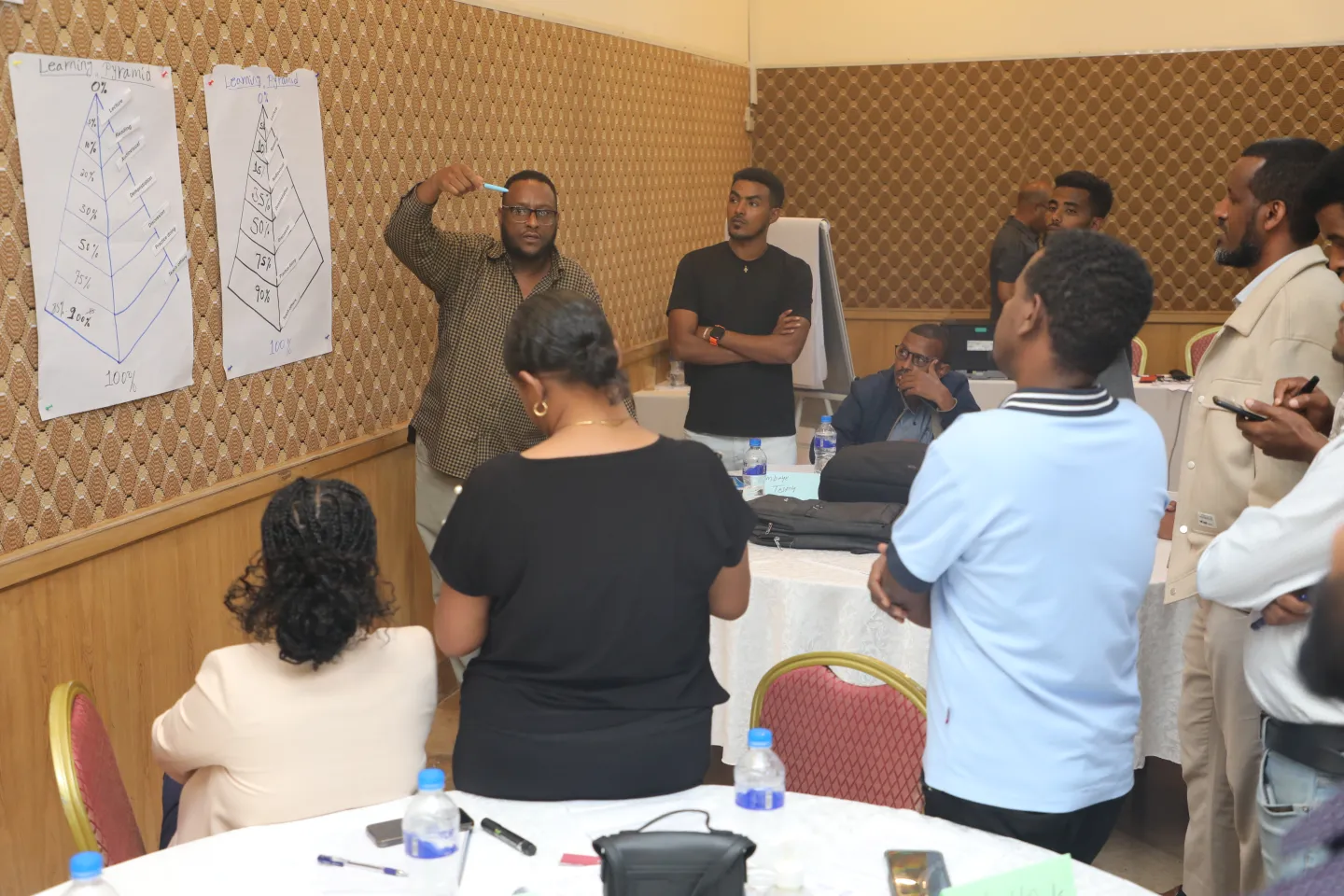
Through interactive exercises, role plays, group discussions and case studies, trainers identified leadership bottlenecks and worked together to devise strategies to address them. The training drew on Better Work leadership skills training modules and tools.
© ILO/Homa M. Ejeta
Participants identified poor communication, conflict between workers and managers, weak delegation, pressure to meet production targets and difficulties managing diverse teams among the leadership challenges facing enterprises.
They also highlighted high staff turnover, skills gaps, resource shortages and weak conflict management as issues that can affect workplace performance.
A central theme was situational leadership, encouraging managers and supervisors to adapt how they lead according to the needs, capabilities and circumstances of their teams.
The focus on managers and supervisors is strategic. Middle managers in particular serve as a critical link between senior management and workers, placing them at the centre of workplace communication, worker engagement and day-to-day performance. At the same time, building workers' awareness of leadership principles can strengthen communication, participation and their ability to contribute to addressing workplace challenges.
© ILO/Homa M. Ejeta
Turning learning into workplace action
For participants, completing the training is only the first step. They are now preparing to apply and replicate the approaches in the enterprises they support.
For Helen Gebremariam of the Kaizen Excellence Center, this means taking the training's interactive methodology into factories and using real workplace situations to help strengthen leadership practices.
"We are planning to replicate the same interactive, scenario-based approach when rolling this out to factory managers and leaders, so the lessons are practical, retained and directly used to solve real situations," she said.
Helen said the approach will help address workplace challenges through stronger communication, active listening, professional feedback and collaborative conflict management. She also committed to integrating disability inclusion into future interventions, including addressing language and attitudes that can reinforce barriers for persons with disabilities.
For Nabon Elias of SCORE PLC, applying the training means helping managers and supervisors recognize the capabilities of every member of their workforce.
"I will encourage leaders to identify and recognize the abilities and potential of persons with disabilities rather than focusing on their limitations," she said. "I will support them to use inclusive communication, reasonable accommodation, non-discrimination, accessible work practices and fair delegation of responsibilities."
Nabon said these approaches can help enterprises respond to challenges identified during the training, including poor communication, worker-management conflict, weak delegation, production pressures and managing diverse teams.
For Awel Kassaw, the training has translated into concrete actions he intends to take with supervisors and enterprises.
"I will train supervisors to apply the Kaizen principle of 'jidoka', automation with a human touch, for inclusivity. I will also conduct psychological safety audits related to persons with disabilities," he said.
Awel also plans to use role plays and practical workplace scenarios to strengthen conflict management and create opportunities for constructive dialogue between employees and management.
These commitments reflect one of the training's core objectives: equipping SCORE trainers with the knowledge and approaches needed to strengthen effective leadership while ensuring workers, including workers with disabilities, are better supported and able to participate in workplace improvement.
© ILO/Homa M. Ejeta
Taking leadership skills across enterprises
With the Training of Trainers completed, the focus now shifts to enterprise-level implementation.
The 23 SCORE trainers will take the approaches, tools and lessons developed in Adama into leather, textile and garment enterprises. More than 650 managers and supervisors are expected to be reached, alongside workers, including workers with disabilities.
While managers and supervisors will be equipped to strengthen how they lead teams, communicate, delegate responsibilities, manage conflict and respond to workplace challenges, workers will also have opportunities to build their awareness of key leadership skills and practical ways of contributing to solutions in their workplaces.
The participation of workers with disabilities will be an integral part of this capacity building, helping ensure that enterprise-level leadership development reflects different workplace experiences, removes barriers to participation and contributes to more inclusive workplaces.
The leadership training forms part of a broader effort to strengthen the resilience of Ethiopia's leather, textile and garment industry.
The programme supports enterprises to adopt practical climate-responsive improvements, including energy-efficient production, climate risk management, stronger occupational safety and health systems, measures to prevent heat stress and improved working conditions.
As the 23 SCORE trainers begin taking the programme into enterprises, the focus moves from building trainers' capacity to achieving change in the workplace: stronger managers and supervisors, more informed and engaged workers, greater disability inclusion and enterprises better equipped to improve productivity and resilience.
About the Project
Implemented under the ONEILO Siraye Programme with support from the Government of Japan, the Strengthening Climate-Resilient Leather, Textile and Garment Industry in Ethiopia Project helps factories become safer, greener, more productive and more inclusive.
Through SCORE Training, Kaizen practices, climate responsive OSH systems and the Women's Leadership Development Programme, enterprises improve efficiency, reduce waste and energy use, strengthen workplace safety, and equip women and workers with disabilities with supervisory and leadership skills.
At the national level, social dialogue, policy assessments and technical support help align labour governance and industrial policy with Ethiopia's climate commitments. Together, these actions strengthen enterprise competitiveness, support better-quality jobs and advance a just transition to a low-carbon economy.


