
From 1 to 3 December 2025, a three-day Training of Trainers (ToT) programme was held in Jizzakh city, bringing together representatives of the Government, employers' and workers' organizations, as well as farmers and agricultural workers engaged in cotton cultivation. The combined ToT focused on two key and complementary areas: the promotion of fundamental principles and rights at work (FPRW) and appropriate behaviour in the workplace, including the prevention of violence and harassment. The programme aimed to equip participants with the knowledge and practical tools needed to strengthen decent work practices and build safe, respectful, and inclusive working environments in rural communities.

© ILO
A total of 50 participants attended the training, including 10 representatives from the Ministry of Employment and Poverty Reduction, 10 from the Federation of Trade Unions of Uzbekistan, 10 from the Confederation of Employers, and 20 farmers from Dustlik district of Jizzakh region and Syrdarya district of Syrdarya region. The diverse composition ensured a genuinely tripartite format while facilitating direct engagement with grassroots actors involved in cotton cultivation.
Throughout the three days, participants enhanced their understanding of FPRW, including the elimination of child labour and forced labour, the advancement of non-discrimination, and the promotion of safe and healthy working conditions. Sessions also focused on strengthening collective bargaining, social dialogue, and local grievance mechanisms - key elements for fostering sustainable labour practices in the cotton sector.
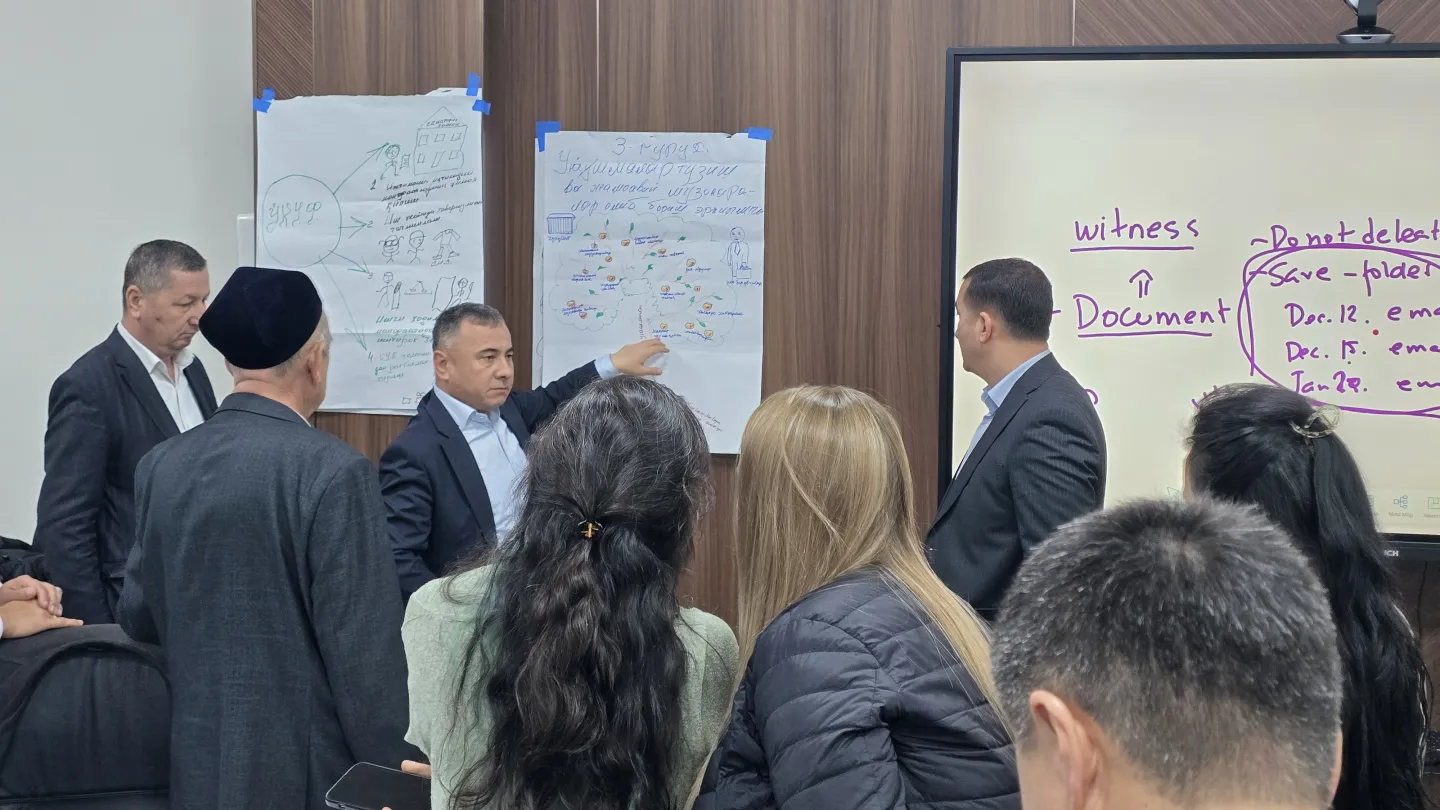
A dedicated module was delivered on appropriate workplace behaviour and the prevention of violence and harassment, in line with ILO standards. Participants examined the concepts, forms, and root causes of violence and harassment that may arise in agricultural settings, including gender-based harassment, bullying, and other abusive behaviours. The training introduced practical approaches for early detection, prevention, and response, while highlighting the need for respectful communication and leadership within communities and institutions.
© ILO
Because the programme was designed as a ToT, participants also developed their facilitation skills to ensure effective knowledge transfer within their own organizations, districts, and farming communities. Group exercises, case studies from the regions, role-plays, and the preparation of short training plans helped participants practise delivering sessions, guiding discussions, and addressing sensitive topics constructively.
This training was delivered under the International Labour Organization (ILO) RISE for Impact project, which remains committed to supporting cotton-growing communities in Uzbekistan by advancing core labour standards, building local knowledge, and creating a fairer, more sustainable agricultural economy rooted in respect for rights, transparency, and opportunity.
By the conclusion of the event, participants had strengthened their technical knowledge of labour rights and acceptable workplace conduct, improved coordination across institutions, and gained practical tools for replication at the local level. The ToT is expected to contribute to building a work culture in the cotton sector where violence and harassment are not tolerated, and where FPRW serve as the foundation for fair, responsible, and decent working conditions.


