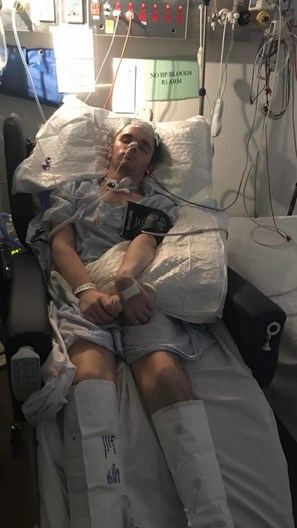
James Kirkwood was a fit and healthy 20-year-old when stroke changed his life.
The Eden Park man was undergoing surgery for an arteriovenous malformation (AVM), often described as tangled blood vessels in the brain, when his stroke happened.
"We had tried a few different treatments, including radiotherapy, but they weren't effective and I just wanted to get this ticking time bomb out of my brain," James said.
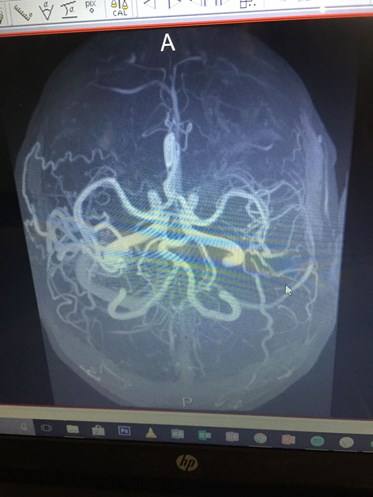
"I lost a lot of blood and ended up living in hospital for a year, and I don't remember most of that. I had my 21st birthday in hospital, but because of COVID-19, I couldn't have visitors."
Despite needing 20 litres of blood, and spending five months in a vegetative state, James was released from hospital 12 months later. His next challenges involved learning how to talk, and how to use a wheelchair.
Now 26, James says the experience has made him a better person, and an advocate for people living with a disability.
"I was screened for post-traumatic stress disorder, but I feel like I have post-traumatic growth instead. I'm more grounded, more focused and probably a better man than I was before my stroke," he said.
"If I'm ever feeling frustrated, I remind myself that I'm still alive. The surgery could have gone a lot worse. I've got a long life ahead, and I want to enjoy it."
Data shows around 30 Australians of working age experience a stroke each day.
Stroke Foundation Chief Executive Officer Dr Lisa Murphy said there are more than 440,000 Australians living with the effects of stroke.
"Stroke does not discriminate, and James' story is evidence of that. Stroke can happen to anyone, at any time or stage of life. In fact, one in four strokes are experienced by young people, like James," Dr Murphy said.
"Stroke touches too many Australian families. We know a stroke occurs every 11 minutes in Australia. James' story highlights how happy and fulfilling life can be after stroke."
James is now working towards becoming an advocate and hopes to create positive change for others living with a disability.
"If I have any advice, it's this: be patient. With yourself, or with the person you love. We might move a bit slower - but we're just trying to live our lives," he said.