
Two years after announcing an unlikely collaboration between Formula 1 engineers and marine scientists, McLaren Racing and Great Barrier Reef Foundation have reached a major milestone in their mission to accelerate coral reef recovery: the first public reveal of Machine One, a breakthrough semi-automated coral-seeding system, designed to solve one of reef restoration's most persistent constraints - speed.
Speaking trackside at the FORMULA 1 QATAR AIRWAYS AUSTRALIAN GRAND PRIX, leaders from McLaren Racing and the Great Barrier Reef Foundation explained how Machine One (affectionately named as OSCAR - Operational System for Coral Assembly and Restoration) is moving from prototype development, into real world field testing ahead of this year's coral spawning season and set to increase speed of output by up to 800%.
Like Formula 1, coral spawning unfolds within an extremely tight performance window. That shared time pressure is what connects the track to the reef, and in both arenas, preparation determines outcomes. By analysing the problem, finding efficiencies, and treating restoration as both a systems challenge and engineering challenge, the partnership is already developing methods that are faster, smarter and more cost effective.
"In racing, marginal gains add up and drive high performance, and we're applying that same philosophy to reef restoration," says Kim Wilson, Sustainability Director at McLaren Racing.
"Here, every second saved doesn't just increase performance, but accelerates the scale, delivery and capacity for innovative engineering solutions and problem solving to help us protect and restore this vital ecosystem."
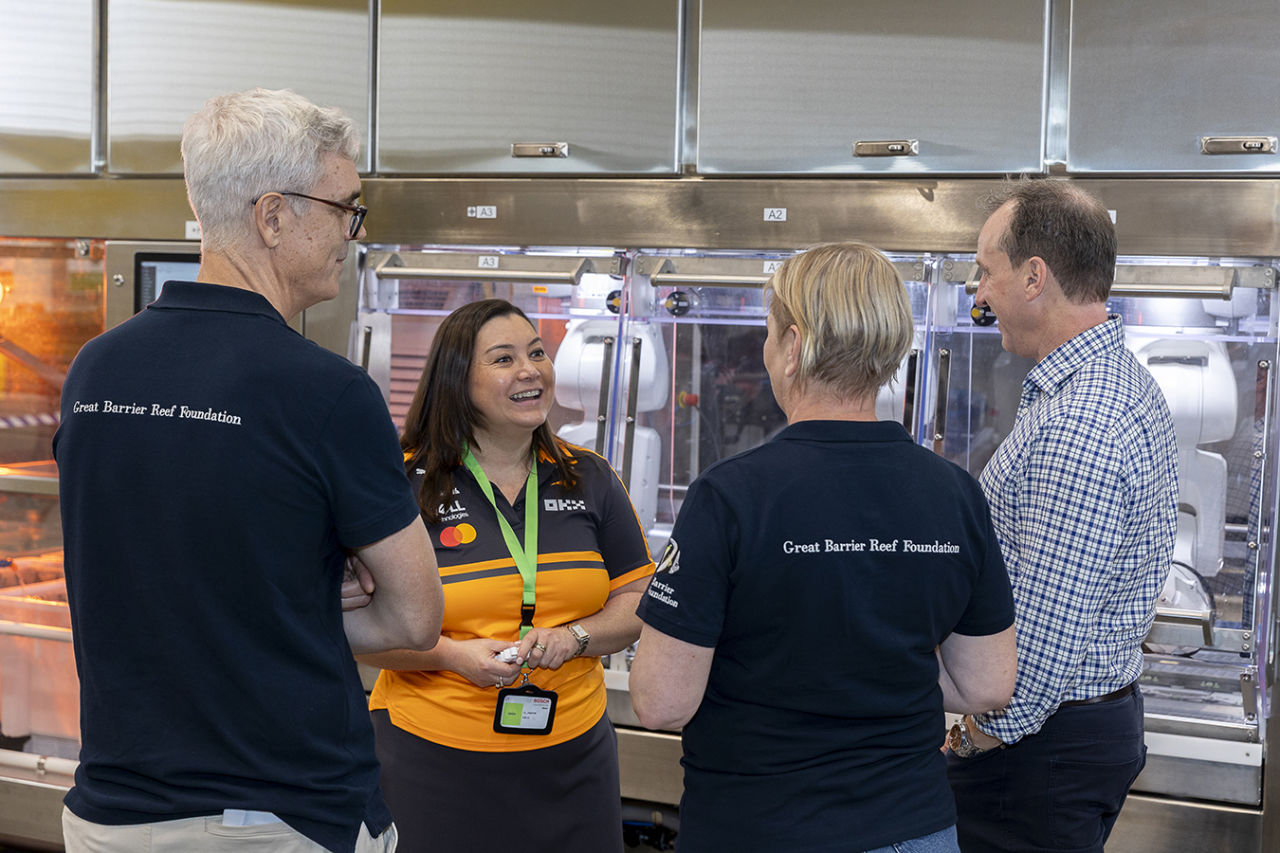
Machine One is a major milestone for McLaren Racing and Great Barrier Reef Foundation. Credit: Great Barrier Reef Foundation.
#The Challenge: Performance Engineering for the Planet
Every year, over just a few nights in spring, the Reef comes alive as corals release millions of tiny reproductive bundles into the ocean in a natural event known as spawning. Scientists collect and grow hundreds of thousands of these bundles in controlled conditions, before settling baby corals onto cradles and returning them to damaged parts of the reef to accelerate recovery.
The process has shown promising results, particularly when using corals with a higher tolerance to warming ocean temperatures, to help build the Reef's resilience to long term climate change.
But the real challenge has always been delivering this potential at the speed and scale required to meet growing urgency, as the Reef faces repeated mass bleaching events. A highly manual and labour-intensive process, assembling each specially-designed coral cradle by hand, can take up to 90 seconds. When the narrow spawning window closes, so does the opportunity to deploy the baby corals at scale - until now.
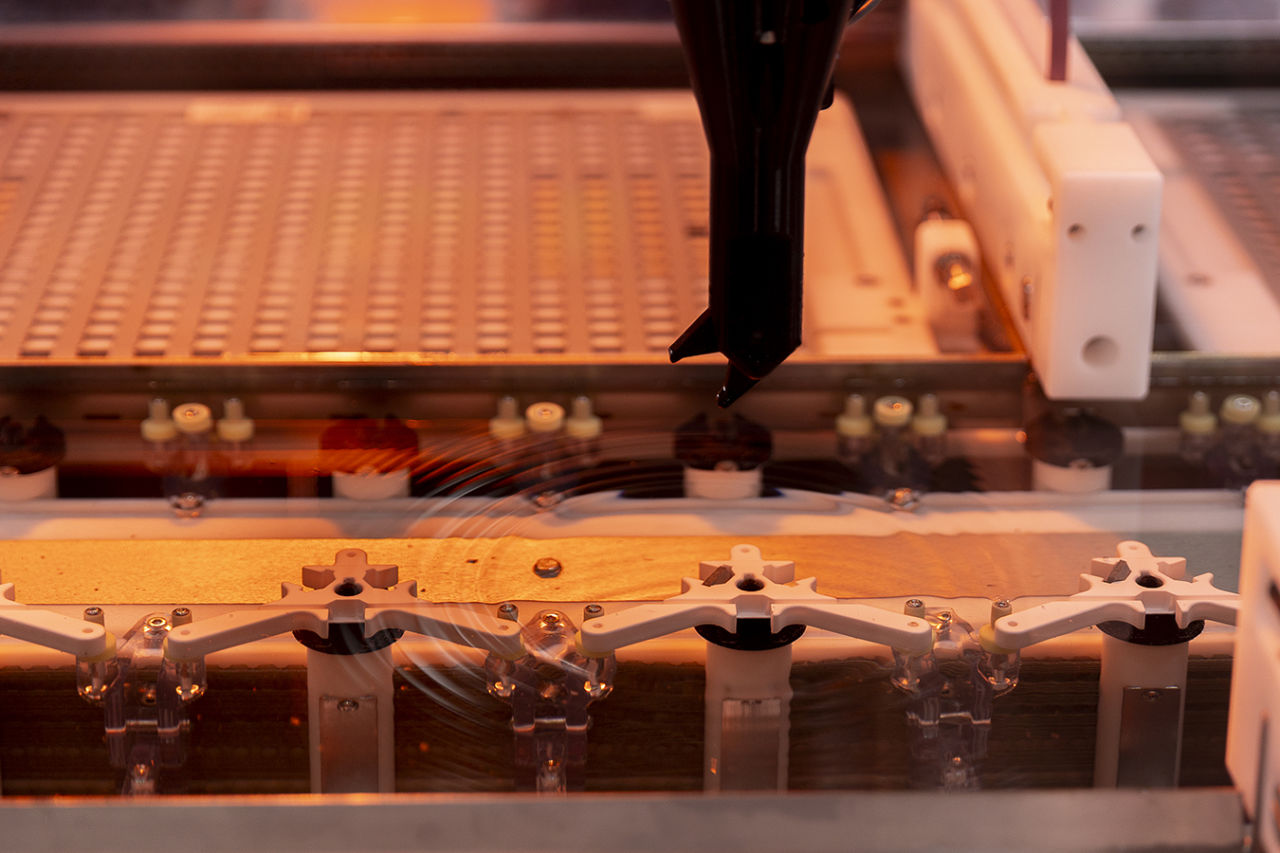
Machine One completes a process that currently takes up to 90 seconds per cradle in as little as ten seconds. Credit: Great Barrier Reef Foundation.
#A New Era of Reef Recovery Begins: Machine One
"Machine One" has been engineered in partnership with McLaren's Racing's Accelerator Programme and is set to revolutionise this process for the Great Barrier Reef and beyond. Inspired by elite motorsport engineering, and drawing on McLaren Racing's high performance engineering mindset, Machine One completes a process that currently takes up to 90 seconds per cradle in as little as ten seconds.
Early modelling suggests Machine One has the potential to assemble up to 100,000 coral seeding devices per week - meaning coral planting can go from currently 100,000 a year to 1,000,000 - and at a major cost reduction.
Anna Marsden, Managing Director of the Great Barrier Reef Foundation, says the challenge facing restoration efforts is one of urgency and scale: "We are in a race against time, working at a scale that can feel impossible. But this partnership is proving world class engineering can help close that gap, and that delivering restoration at the speed and scale the reef demands is still possible."
#Test Practice in Townsville: Deploying Machine One
Following in-factory testing, Machine One will be imminently shipped to the National Sea Simulator in Townsville for field trials, to test the system under reef conditions, ahead of this year's spawning season. McLaren Racing's engineers within the Accelerator Programme, will be working with marine scientists on the ground, to assess, refine and optimise the system through each stage of performance testing, just as the team does with everything they do at track.
Coral reefs support a quarter of all marine life and underpin the livelihoods of close to one billion people globally. If successful, there is potential for Machine One to be deployed across reefs worldwide, shifting coral restoration from small-scale pilot efforts to a globally deployable solution capable of operating at pace. While restoration alone cannot offset the impact of climate change, improving efficiency and scale may strengthen reef resilience during what scientists describe as critical decades.
Dr Cedric Robillot, Executive Director of the Reef Restoration and Adaptation Program, says the forthcoming trials, will be imperative to understanding the system's potential impact:"Innovation alone is not enough, Machine One must stand up to real-world testing," he says. "These field trials will allow us to assess performance, understand limitations and refine the system before broader application. If the data supports it, this approach will represent a major step forward in how we deliver restoration globally and at scale."
The project forms part of McLaren Racing's broader sustainability ambition: to leverage worldclass engineering and global partnerships to accelerate solutions beyond motorsport. If validated, restoration scale could, for the first time, demonstrate how applying performance thinking from elite motorsport can be successfully applied to the planet's most urgent and complex environmental challenges, setting a benchmark for others in the industry.


