
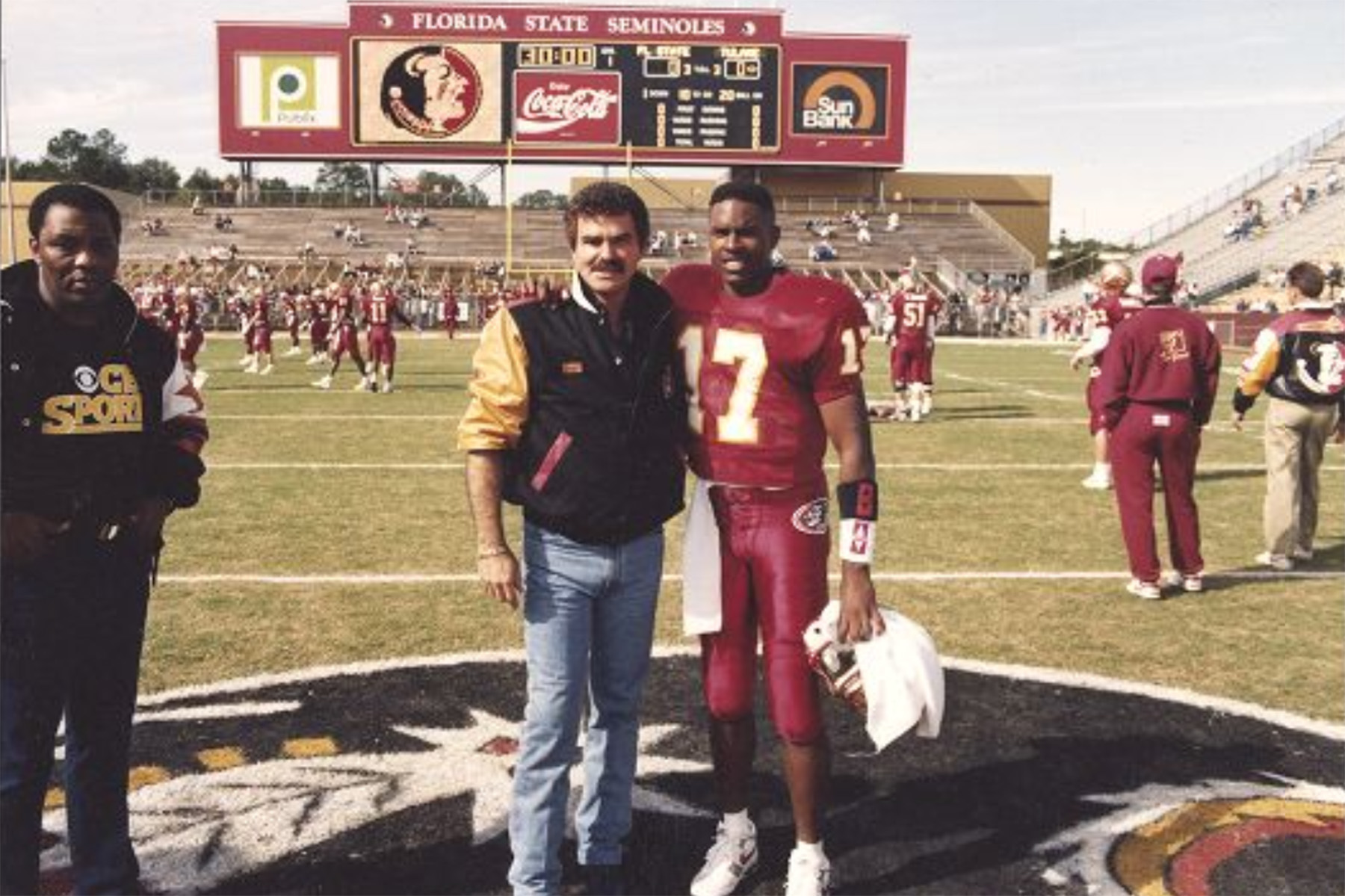
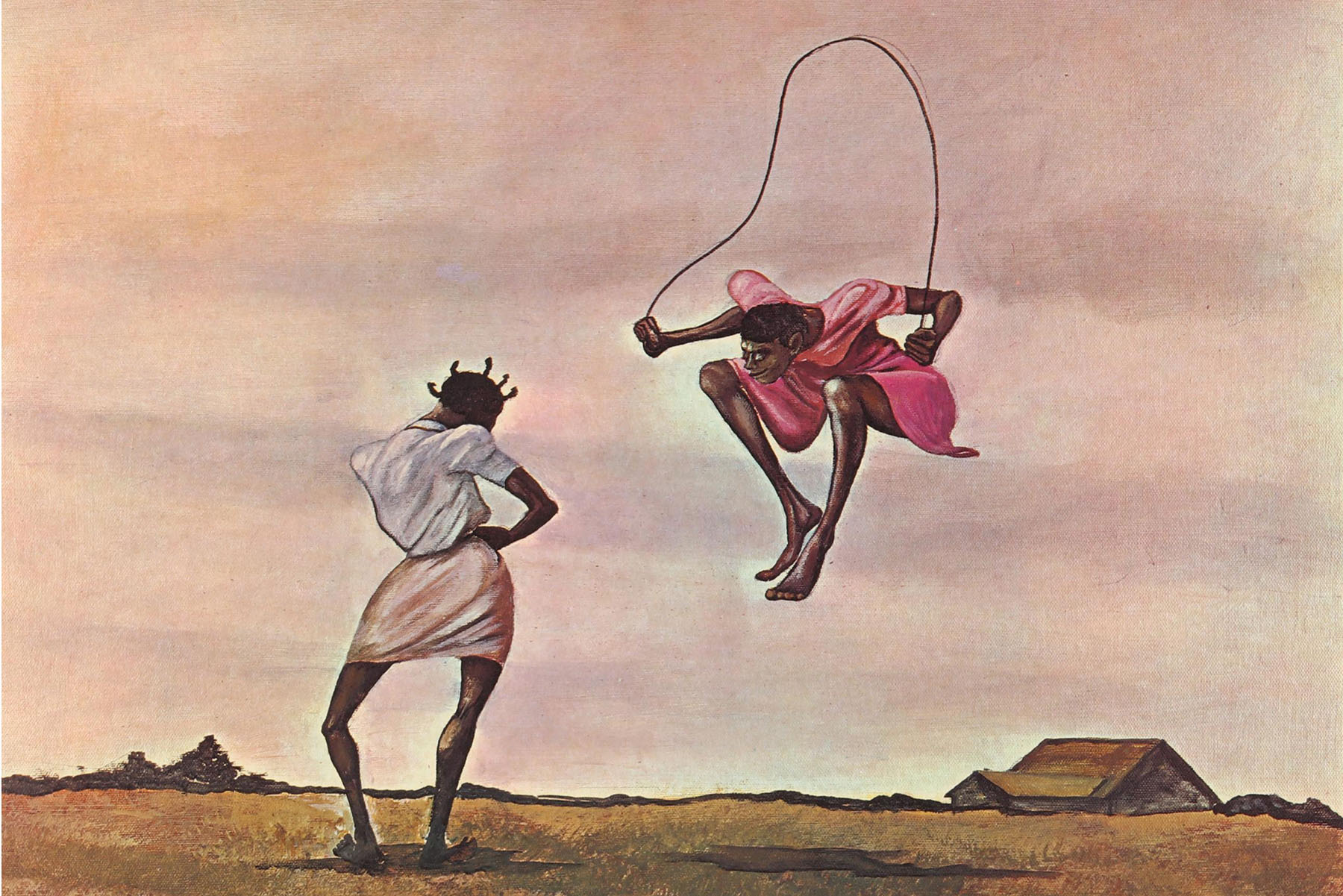
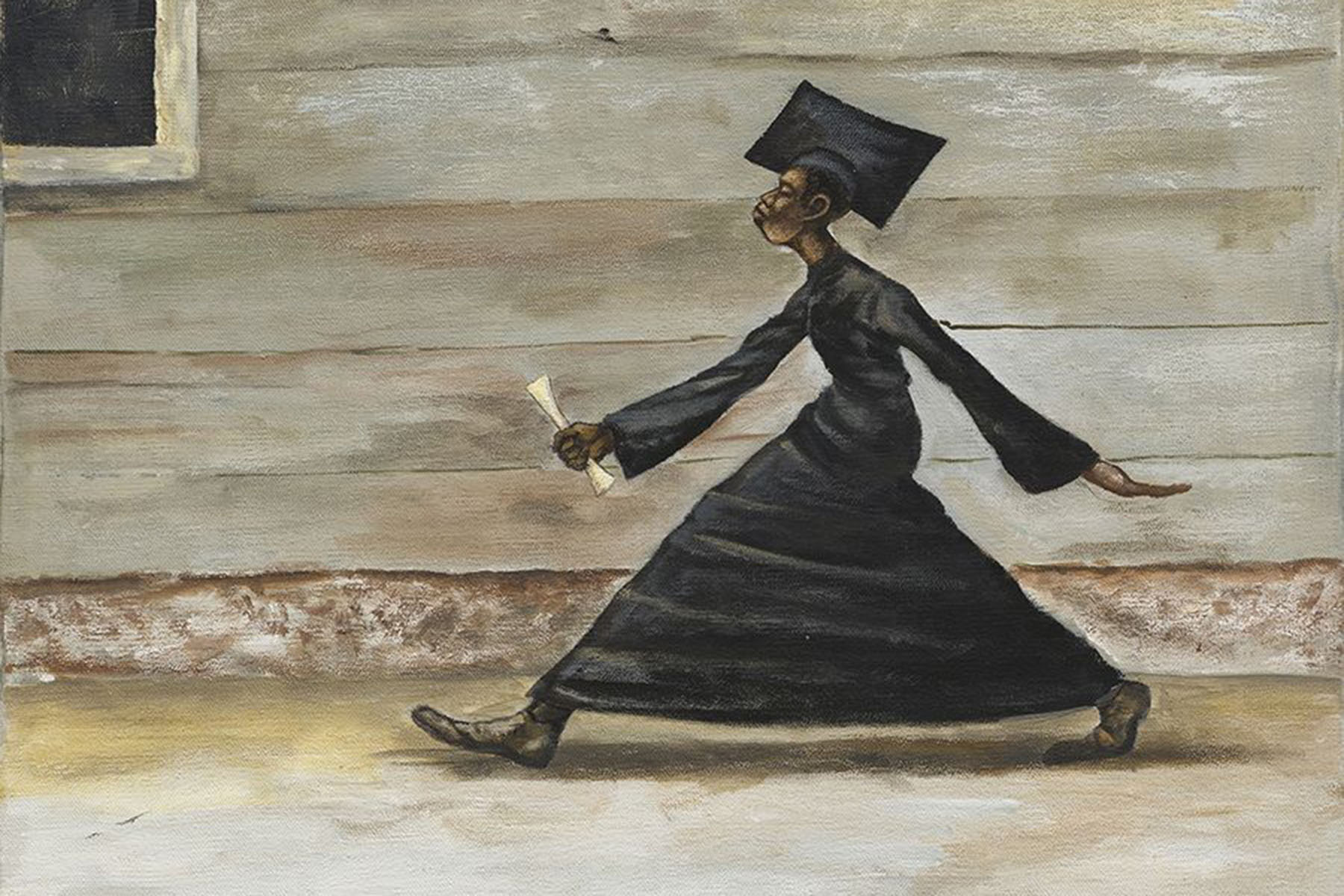
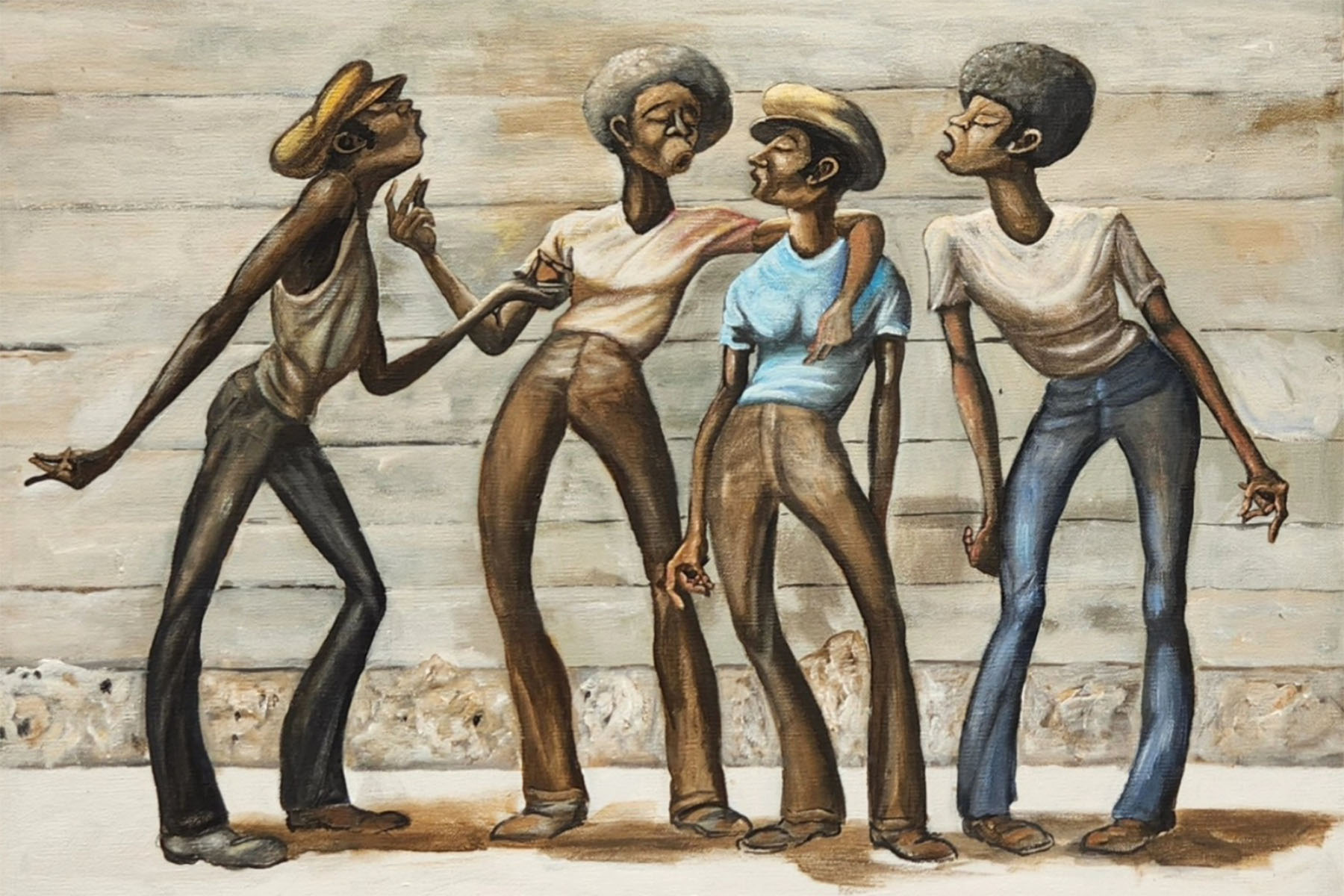
Florida State University's Museum of Fine Arts is home to a permanent collection of more than 7,000 works of art, including 12 offset lithograph prints by renowned American artist Ernie Barnes. The pieces were donated by the late actor and former Florida State Seminole football star Burt Reynolds.
In honor of what would have been Reynolds' 90th birthday, the museum and the Department of Art History are sharing a special look at these pieces.
"By contributing this portfolio of lithographs to MoFA, Reynolds made a lasting impact on FSU and the Tallahassee community," said Kaylee Spencer, director of the Museum of Fine Arts. "We're honored to have these prints as part of our collection. They serve as vital examples of Barnes' work and 20th-century American art for generations to come."
Reynolds, known as "Buddy" by his teammates, is a legendary figure within the FSU community for his generosity and dedication to Seminole athletics. However, his legacy at the university extends deep into the arts.
In addition to the donation of these prints, Reynolds contributed $600,000 to establish the first named chair position within the FSU School of Theatre. Throughout his career, he returned to campus as a guest lecturer for film and theater students and was a frequent attendee at dance and theater performances.
Mora J. Beauchamp-Byrd, associate professor and director of the Museum and Cultural Heritage Studies Program in the FSU Department of Art History, recently visited the Barnes prints, which are on display at the College of Fine Arts Dean's Office at the Facility for Arts Research. She noted that while the works are emblematic of Black Arts Movement imagery of the 1970s, they also reference other global art historical movements spanning centuries and continents.
"In Barnes' work, you can see influence from the Mannerists of the 16th century through 19th-century French realism, through American social realism of the 1930s and the Black Arts Movement of the '60s and '70s," Beauchamp-Byrd said. "As an art historian, I am intrigued by these art historical references in his work, and we are so excited about Barnes's inclusion in MoFA's collection here at FSU."
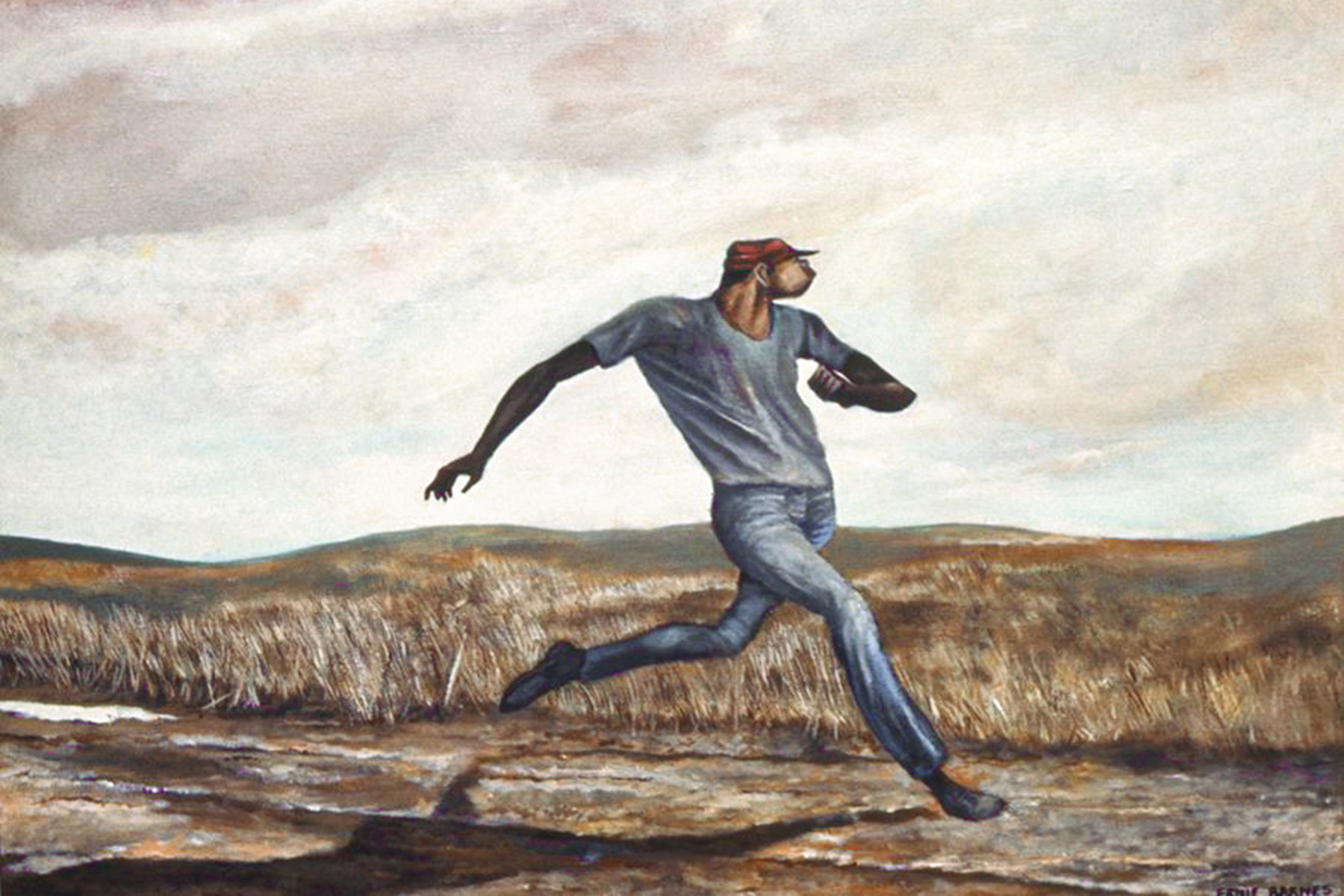
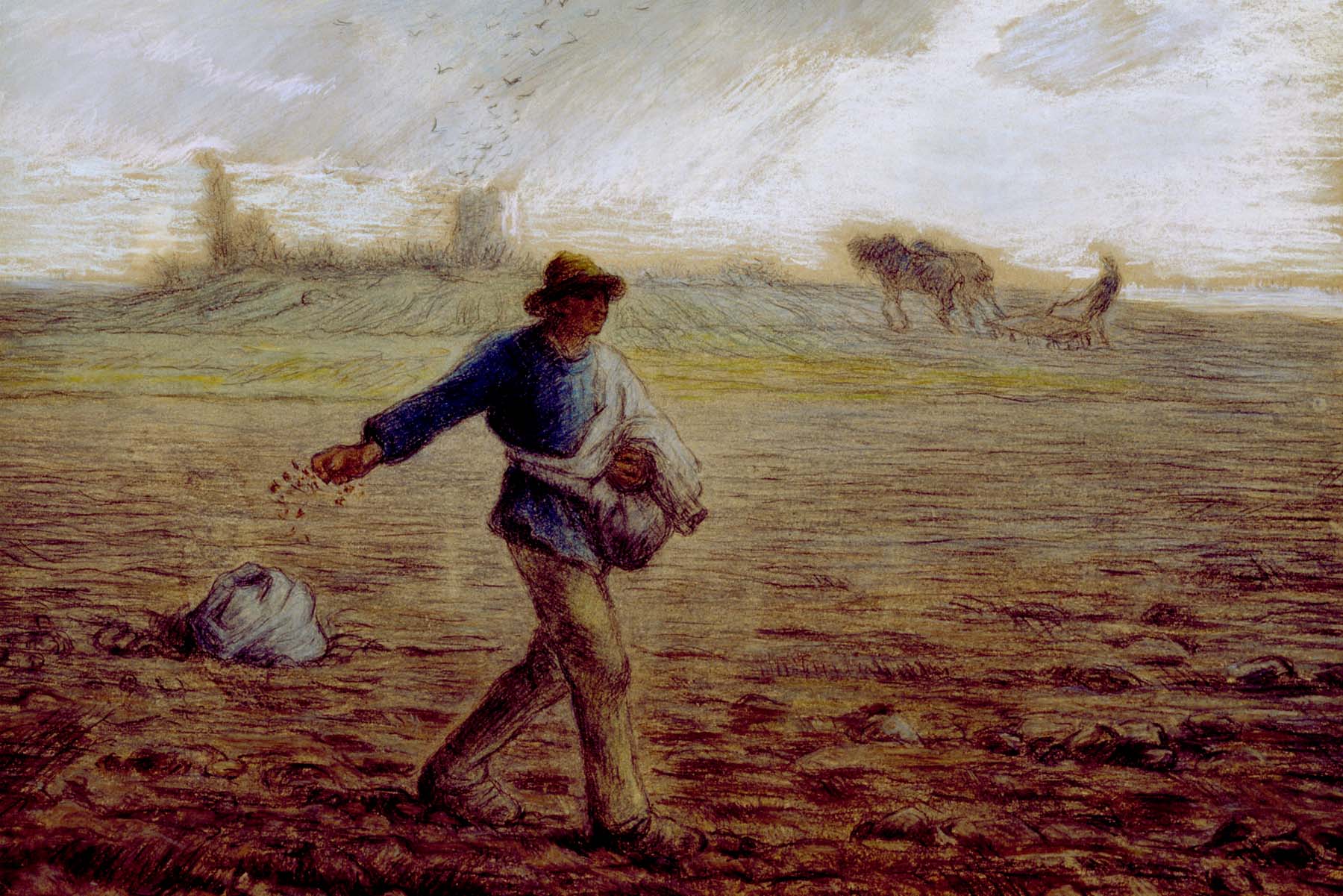
In one example of this type of art historical referencing, Beauchamp-Byrd compares Barnes's work "The Runner" with "The Sower" by 19th century French realist Jean-Francois Millet.
"I see compositional similarities in the landscape, with the earthy colors and a lone, isolated, elongated figure, rendered in a really graceful way," she explained. "Whereas Millet's earlier, Realist painting is a celebration of the laborer, here, in Barnes's Neo-Mannerist print, there is a celebration of the athlete, participating in a different kind of labor. He's highlighting the work ethic that goes into this type of labor as well."
Like Reynolds, Barnes was no stranger to football or fame. Originally from Durham, North Carolina, Barnes played five seasons in the American Football League (AFL) for teams including the Denver Broncos and San Diego Chargers. He was later named the official artist of the AFL in 1965 and the "Sports Artist of the 1984 Olympic Games."
Pop culture fans may recognize Barnes's most celebrated painting, "The Sugar Shack" (1971), from the opening and closing credits of the 1970s sitcom "Good Times." His work also shows up on iconic album covers, including Marvin Gaye's "I Want You" (1976), Curtis Mayfield's "Something to Believe In" (1980) and B.B. King's "Making Love is Good for You" (2000).
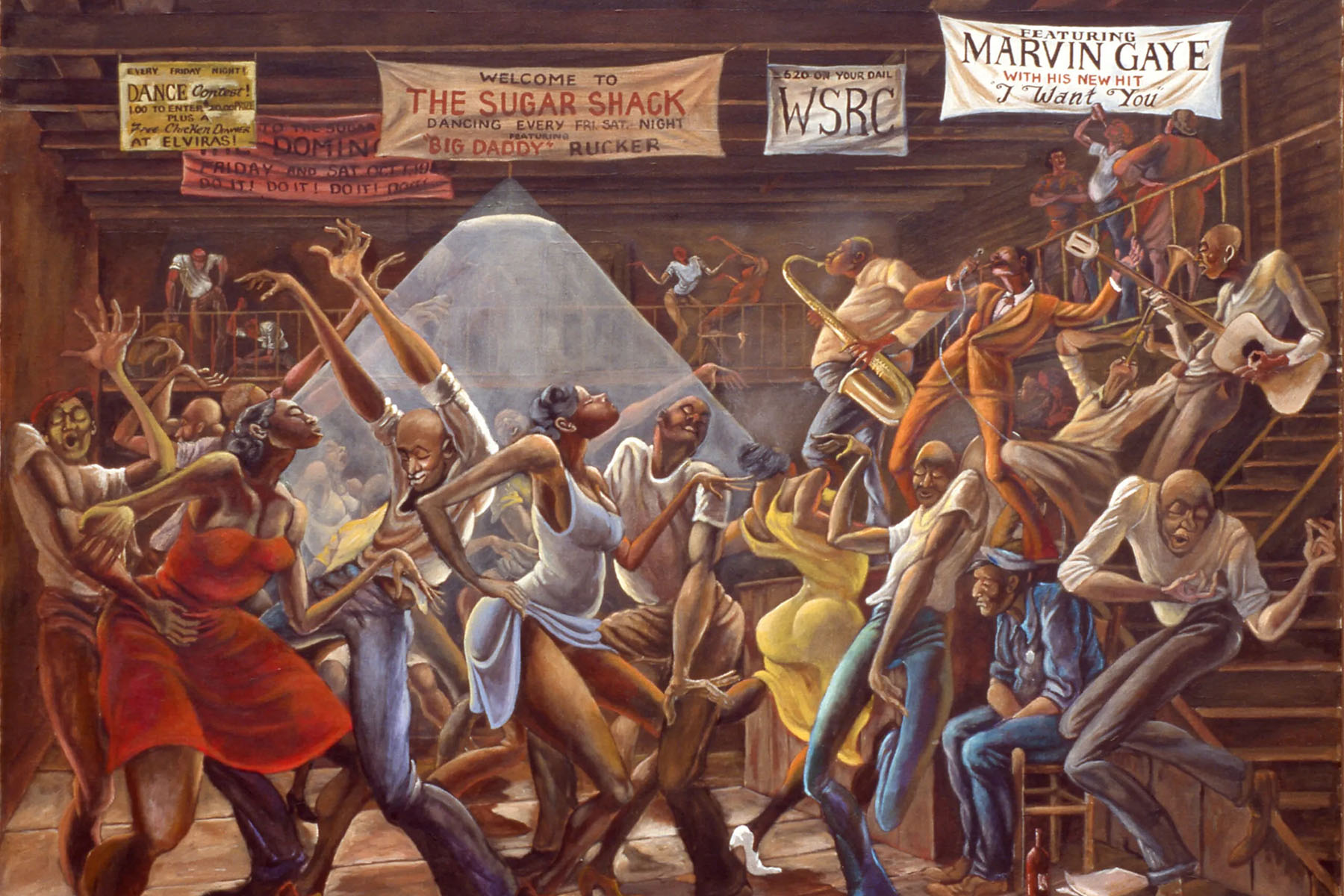
According to Beauchamp-Byrd, Barnes' works capture an important moment in American history after the civil rights movement, a celebration of community pride and everyday life.
"It was so important to artists like Barnes to depict the kind of everyday experiences of life - rural as well as urban scenes, African American achievement, including educational success, to those intensely-emotive, celebratory moments where figures are entranced in expressive, rhythmic movement," Beauchamp-Byrd said. "All of these aspects make his work truly distinctive; they speak so eloquently about this time and place, in 1970s America."
To learn more about Ernie Barnes, his art, life and legacy, visit ErnieBarnes.com


