
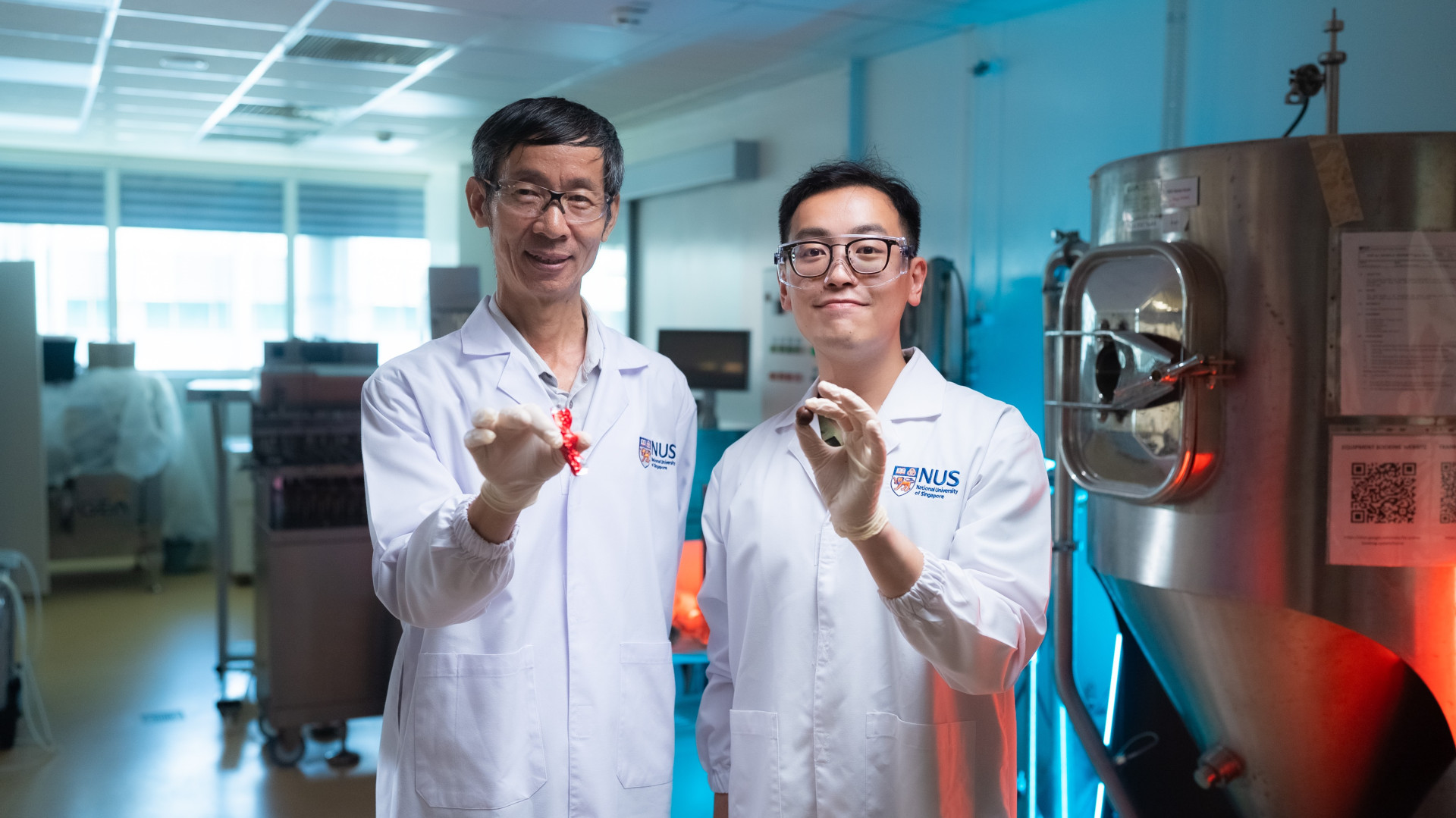
With climate change and higher incidence of crop diseases, global cocoa production and supply is being threatened. A research team from the National University of Singapore (NUS), motivated by these reports, set out to enhance the taste of carob, making it a more appealing and sustainable alternative to cocoa.
Derived from a hardy, climate-resilient plant known as Ceratonia siliqua (carob), carob pulp has gained attention as a promising cocoa alternative. After roasting, it releases a unique aroma that resembles that of cocoa. However, its flavour still falls short, posing a major hurdle for wider adoption.
The NUS team, led by Associate Professor Liu Shao Quan from the Department of Food Science and Technology (FST) at the NUS Faculty of Science, has developed two innovative techniques to enhance the taste of carob pulp.
"Our carob-based innovation meets the relatively untapped and nascent market of alternative chocolate sources. Additionally, our new techniques improve the taste of carob itself, without the use of additives such as flavourings. So, consumers can have the best of both worlds - better flavour and a simple ingredients list. With these innovations, we aim to make a meaningful contribution towards addressing the current challenges and needs of the chocolate industry," said Assoc Prof Liu.
A worthy, sustainable successor to cocoa
The carob tree is a leguminous tree native to the Mediterranean and it thrives in hot, arid climates with very low water requirements. In contrast to the Theobroma cacao tree - the source of cocoa - which grows only in narrow climatic conditions, the carob tree is highly drought-tolerant, making it more resilient to climate change and drastic weather conditions.
Beyond its climate resilience, carob also offers some nutritional advantages. With its natural sugar content, it could be used to create chocolate alternatives without added sweeteners - an increasingly desirable feature for health-conscious consumers. Carob is also caffeine-free and rich in d-pinitol, a compound that has been shown to have anti-diabetic effects.
Carob pulp is generated as a by-product during the production of locust bean gum, a common thickening agent in the food industry. Its flavour differs significantly from chocolate, with less bitterness and fewer of the rich, roasted notes that define cocoa-based products. These differences have so far limited the widespread use of carob pulp as a cocoa-substitute.
Two innovations to mimic the flavour of cocoa
To overcome carob pulp's sensory limitations, the research team devised two innovative techniques using easy-to-obtain enzymes that alter the profile of flavour precursors (substances which affect the flavours of a product during processing) in roasted carob pulp, enabling it to more closely mimic the taste and aroma of cocoa:
1. Enzyme-treated soy protein enhancement to increase bitterness - A novel application of enzyme-treated soy protein that intensifies roasted carob pulp's cocoa-like aroma and balances its overall flavour. This enzyme increases amino acid and peptide content, which gives the product the rich, bitter taste associated with dark cocoa chocolate. The research findings were published in Journal of Food Science on 18 July 2025.
2. Enzyme-aided monosaccharide generation to enhance sweetness - A process that promotes the generation of naturally occurring simple sugars, which then react during roasting to generate sweet, roasted and caramel-like aroma compounds. The steps and results of this technique were published in the journal Food Chemistry on 16 June 2025.
The first method targets the creation of two key flavour compounds - 2-methylbutanal and 3-methylbutanal - which are essential to chocolate's distinctive aroma. This novel technique also modulates some of carob's less desirable intrinsic odours, resulting in a smoother and more familiar chocolaty taste.
The second method focuses on the production of a group of compounds known as oxygenated-heterocycles which gives a sweet, roasted aroma.
Enzyme treatment is a straightforward and clean method that requires minimal processing, compared to other methods which involve harsh chemicals such as hydrochloric acid to enhance flavour. In addition, as the enzymes are widely used in conventional food processing, these innovative approaches can be easily scaled for commercial production.
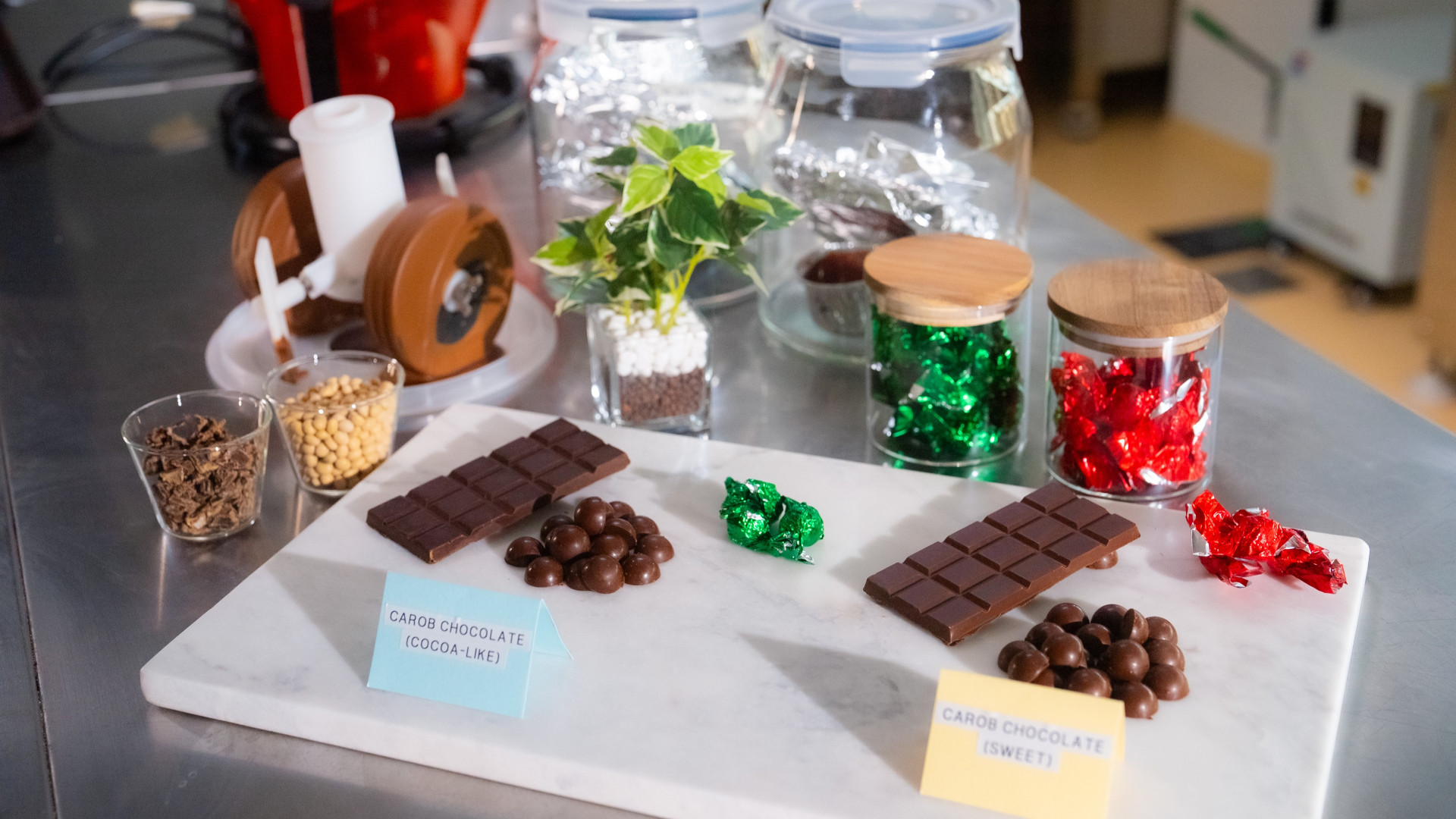
Carob's impact on the industry and sustainability
By improving carob pulp's flavour profile, these techniques could encourage confectioners to incorporate carob into food products that require cocoa, such as chocolate bars, cocoa powders, malt drinks, and other cocoa-based products. If adopted at scale, this could significantly reduce the chocolate industry's dependence on cocoa, making supply chains more resilient to climate change and crop disease outbreaks.
"Our research is not just about replicating the flavour of cocoa - it's about diversifying the ingredients we use to make chocolate alternatives," explained Manfred Ku, first author of the research paper, and a PhD student at NUS FST. "By turning to hardy, climate-resilient crops like carob, we can help the industry adapt to environmental challenges while giving consumers a product they will enjoy."
The NUS researchers also anticipate that carob's lower production costs will make it an attractive alternative. Since carob pulp is a side-stream of locust bean gum manufacturing, its utilisation in the production of chocolate substitutes could add value to an existing supply chain, reduce agricultural waste, and potentially lower prices for manufacturers and consumers alike.
Next steps and commercialisation
The NUS team aims to continue investigating other techniques to further enhance the flavour of carob during roasting. They also plan to explore new techniques to introduce pleasant, novel flavour notes into carob-based chocolate alternatives, catering to diverse consumer preferences worldwide.
Looking ahead, the NUS researchers plan to collaborate with industry partners to commercialise these techniques through licensing, venture co-creating or other modes of partnership.


