
The way we manufacture and use products is under pressure. Global supply chains make it possible to produce goods quickly and cheaply, but they also create new vulnerabilities. Shortages of raw materials, climate change, and geopolitical tensions make it clear that our current model of production is no longer sustainable.
What new forms of "making" are emerging in response to these societal challenges? This is the central question of NEW CRAFT, a six-year research project led by anthropologists Cristina Grasseni and Federico De Musso, which has been awarded an NWO grant of €800.000.
Old and new ways of making
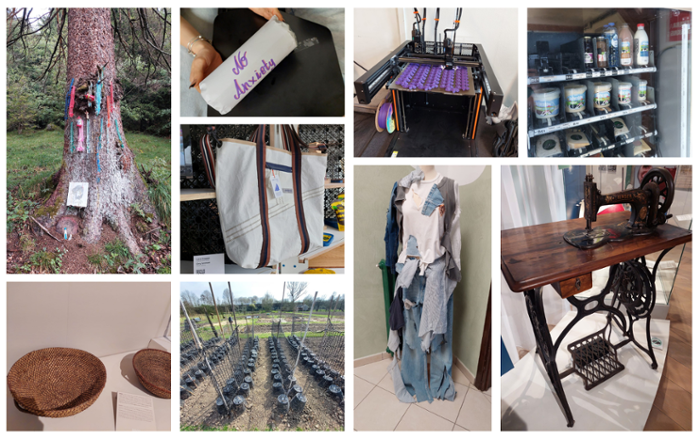
Working alongside two PhD researchers, the team will investigate how people and organisations in the Dutch Randstad and the Italian region of Lombardy are developing old and new ways of making that are more sustainable, local and socially engaged. Examples include repair cafés, where people can bring broken devices to be repaired or learn to repair them themselves, and artisan ateliers and workshops, where handicraft can be reinvented and retooled for present-day needs.
Loss of practical skills and knowledge
The initiatives studied by NEW CRAFT are responses not only to sustainability challenges, but also to deskilling-the gradual loss of practical skills and knowledge. By examining initiatives that combine traditional skills with new ideas about sustainability, collaboration and innovation, the researchers aim to understand how such practices can help reverse this trend.
Contribute to a circular economy
The project will also explore how these renewed skills and forms of production can contribute to a circular economy, in which products are designed to last longer, are repaired rather than discarded, and are reused whenever possible. In addition, the researchers will investigate how old and new practices of making, repairing and collaborating shape people's relationships with products, materials and their environment.
Mixed methods
The research team has already identified a wide range of businesses, organisations and community initiatives in both the Randstad and Lombardy that are experimenting with old and new forms of making. A key part of the project will consist of participant observation, with researchers working alongside these organisations to gain an in-depth understanding of their everyday practices. The project will also include workshops and collaborative events where researchers, partner organisations and other participants will exchange knowledge and experiences.
Building a more sustainable and resilient society
The findings of NEW CRAFT will provide new insights into how Europe can respond to the challenges of changing supply chains and more sustainable forms of production. The researchers hope their work will inform policy on heritage, labour and innovation, and contribute to building a more sustainable and resilient society.


