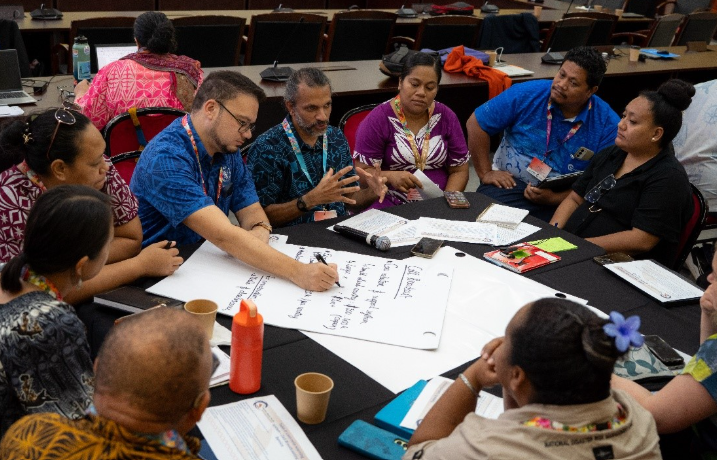
For three days, representatives of 15 Pacific National Meteorological and Hydrological Services (NMHSs) came together in Nuku'alofa, Tonga, to strengthen regional collaboration on weather, climate and water services with a shared goal of better protecting lives, livelihoods, ecosystems and economies across the Pacific.
The eighth Pacific Meteorological Council, with thetheme "Weather Ready for a Secured and Sustainable Blue Pacific." brought together meteorological leaders, experts and partners to advance the modernization and strengthening of weather, climate and hydrological services.
From 10 to 14 September, participants from 26 member countries and territories discussed shared priorities and challenges, including strengthening early warning systems, improving climate services, enhancing observations and data, and ensuring that weather and climate information reaches the people and communities who need it most.
"A forecast has little value if it does not reach the farmer deciding whether to plant, the fisherman preparing to go to sea, the airline determining whether it is safe to fly, the school deciding whether children should return home, or the family deciding whether it is time to evacuate," said the Deputy Prime Minister of Tonga, Viliami Latu.
"This is why Early Warnings for All must mean exactly that: warnings for all-including people in our outer islands, persons with disabilities, women, children, older persons and those living in our most remote communities. No Pacific Island should be considered too small, and no community too remote, to receive an effective warning," he declared.
A decade of progress and a new strategic direction
The Pacific Meteorological Council is the region's principal forum for cooperation among Pacific National Meteorological and Hydrological Services, bringing together countries and partners to strengthen weather, climate and water services. This year's meeting was hosted by the Government of Tonga in partnership with the Secretariat of the Pacific Regional Environment Programme (SPREP) and the World Meteorological Organization (WMO).
It will be followed by the Fourth Pacific Meteorological Ministers Meeting on September 16, bringing together Pacific ministers responsible for meteorology and related portfolios to strengthen political support for the region's meteorological and hydrological services.
"The Pacific has consistently demonstrated that regional cooperation is one of the most powerful tools for building resilience in the face of weather, climate and water-related hazards," said WMO's Regional Coordination Office, Ishaam Abader.As the region looks towards the next decade, this cooperation is also central to shaping a shared strategic direction for Pacific meteorological and hydrological services.
The meeting took stock of progress made under the Pacific Islands Meteorological Strategy over the past decade and considering a new strategy for 2027-2036 to help guide regional investment and cooperation,"The objectives of this new strategy align very closely with WMO priorities. They recognize that strengthening weather, climate, and water services is not only about scientific knowledge; it's more importantly about protecting lives, supporting sustainable development, safeguarding livelihoods and enhancing resilience across Pacific communities," Abader says.
Effective early warning systems are essential to turning weather and climate information into action, helping people, communities and critical sectors make timely decisions that protect lives, livelihoods and economies. The Council meeting was preceded by three days of preparatory meetings and events, including expert panel meetings, a Weather-Ready Pacific Liaison Platform and a media training session.