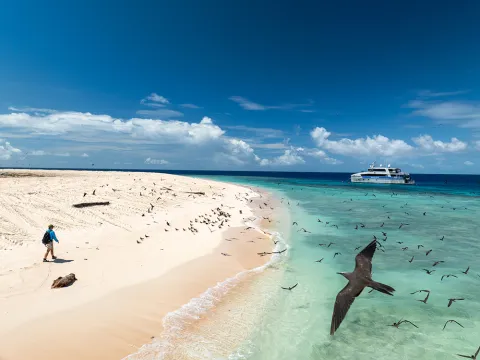
Protecting the Great Barrier Reef is no small feat - it takes people, passion, and a lot of time on the water. Every year, the Reef Joint Field Management Program, a partnership between the Australian and Queensland Governments delivers vital in-field operations across the Great Barrier Reef World Heritage Area, from remote islands to marine parks spanning thousands of kilometres.
With a fleet of 20 vessels of varying sizes, fuel use is essential to maintaining this vital presence. Marine vessels represent the Program's largest source of greenhouse gas emissions, and finding low-emission alternatives remains one of our greatest challenges. Yet despite these constraints, the Program continues to innovate, improve efficiency, and embrace new technologies to minimise its environmental footprint.
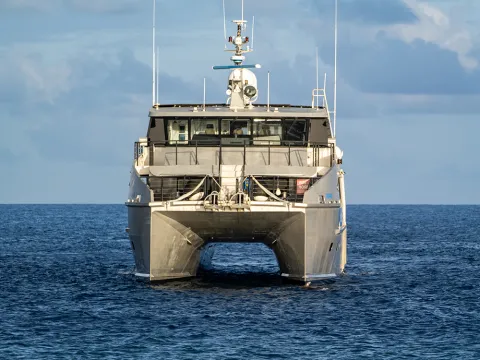
Recent years have seen significant progress. By investing in modern, fuel-efficient engines, the Program has achieved meaningful reductions in both emissions and maintenance costs, supporting environmental and financial sustainability. Operational adjustments have also played a part. Through optimised vessel speeds, the Program is reducing fuel consumption without compromising the quality or effectiveness of surveillance and conservation work. For example, a speed reduction of just eight knots on a 24-metre long-range patrol vessel can lower emissions by up to 30 per cent.
Sustainability is also being built into the fleet from the start. The Program's recent procurement of the Barcoo vessel demonstrates how thoughtful design can make a lasting difference. Built using advanced composite materials, Barcoo has an expected lifespan twice that of a traditional aluminium vessel, a 20-year hull warranty, and 82 per cent less embodied energy in its construction. The vessel is also lighter, resulting in approximately 115 tonnes less carbon emissions over its lifetime, and lower ongoing maintenance costs.
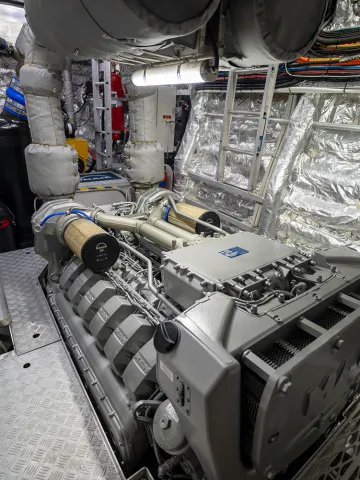
Another of the Program's flagship long-range patrol vessels, the Reef Ranger, has recently undergone a major refit that has set a new benchmark for marine sustainability. The upgrade included Euro V standard diesel engines - the first of their kind in Australia - hybrid power integration to reduce generator use, and compatibility with hydrotreated vegetable biofuel, which offers up to a 90 per cent reduction in emissions once commercially viable in North Queensland.
Recognising that some emissions are unavoidable, the Program offsets its remaining carbon footprint through the purchase of high-quality Australian Carbon Credit Units. These credits support land regeneration projects that reduce nutrient runoff into the Reef, helping to protect both terrestrial and marine ecosystems - a powerful example of circular environmental benefit.
These investments demonstrate a clear commitment to continuous improvement and innovation in sustainable field management. By combining practical operational changes with forward-thinking design and offset initiatives, the Reef Joint Field Management Program is leading the way in responsible marine operations.