
The University of York has partnered with some of the country's leading museums and heritage organisations to help people from diverse backgrounds access volunteering opportunities.
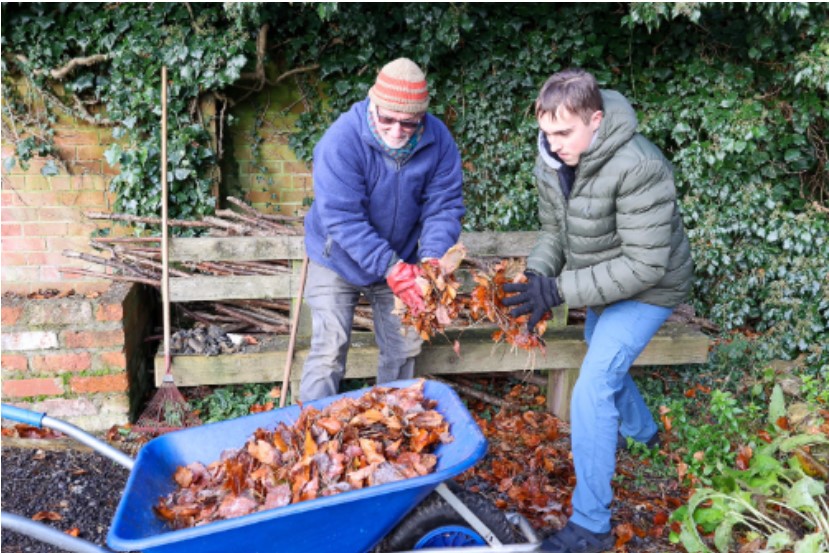 The project builds on the inclusive volunteering research project developed with Ripon Museum.
London Zoo, Imperial War Museums and Forestry England are just some of the partners taking part in the initiative, which aims to break down barriers and broaden the talent pool accessing volunteering, including those with mental health issues, disabilities, or neurodiversity.
The project, led by Professor Martin Webber and Dr Beth Casey of the Mental Health and Social Care Research Centre in the School for Business and Society, has been awarded more than £500,000 by the NIHR School for Social Care Research (SSCR) to carry out the study.
Many museums cannot operate without volunteers, who play an important role in their communities. The research will investigate how these organisations can set up inclusive volunteering programmes which benefit people, organisations and wider society in a sector which has traditionally relied on a narrow demographic.
National partners
The University of York research team is collaborating with six diverse partner organisations from across the UK. They are:
- Imperial War Museums
- Beamish, The Living Museum of the North
- Forestry England
- John Hall Wellness Gardens
- Sedgwick Museum of Earth Sciences
- ZSL London Zoo
Dr Beth Casey, Project Co-Lead and Research Associate in the School for Business and Society, said "We are thrilled to be working in partnership with six fantastic organisations to support the development of inclusive volunteering programmes. We hope the research will highlight how inclusive volunteering can benefit people, organisations and wider society. We are looking forward to meeting volunteers to hear about their experiences and the support they receive."
Scaling up
The project is a significant scaling up of a successful pilot project developed at Ripon Museums Trust, with the small local museum in North Yorkshire now acting as an independent consultant to support some of the UK's largest national organisations.
The new research will build on the practical guide to inclusive volunteering programmes which was developed during the Ripon study. It provides a framework for organisations to move beyond traditional volunteering models.
By testing the Ripon-developed guide across six national sites, the team hopes to create a gold standard for inclusive volunteering that can be adopted across the UK.
Working as a "community of practice," the partners will share insights with each other and promote organisational change across the sites involved in the research.
New opportunities
The project encourages organisations to provide the opportunity first, allowing skills, confidence, and social connection to develop through the experience.
Professor Martin Webber, Project Co-Lead and Director of the Mental Health Social Care Research Centre, said:
"For someone recovering from an inpatient admission or living with a disability, the idea of jumping straight into employment can be daunting. Inclusive volunteering provides a vital stepping stone. It is a long-term investment; while initial support might be higher, the payoff for both the individual and the organisation is immense."
"Most organisations realise they want to be more inclusive, but this research helps them to adapt their policies, perceptions, and culture. We are moving away from a model where we ask what a volunteer can do for an organisation, and instead asking: 'What can this experience do for you?'
Investing in communities
The study comes at a time of significant societal shifts. As the NHS moves its focus from hospital to community and from illness to prevention, the project highlights the role of active citizenship in improving health outcomes. Over a 12-month period, the research team will track 80 participants to evaluate the impact of the programme on their wellbeing and social inclusion.
Professor Webber added: "At a time of increasing societal polarisation, these organisations are challenging themselves to open their doors to people who might not typically see themselves as 'volunteers.' It's a counter-narrative to the idea that we should only spend time with those who hold similar views or backgrounds.
"York is the University of Opportunity, and this project embodies that vision. We are taking a step back from the 'market economy' of constant competition and instead finding ways to connect, support one another, and invest back into our communities."
Further information:
Evaluating Inclusive Volunteering in Heritage and Nature-based Organisations, is being conducted by researchers within the Mental Health and Social Care Research Centre at the University of York's School for Business and Society. It is funded by the NIHR School for Social Care Research (SSCR).
Led by Professor Martin Webber and Dr Beth Casey at the University of York, the project team comprises Chandani Nekitsing, Stephanie Tierney, Annette Bauer and Ailsa Cameron.
The NIHR School for Social Care Research aims to develop the evidence base for adult social care practice in England by commissioning and conducting high-quality research.
The University of York brings together brave, independent minds to build trusted partnerships and deliver curiosity-driven research for the public good. Sign up to our newsletter for the latest research news and insights from York.


