World leaders approved the UN Declaration on Sea Level Rise by consensus on Thursday as the UN chief warned that encroaching waters are already threatening the future of coastal communities worldwide.
Here's what the declaration says:
- Science and data: Better observation, shared data and stronger early warning systems
- Finance and resilience: More predictable and accessible funding, especially for small island and least developed countries
- Livelihoods and culture: Protecting coastal communities' livelihoods and cultural heritage and including people in decisions that affect them
- International Law: A presumption in favour of continued statehood and the ability to maintain maritime zones established under the UN Convention on the Law of the Sea - despite the physical threat presented by rising seas.
Visit our live coverage of the meeting as it happened here .
Sharing challenges and recommendations, Heads of State and ambassadors outlined ways their countries have tried to adapt to rising seas, which are an existential threat to many small island developing States.
At the outset of the high-level meeting, UN Secretary-General António Guterres warned that global sea levels rose by almost six millimetres in 2024 - the largest annual increase ever recorded.
While this rise is measured in millimeters, "its price is measured in millions of shattered lives, uprooted communities, and stolen futures."
Without drastic emissions cuts, seas could rise by a metre by the end of the century. Right now, around 770 million people live less than five metres above the high-tide line.
Threats abound
Rising waters threaten homes, food systems, infrastructure and even the territorial integrity of some nations, he said.
However, those who contributed least to climate change face the greatest danger, Mr. Guterres said, urging action on three fronts: cutting emissions, protecting communities and closing legal gaps.
To change that trajectory, he said global emissions must peak immediately and fall 60 per cent by 2035, and adaptation finance must triple.
Wet feet at UN Headquarters
Khalilur Rahman, President of the General Assembly 's 81st session, brought the warning close to home.
In New York City, he said, seas are projected to rise by up to 1.3 metres by the end of the century and by far more if Antarctic ice melts rapidly.
That would be enough to turn the Assembly Hall into "a very large wading pool", he said.
Alarm across island States
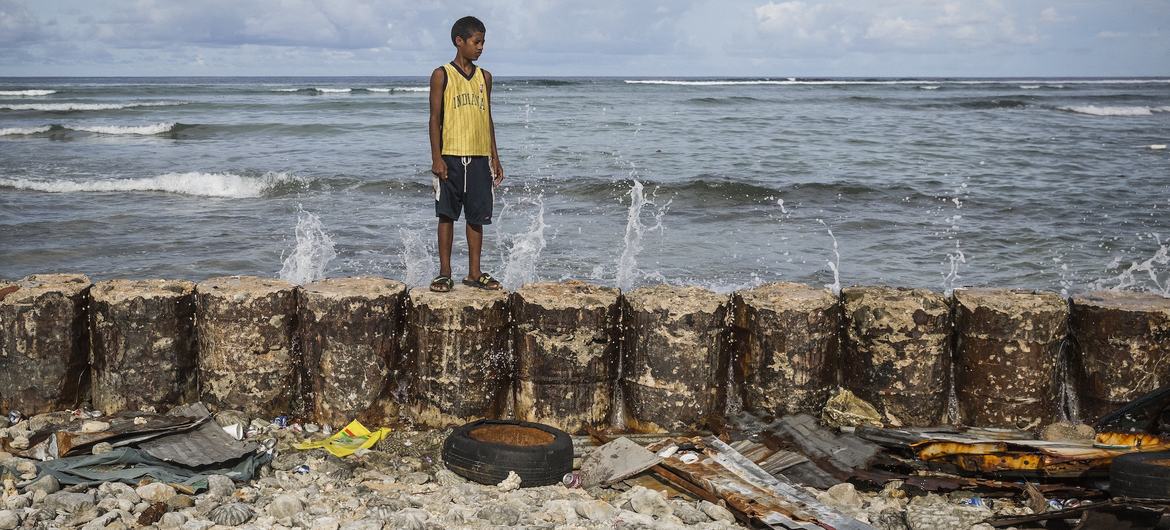
Prime Minister Godwin Friday of Saint Vincent and the Grenadines said 85 per cent of his country's population and 90 per cent of its critical infrastructure are concentrated along a narrow coastal belt.
Investing in resilience now, he argued, costs far less than paying for loss and damage later.
Prime Minister Francisco Carvalho Cabo Verde, whose country co-facilitated negotiations on the declaration, said its consensus approval shows that multilateralism still works.
Sea level rise, he said, is "neither a distant threat nor a theoretical concern" for his country.
For small island States, it is about preserving a "historical and cultural identity deeply rooted in the land and the sea", he said, adding that the declaration recognised it as a matter of justice, human rights and peace.
Eyes on the oceans
European Commissioner Costas Kadis pointed to the OceanEye International Alliance, launched by the European Commission - the executive branch of the EU - and Canada to strengthen ocean observation.
With 31 members, the alliance has secured $250 million in pledges. Finance, Mr. Kadis said, must also be predictable, accessible and aligned with the needs of communities at risk.
The day-long meeting resulted in UN Member States agreeing to return to the issue, with the declaration calling for a further high-level meeting before the end of the General Assembly's 84th session.
Check out more UN News stories on rising sea levels here .
What's the UN doing to address sea level rise?
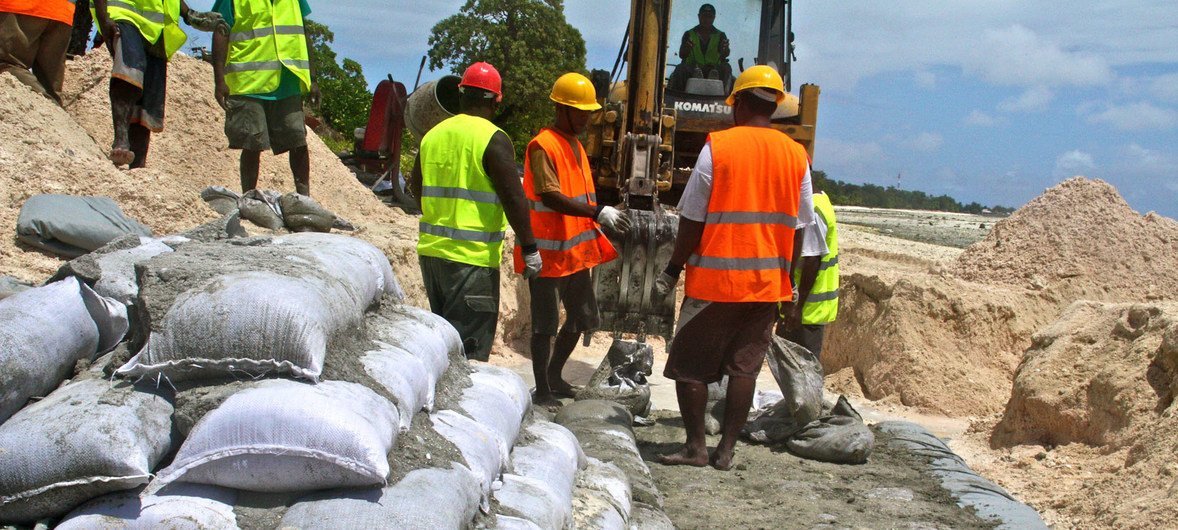
From boosting lifesaving early-warning systems to providing the latest data to vulnerable States, UN agencies are working with partners around the world on tackling threats stemming from sea level rise.
Action includes:
- Supporting countries facing rising sea level threats through climate action, adaptation, early warning systems and international cooperation
- Mobilising financing and strengthening resilience in small island developing States and other vulnerable countries
- Providing assistance to global efforts under the Paris Agreement on climate change to limit future sea level rise