
A balsam fir for its sweet fragrance or a white pine for its soft needles?
Picking a real Christmas tree is a beloved tradition for many and a proven environmentally friendly choice. But as our climate changes, tree growers are having to adapt to new conditions from shifting seasons to the arrival of unfamiliar pests. While the challenges are significant, innovation is growing.
Housed in the Faculty of Environment, the University of Waterloo's Christmas Tree Lab empowers Christmas tree growers year-round with research and science-based tools that strengthen sustainability and resilience across the industry.
With more than 1,300 farms across Canada, it's no small task, but the Lab saw some major successes this past year. The team launched a public education series titled Christmas in July and catalogued the history of the Christmas tree industry over the past century. Most notably, they published a Growers Glossary in partnership with the Christmas Tree Farmers of Ontario (CTFO).
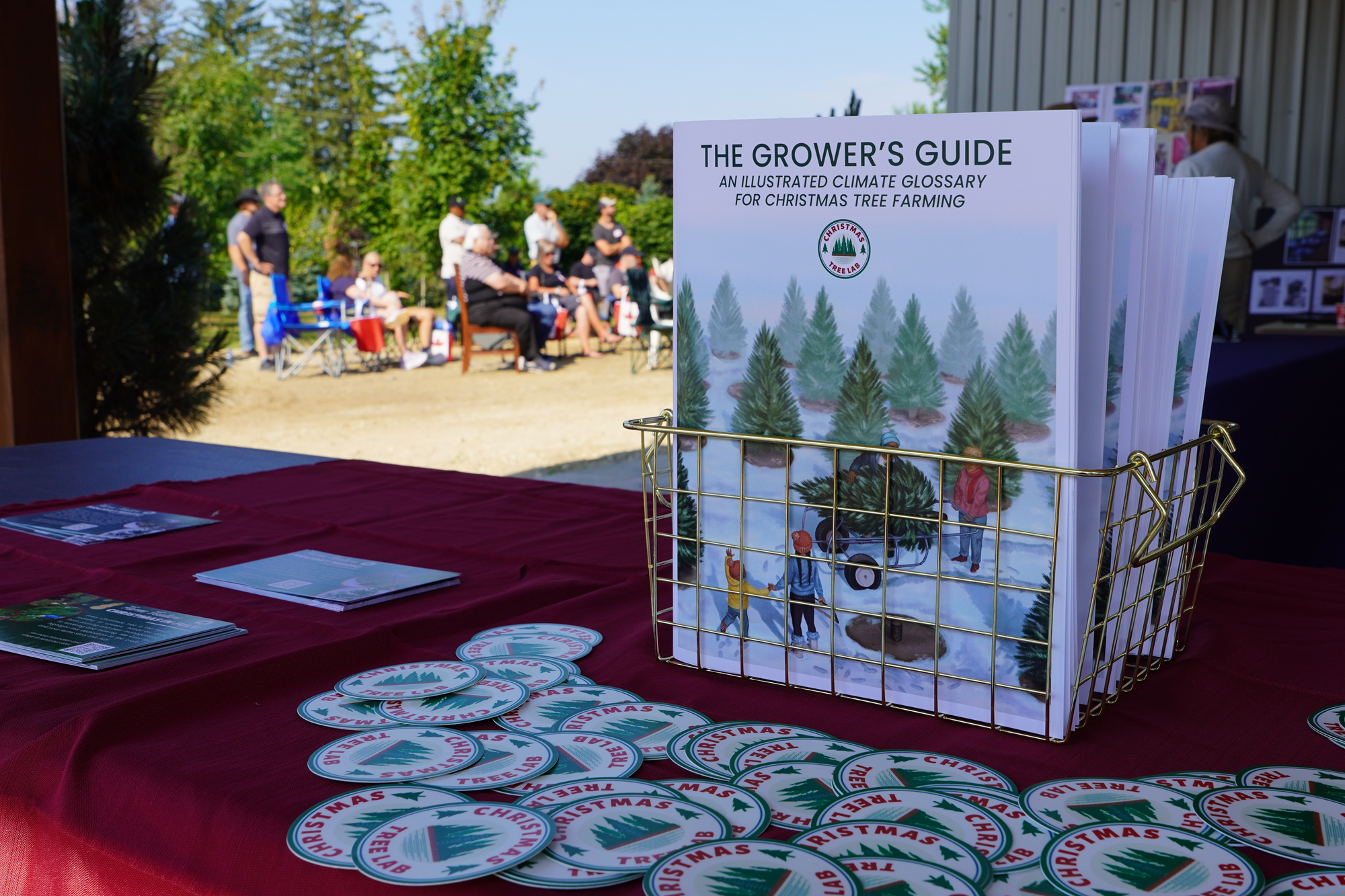
The Growers Glossary made its debut at the Christmas Tree Farmers of Ontario's Annual Field Day.
Developed in close collaboration with farmers, the Grower's Glossary integrates practical insights from the field with research-based recommendations, ensuring it meets the needs of producers whether they are seasoned owners or new to the industry. The process was deeply collaborative, with growers offering feedback and the guide being officially launched at the CTFO's Annual Field Day in Listowel.
The yearly event is designed to highlight new technology, research and best practices in the industry. From site planning and soil management to irrigation strategies that address increasingly unpredictable weather, the day offered practical learning that reflects the growing importance of adapting to a changing climate.
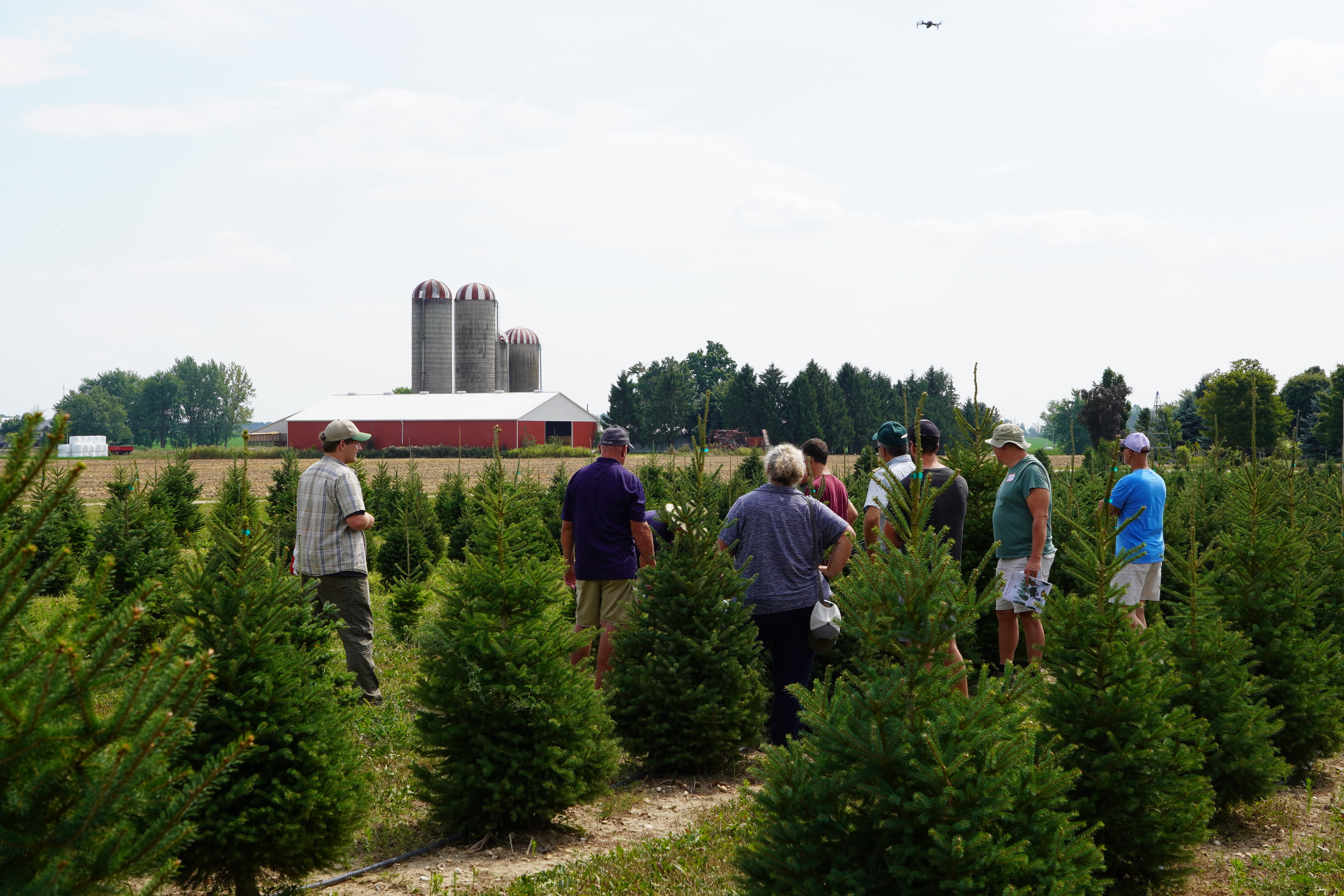
Farmers share knowledge about pruning strategies at the 2026 CTFO Field Day.
"The more we can raise awareness that field days like this are happening across the country, the better," says Dr. Kelsey Leonard, professor in the Faculty of Environment and director of the lab. "They're spaces where research isn't just shared, it's put into action. Attending is pivotal to doing community-engaged research because it's about meeting people where they're at."
For the past 50 years, the University has been a leader in sustainability research and education, and the Faculty of Environment has been a catalyst for environmental innovation, solutions and talent developed with the world, for the world.
With the holiday season right around the corner, initiatives related to Christmas trees are picking up.
"We have some exciting work planned in collaboration with Environment and Climate Change Canada and an article with the Great Lakes Christmas Tree Journal", says Alison Clarke, research associate.
Looking ahead to next year, the team is applying for funding to advance work on tree health, recognizing the growing need for localized technical capacity to address emerging pests and diseases.
"We've built the trust and the relationships now that farmers are bringing these concerns to us, but the type of research network and institutional capacity that's needed requires an increase in dedicated funding," Leonard says.
As the lab continues building its research capacity and strengthening partnerships with growers, the broader impact propelling this work remains clear: buying a real Christmas tree helps protect local ecosystems and supports family-run farms across Canada, benefiting both people and the planet.


