
South Australian Track Injuries
2026
South Australian statistics supplied by the Coalition for the Protection of Greyhounds (CPG) on 8 April 2026.
Greyhounds carry a long list of myths on their narrow shoulders, most of them shaped by the racing industry rather than the dogs themselves.
Myth: "Greyhounds love to race"
This is a commonly used statement within the greyhound racing industry and a common misconception from the public.
Greyhounds love to run, but this doesn't mean they love to race.
Greyhounds are sighthounds, dogs that were historically bred to spot prey with their sharp eyesight rather than smell. For all sighthounds, chasing is instinctive rather than a preference, an automatic stimulus-driven behaviour.
Running for a dog is typically a voluntary behaviour. It is self-directed and playful, with the dog able to choose when to start, how fast to run, and when to stop. Racing removes that element of choice.
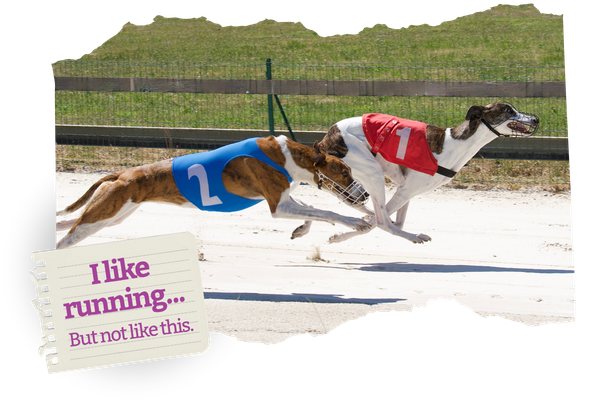
Chasing is instinct, not enjoyment.
Greyhounds that end up racing on track have been selectively bred and trained to chase. Chasing is reinforced through repeated exposure and conditioning, and any dogs that don't chase are removed from the racing pool. As a result, the greyhounds seen racing represent a small selection of dogs bred into the industry, rather than the full population of dogs bred into the system.
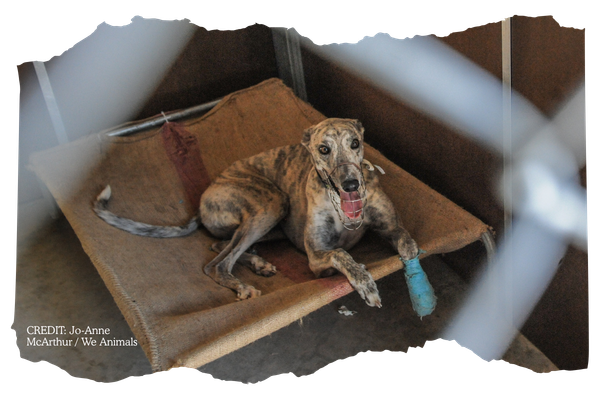
Chasing a mechanical lure at high speeds around a track in close proximity to other dogs is extremely dangerous. Racing presents inherent risks, and even minor incidents can result in collisions and falls that result in fractures, broken bones, spinal injuries, soft tissue damage or significant trauma.
These injuries can be life-threatening, end a racing career, or require extended recovery periods. In some cases, the injuries are so significant that on-track euthanasia is required (counted as a death) or they are euthanised or killed off-track after the race (not published as an official death).
In South Australia alone, more than 1,000 injuries were recorded by the Coalition for the Protection of Greyhounds on greyhound racing tracks in 2025. Nationally, the figures are even more concerning, with over 10,000 injuries reported, including more than 2,000 classified as major.
Some of these injuries may have resulted in deaths, but due to a lack of transparency in reporting, the true number of deaths caused by racing remains unknown.
A fleeting moment of respite from a largely caged existence…
Racing makes up only a small part of a greyhound's life. In South Australia, industry codes and government inquiries show that racing greyhounds are typically housed in registered kennel establishments and transported to tracks when required to race.
Their daily routines are structured around controlled housing, handling, and scheduled movement rather than free roaming, meaning the brief time spent racing represents only a small fraction of their overall lives.
Outside of the racing environment, greyhounds are widely recognised as companion animals. They are typically calm, social, and well suited to home environments. Many enjoy low-intensity lifestyles, with short periods of activity followed by extended rest. They benefit from safe, enriched environments and positive human interaction.
While greyhounds may have a natural inclination to run, racing is a structured activity that involves conditioning, selection, and exposure to risk. It is therefore important to distinguish between voluntary behaviour and participation in a system where animals do not have a choice over their involvement.
Ongoing consideration of injury rates, welfare outcomes, and transparency remains critical in assessing whether current practices meet acceptable animal welfare standards.
Rest In Peace - Turbo Tully
And then there are individual stories that cut through the statistics. Turbo Tully was a two‑year‑old greyhound who died in agony after being distracted by a bird and suffering a catastrophic leg injury on the Capalaba track in Queensland. Footage shows her veering off course, tail spinning and face twisted in pain before the on‑track vet killed her.
She was raced four times in just eighteen days and became one of seventeen greyhounds to lose their lives on Australian tracks in February 2026. It's a stark reminder of how disposable these dogs are to the industry.
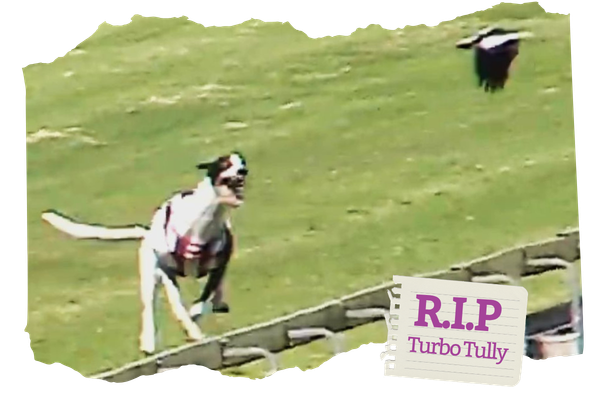
Image: Coalition for the Protection of Greyhounds (CPG).
In 2023, the report from the independent inquiry into South Australia's greyhound racing industry laid out 87 recommendations to address the governance and grievous animal welfare issues in greyhound racing.
As much as RSPCA South Australia welcomes reform that will genuinely improve the lives of greyhounds in the racing industry, we have serious doubts that SA's greyhound racing industry will clean up its act by the Inquiry deadline of 7 July 2026.
And even if the industry does implement all inquiry recommendations, it's doubtful that these measures will fix the deep‑rooted animal welfare problems that have resulted in thousands of greyhounds being injured, killed or rejected from the industry (fate unknown) over so many years.
If the industry wants to earn the community's trust, it must clearly and consistently demonstrate, with evidence and transparency, that every greyhound is afforded good welfare from birth through to the end of their life.
Until that happens, Greyhound Racing SA cannot claim a social license to operate.
Greyhounds deserve better.
If you believe this too, please stand with us.


