
As Ukraine enters its fourth winter under full-scale invasion, millions of civilians face renewed hardship from relentless attacks, widespread power outages and freezing temperatures that are straining an already exhausted population.
Ongoing strikes on energy infrastructure have left entire communities uncertain whether they will have heat, electricity and clean water in the months ahead, while fresh displacement continues along active frontlines.
Humanitarian agencies warn that this winter could be one of the most difficult yet, as intensified bombardment, worsening access constraints and growing funding gaps threaten to leave hundreds of thousands without adequate support.
At the same time, the psychological toll of nearly five years of conflict is becoming ever more visible across the country.
In an in-depth interview on Monday with UN News, Matthias Schmale, the UN Resident and Humanitarian Coordinator in Ukraine, describes the mounting winter risks, the deepening vulnerability of civilians, the funding shortfall facing the relief response and the resilience he continues to witness every day, in communities living under fire.
He started by describing the humanitarian situation and the most pressing concerns.
This interview has been edited for length and clarity.
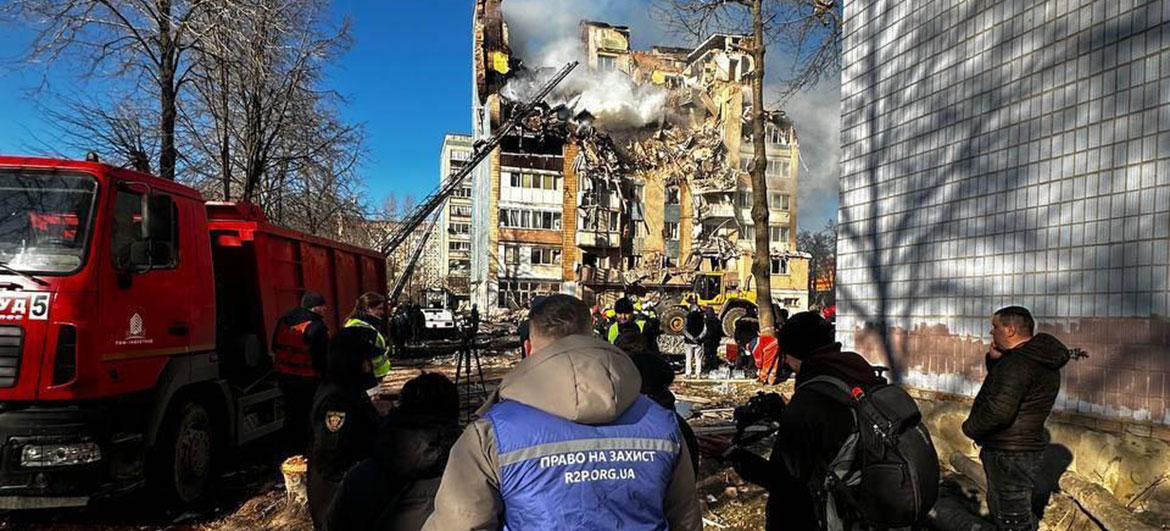
Matthias Schmale: There are several key concerns. First, the ongoing military strikes continue to have a direct and deadly impact on civilians. Just last night, four civilians were killed in Dnipro and dozens were injured. This kind of impact is constant.
Second, the attacks are severely damaging energy generation and distribution infrastructure. With cold temperatures already setting in, we are particularly worried about people's ability to keep warm and have access to safe drinking water.
If this destruction continues and if the winter is as cold as forecast, our biggest nightmare is thousands of people stuck in high-rise buildings without electricity, heating or water. Managing that scenario would be extremely difficult.
UN News: Can we safely say this winter will be different from what we already experienced?
Mr. Schmale: Yes, we fear it might be. There is a cumulative effect now, as we move into the fourth year of this war. This is not only visible in physical destruction, but also in psychological terms. I see this during my travels across the country - people are becoming increasingly tired and weary, and more uncertain about their future.
What also makes this winter different is the scale of recent infrastructure damage. Last year, repairs were progressing relatively well and the winter was milder than expected.
This year, the level of destruction has been significantly higher and forecasts suggest a colder winter. That combination makes this winter potentially much more difficult.
UN News: Which population groups are most vulnerable right now?
Mr. Schmale: One group is low-income people living in high-rise apartment buildings in cities, especially in poorly constructed housing. They are particularly exposed if electricity and heating fail.
Another highly vulnerable group is people living close to the frontline. We estimate at least half a million people live within zero to 20 kilometers of the front. Many are older people and those with limited mobility.
A third group includes the most vulnerable among the internally displaced people (IDPs). Many have been displaced for several years now. Some have found solutions with family, jobs or rental housing, but many remain in precarious conditions and continue to need support.
UN News: The number of displaced people keeps growing as evacuations continue from frontline communities.
Mr. Schmale: We see displacement in waves rather than a steady increase. There was a significant wave in August, and we are seeing new movements again now.
I recently visited Donetsk region, and the governor told me fewer than 200,000 people are left in the government-controlled part of the oblast. He fears that at least half of them may leave this winter.
The number of IDPs is not rising at the same dramatic pace as in 2022, but it is steadily increasing.
UN News: Why do so many people still stay in such dangerous areas?
Mr. Schmale: I ask this question often, and the answers reflect a mix of factors. For some, it is deep attachment to their land and home - their families have lived there for generations.
Others simply lack alternatives. Some people did move to safer areas but could not find housing or jobs. They told me they preferred to return home where they at least do not have to pay rent, even though it is more dangerous.
There is also a strong sense of endurance and defiance. Some say, "We have survived four years; we will survive another year." Others believe they must stay to honor those who have lost their lives defending the country. It is a combination of emotional, economic and psychological factors.
UN News: How does winter affect humanitarian operations on the ground?
Mr. Schmale: Winter makes everything more hazardous. Road conditions deteriorate with snow and ice, and many frontline convoys delivering food, water, hygiene items and heating supplies face greater risks.
Another major challenge is the constantly shifting frontline. Russian advances in certain areas, even if not decisive, have made access impossible for some communities. The World Food Programme ( WFP ) estimates that at least 50,000 people they previously reached can no longer be accessed because of fighting. This severely constrains our ability to deliver life-saving aid.
UN News: How important is cooperation with local authorities?
Mr. Schmale: It is absolutely essential. Ukraine is not a failed state. It remains a functioning state that continues to deliver services under extraordinarily difficult circumstances.
I have seen functioning health centers close to the frontline, and further away markets are fully operational. The government, including local authorities, remains primarily responsible for the safety and well-being of its citizens.
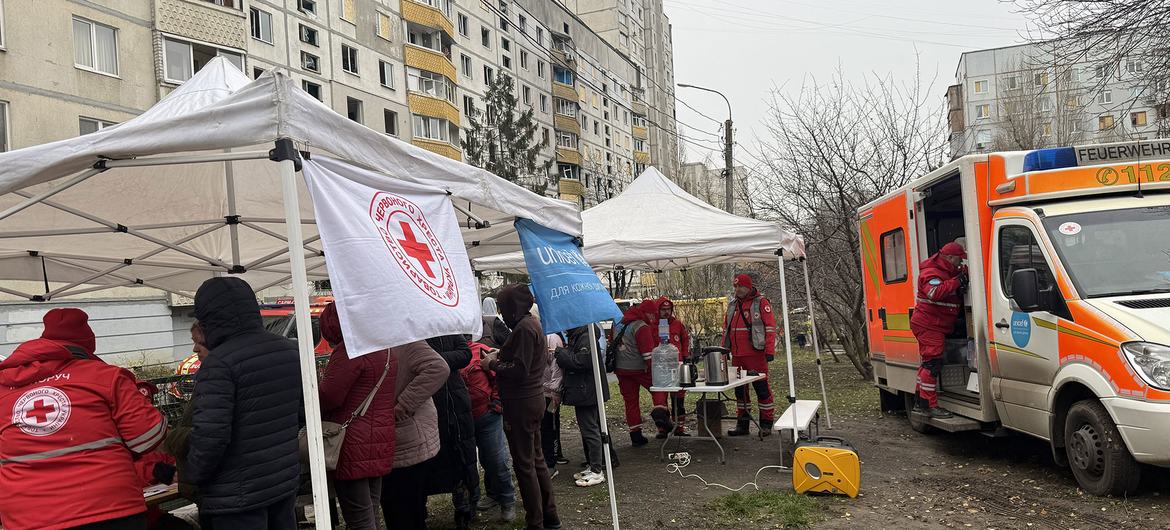
Our role as the UN and humanitarian community is to work in a complementary way - identifying what the authorities can still provide and where we must step in to reach the most vulnerable. We work closely with the government and with more than 400 NGOs, many of them Ukrainian, to ensure our assistance fills the most critical gaps.
UN News: Let's talk about the winter humanitarian plan. What are the key figures and how well is it funded?
Mr. Schmale: Our winter plan aims to reach 1.7 million people - mainly those living close to the frontline and in rural areas. This does not include all vulnerable urban residents, particularly those in high-rise buildings.
We provide cash assistance so people can purchase heating supplies such as wood, gas or electricity. We also provide warm clothing and essential non-food items.
The winter appeal is about 65 per cent funded. We requested $278 million. We have been able to do a lot with what we received, but funding gaps mean many people are still waiting for assistance, particularly cash and solid fuel for heating. We continue to appeal to the international community to fully fund the response so we can reach everyone in need.
Our winter plan aims to reach 1.7 million people - mainly those living close to the frontline and in rural areas.
UN News: Is there a plan B if additional funding does not arrive?
Mr. Schmale: For the people themselves, plan B is to move. If they do not receive support from us, the government, the Ukrainian Red Cross or others, they may relocate to other parts of the country in search of heating and clean water - or even leave the country.
If we reach the nightmare scenario of people stuck in high-rise buildings without utilities, population movement will be inevitable. Our ability to prevent that depends entirely on funding.
UN News: What is your message to the Ukrainian people and to the international community?
Mr. Schmale: To the Ukrainian people: as long as we have the means, we are determined to stay and deliver. That is the UN's responsibility - to stay and support civilians through thick and thin.
To the international community: thank you for the generosity shown so far. It has allowed us to help countless people survive harsh winters and summers of war. But the war is not over. We must not normalize what is happening in Ukraine as it enters its fifth year. I appeal especially to governments to continue funding this vital humanitarian work.
There are countless stories that show both the strength of the Ukrainian people and the heavy psychological toll of war.
UN News: You travel extensively across the country. Is there a story that particularly stayed with you?
Mr. Schmale: There are countless stories that show both the strength of the Ukrainian people and the heavy psychological toll of war.
A few weeks ago in Kharkiv, I spent an entire morning underground with about 100 students, because public events must take place in shelters. During the discussion, I received messages that a kindergarten nearby had been bombed. After the meeting, I went to the site. The kindergarten had been hit three times. Thankfully, no children were hurt.
There I met a woman who works as a humanitarian. She had dropped her children at that very kindergarten that morning, was called to collect them after the bombing, brought them to safety - and then returned hours later to help with cleanup. That level of resilience is extraordinary.
Another experience was in Kherson, a city under constant bombardment. Above ground it felt desolate, with destruction everywhere. But underground, I visited a modern maternity ward where new life was being delivered safely. The contrast between war and hope was striking.
And in Mykolaiv, I met an older man who stayed in his home during occupation. He proudly showed me how he and his wife rebuilt their house and vegetable garden.
Then he told me his brother was killed in 2022, and he completely broke down. In one moment, you see resilience; in the next, immense grief. That contrast defines Ukraine today.


