
On Friday the General Assembly was briefed on the latest developments of the UN80 Initiative - a system-wide reform effort to make the organisation more effective and fit for the future - including progress on the New Humanitarian Compact and on training and research reforms.
Teams under the leadership of UN Secretary-General António Guterres have been working on a wide-ranging set of proposals, spanning peace operations, development, human rights and humanitarian action, as well as cross-cutting areas such as data, technology and shared services, since the Initiative was launched in March 2025.
This includes efforts to generate efficiencies within the UN Secretariat, strengthen the creation, implementation and review of mandates (decisions adopted by Member States that direct the work of the UN), and explore ways to strengthen coherence and collective delivery across the UN system.
The briefing on 27 February focused on proposals for streamlining humanitarian support and the potential merger of some of the UN's training and research bodies.
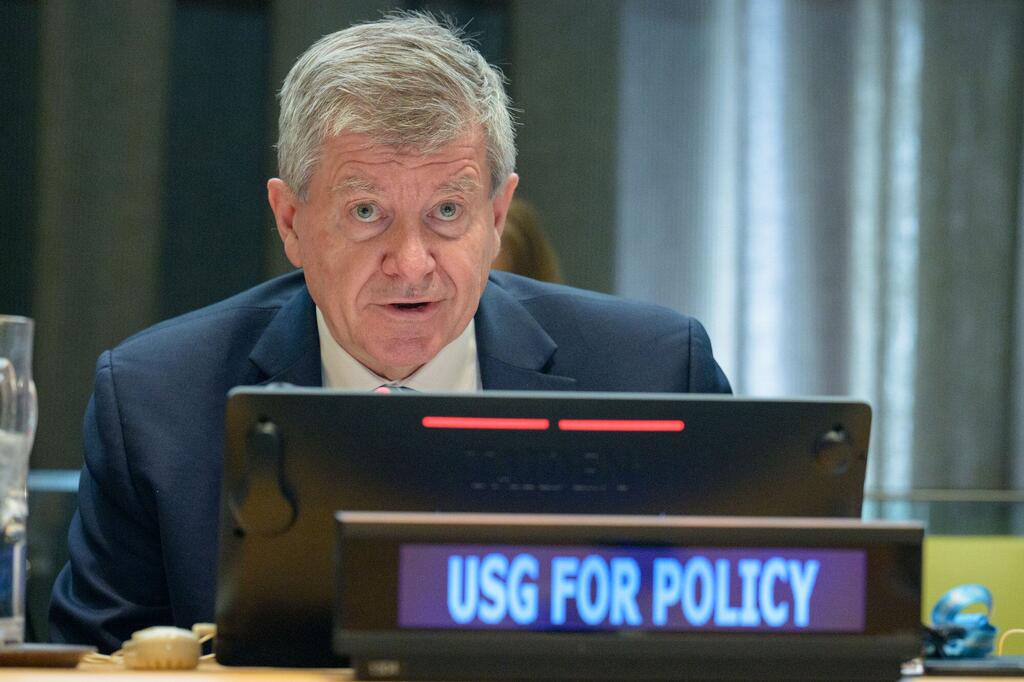
Mr. Ryder began the Friday morning briefing with an overview of the progress of the UN80 Initiative over the past 12 months, and an acknowledgment that the complexity of the work has been challenging for Member States to stay on top of it. He promised to deliver clear information and a full vision of the process in a forthcoming report.
Duplicated UN humanitarian efforts 'no longer sustainable'
Tom Fletcher, the UN Emergency Relief Coordinator, led a briefing on the New Humanitarian Compact, a process of reforms to the organisation's humanitarian operations, which are under exceptional strain as they attempt to address multiplying conflicts, intensifying disasters and pressure on international humanitarian law.
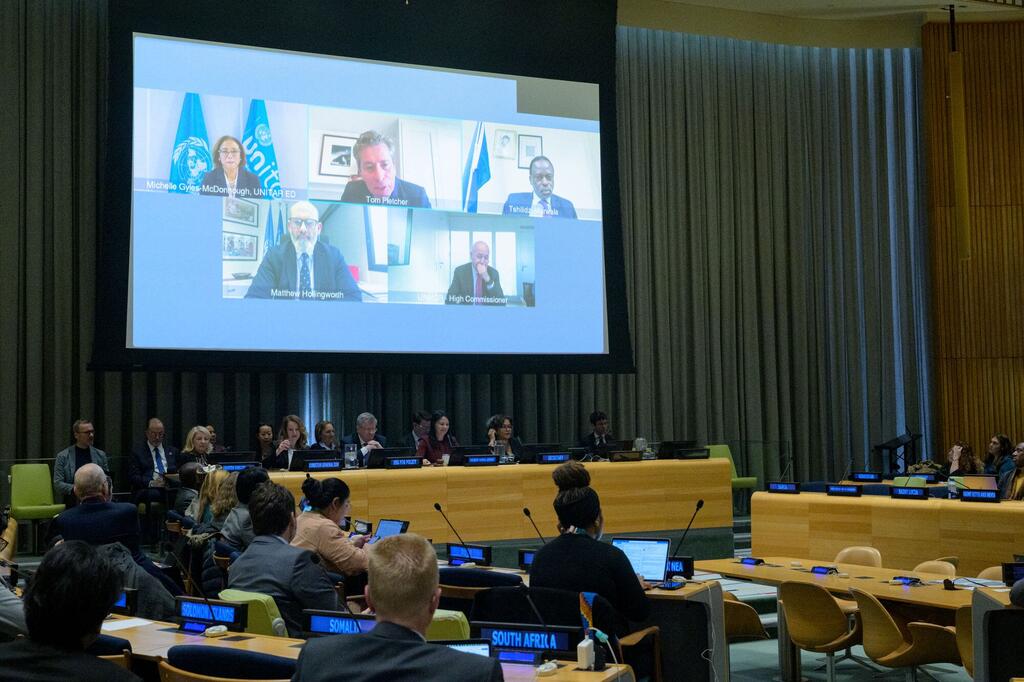
Mr. Fletcher was joined by several leading officials from the UN system (Catherine Russell, Executive Director of the UN children's fund; Amy Pope, Director-General of the UN migration agency; Barham Salih, the head of the UN refugee agency and Matthew Hollingworth, Assistant Executive Director of the World Food Programme). The officials all explained how their agencies are ramping up cooperation and, in the words of Mr. Fletcher, "working as one unit."
Ms. Russell said that a system in which humanitarian agencies operate parallel warehouses, fleets, contracts, and logistics networks is no longer sustainable. "We are taking a real step towards meaningful coherence," she declared. "When supply chains are integrated, children receive assistance faster. When nutrition systems are aligned, fewer children become malnourished. When diplomacy is coordinated, access improves."
Mr. Fletcher, who lauded the efforts of the five UN aid bodies to work more closely together, noted that, at a time when humanitarian needs are rising faster than the available resources, the collaboration that is already taking place is making a tangible difference on the ground.
"It's absolutely vital that we reform," said the humanitarian chief, "because we know the impact of what we do. The reset is about defining more clearly our work around life-saving priorities first, radical reform to the efficiency in the way we deliver, and defending our values and our principles, which are under sustained attack."
Fixing a fragmented training and research system
Training and research are vital functions of the UN system, but the landscape is fragmented, with overlapping functions, high costs and financial vulnerabilities.
Professor Tshilidzi Marwala, the Rector of UN University (UNU) and Michelle Gyles-McDonnough, the Executive Director of the UN Institute for Training and Research (UNITAR) described reform proposals which would involve the merging of training and research bodies, and a UN System Coordination Mechanism aimed at a more efficient use of resources.
Mr. Marwala also shared ideas for an AI platform to help address disinformation and strengthen links between research and training. "In a complex organization such as the UN, expertise and operational experience are often dispersed across entities," he said. "Such a platform could connect operational expertise and member state needs with research priorities while translating research findings into practical training tools."
Next steps towards a 'fit for purpose' UN
The next major update of the work of the UN80 Initative for civil society is scheduled to take place at a Town Hall in late March. A high-level event co-designed with civil society is also planned for the High-Level Political Forum (HLPF) in July.
The Secretary-General aims to be able to demonstrate to Heads of State and government by the September high-level week of the General Assembly (UNGA 81) that the UN system is effectively meeting its responsibilities, changing and improving with serious levels of ambition.
"What is at stake," said Mr. Ryder, "is no less than whether the United Nations system can rise to this moment and deliver on its commitments to build a UN that is truly fit for purpose and capable of responding effectively to today's challenges and tomorrow's uncertainties."
Progress under the UN80 Initiative can be tracked through a public dashboard , which provides an overview of actions, timelines and implementation across the system.
The New Humanitarian Compact
The New Humanitarian Compact , part of the UN80 Initiative, is about delivering faster, leaner and more accountable humanitarian support, and maximizing impact of available resources. Specific measures include:
- Streamlining humanitarian planning and reporting.
- Integrating global supply chains to reduce duplication.
- Common Services Catalogue (single entry point where UN entities can see available services and providers).
- Humanitarian Data Collaborative, enabling consistent data exchange for improved targeting of aid.
- Collaborative Humanitarian Diplomacy Initiative, bringing UN agencies together under the coordination of the Emergency Relief Coordinator to reduce duplication and strengthen impact.
- Aligning agencies' responsibilities to clarify their roles in areas of food security, mobility, beneficiary data, and health and nutrition.
Training and Research reforms
The UN80 Initiative's goal is the creation of two dedicated pillars (one for training and one for research), via the following actions:.
- The UN80 Initiative's goal is the creation of two dedicated pillars (one for training and one for research), via the following actions:
- Merger of the UN System Staff College (UNSSC) into the UN Institute for Training and Research (UNITAR) to establish a single, coherent training institution serving staff and Member States, whilst preserving the mandates of both entities.
- Integrate the UN Research Institute for Social Development (UNRISD) into the United Nations University (UNU). UNRISD would become a new research institute within UNU, making the UN's research functions more coherent.
- Establish a Joint UN System Coordination Mechanism, co-led by the UNU Rector and UNITAR Executive Director. The aim is a more efficient use of resources, and an improvement of system-wide coherence.
.


