
Since the 19th century, industrialisation has had a transformative effect on the world, both positive and negative. It has created jobs and lifted millions out of poverty. But it has also had devastating consequences; destroying ecosystems, polluting the air, and driving the climate crisis that threatens to make large parts of the planet uninhabitable.
But it doesn't have to be this way. The UN Industrial Development Organisation ( UNIDO ), a technical agency created in 1966 to help the Global South develop and industrialise, is today committed to ensuring the countries progress in a way that benefits us all, as well as the planet itself.
At the Global Industry Summit in Riyadh, Saudi Arabia, Fatou Haidara, the Managing Director of Global Partnerships and External Relations at UNIDO, sat down with Conor Lennon from UN News to look back at the agency's changing priorities, and why it is needed more than ever as it enters its 60th year.
This interview has been edited for clarity and length
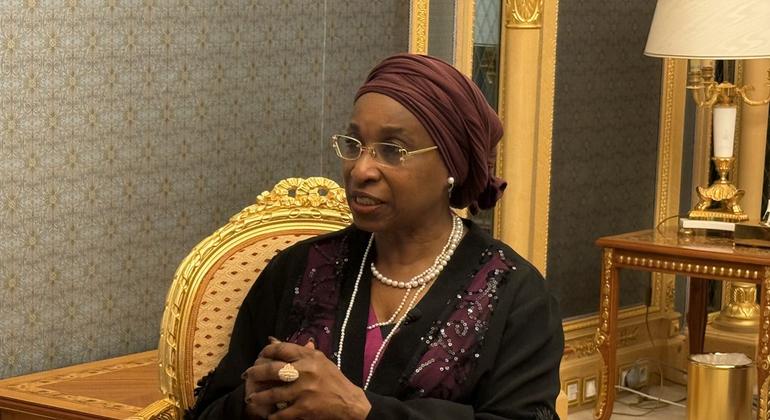
Fatou Haidara: When UNIDO was created, industry was considered a polluter. Industrial policy was not a good phrase, and the environment was not such a concern. In the meantime, we've seen that industrialisation is not only about manufacturing; it's a whole process starting from policy, to strengthening institutions, and about making small and medium-sized enterprises competitive.
If you put all of these elements together, you realise that no one can tackle all of them alone. Therefore, for us, the crucial element is partnerships with governments, and the second important partner is the private sector. We need to support government in preparing the right space for industries or the private sector to invest in the technologies that are required today.
We need to protect the planet, but we need to lift as many people as we can out of poverty; this is what drives our work.
UN News: You support countries even when they are in the middle of conflicts. When a Member State like Sudan is at war, what can you actually achieve?
Fatou Haidara: I think UNIDO is one of the rare institution that decided to continue its activities. We think that it's precisely when countries are in difficult situations that they need support.
We are very careful when continuing the activities, but we do stay with the government to support them, and this has happened in Sudan and in other conflict areas. We prepare the ground, we start working on industrial strategies with the government and for this, you don't need to be physically in the conflict zone.

UN News: How important are environmental concerns to your work at UNIDO?
Fatou Haidara: We have different categories of Member States and we have dedicated strategies for all of them. For some countries, it's about energy access. For others, it's about decarbonising big polluting industries or energy efficiency. We have all these different approaches depending on the level and the sectors we are working in. In all these strategies, climate is there, but it's not a one-size-fits-all policy.


