
New research led by a University of Oregon ecologist suggests that fire was historically more frequent in the Douglas fir forests of the western Oregon Cascade Range than previously believed.
In the first study to use tree-ring scars to resolve fire records across the region, the findings challenge a longstanding convention that the state's temperate rainforests historically experienced extended fire-free periods. As described in a paper published on Jan. 14 in Ecosphere, two-thirds of the 36 sites investigated reburned multiple times between 1300 and 1850, before land management policies that suppressed fire were introduced at the turn of the 20th century.
"We live in one of the moistest parts of the world, so we don't think of fire as being an important influence in this neck of the woods," said lead author James Johnston, a landscape and fire ecologist at the UO's Institute for Resilient Organizations, Communities, and Environment. "But in fact, Douglas fir forests historically experienced a lot of fire."
Conducted with collaborators at the U.S. Forest Service and Oregon State University, the paper adds further evidence that the high-severity fires followed by long fire-free periods seen over the last century are not necessarily typical for the region. The team identified only three historical fire events of comparable size to the half-dozen large fires of the early 2020s, such as the Holiday Farm fire that tore through the McKenzie River valley in 2020.
Instead, when fires did burn in the past, the landscapes typically reburned over decades, creating gaps in the tree canopy. Most of today's old-growth Douglas fir forests are the product of multiple fires when they were young, the tree records suggest.
"It's not the absence of fire that makes these old-growth forests so stupendously complex," Johnston said. "It's the occurrence of low- and moderate-severity fires, which don't kill all - or even most of - the trees, that open gaps in the canopy and stimulate understory vegetation and new trees in the hundreds of years that follow."
The study offers new context for how forest managers approach fire in the region, especially as fire seasons expand across the Pacific Northwest.
"The findings make management more complex, and it raises more questions than it answers," Johnston said.
'An agent of forest complexity'
Much of Johnston's work over the past 10 years has been focused on Eastern Oregon, home to dry ponderosa pine forests that historically burned often. But his latest research shifts west, motivated by a personal connection.
"I was born and raised in Western Oregon and always wondered what the fire history was of these magnificent Douglas fir forests that I grew up around," Johnston said. "I was also a little skeptical of the conventional theory that they experienced little fire."
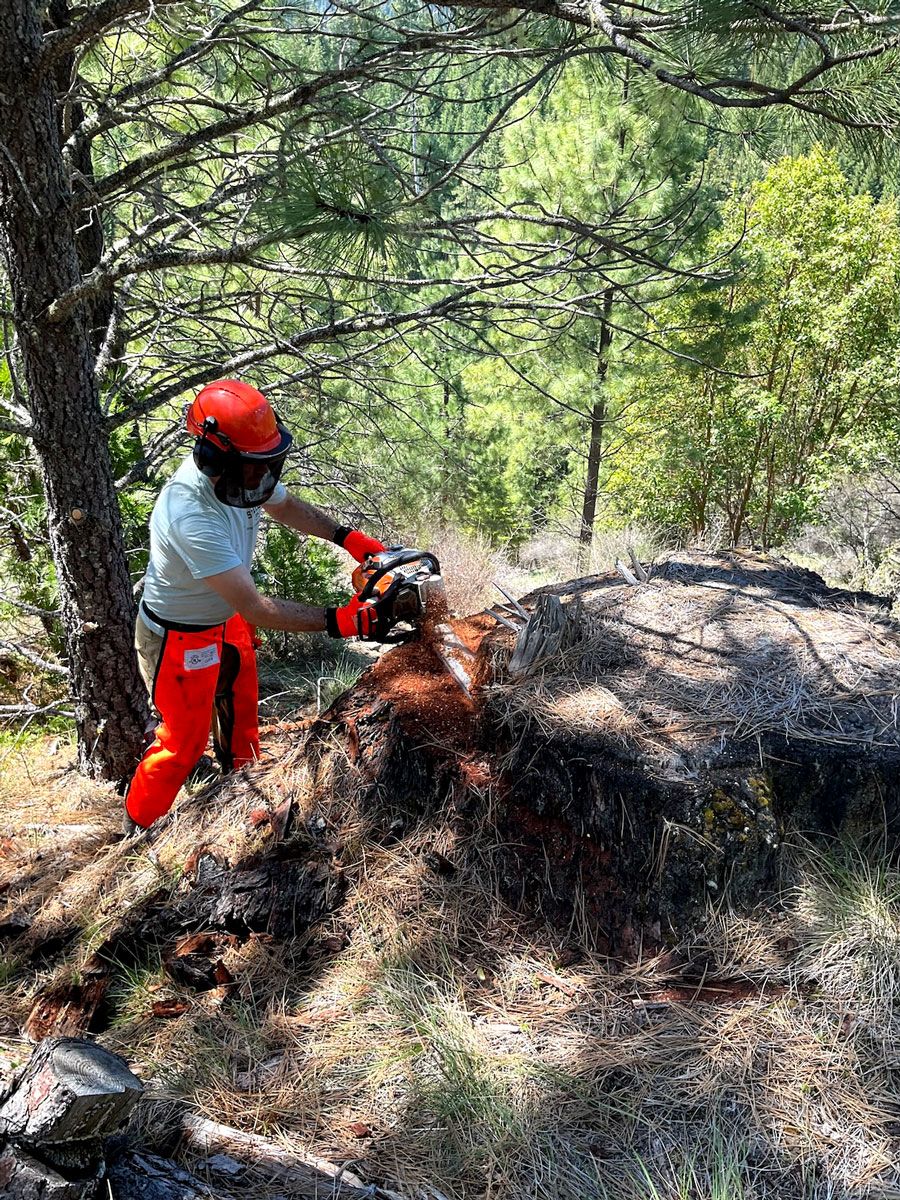
James Johnston samples the top of a Douglas fir stump, left over from previous clear-cutting.
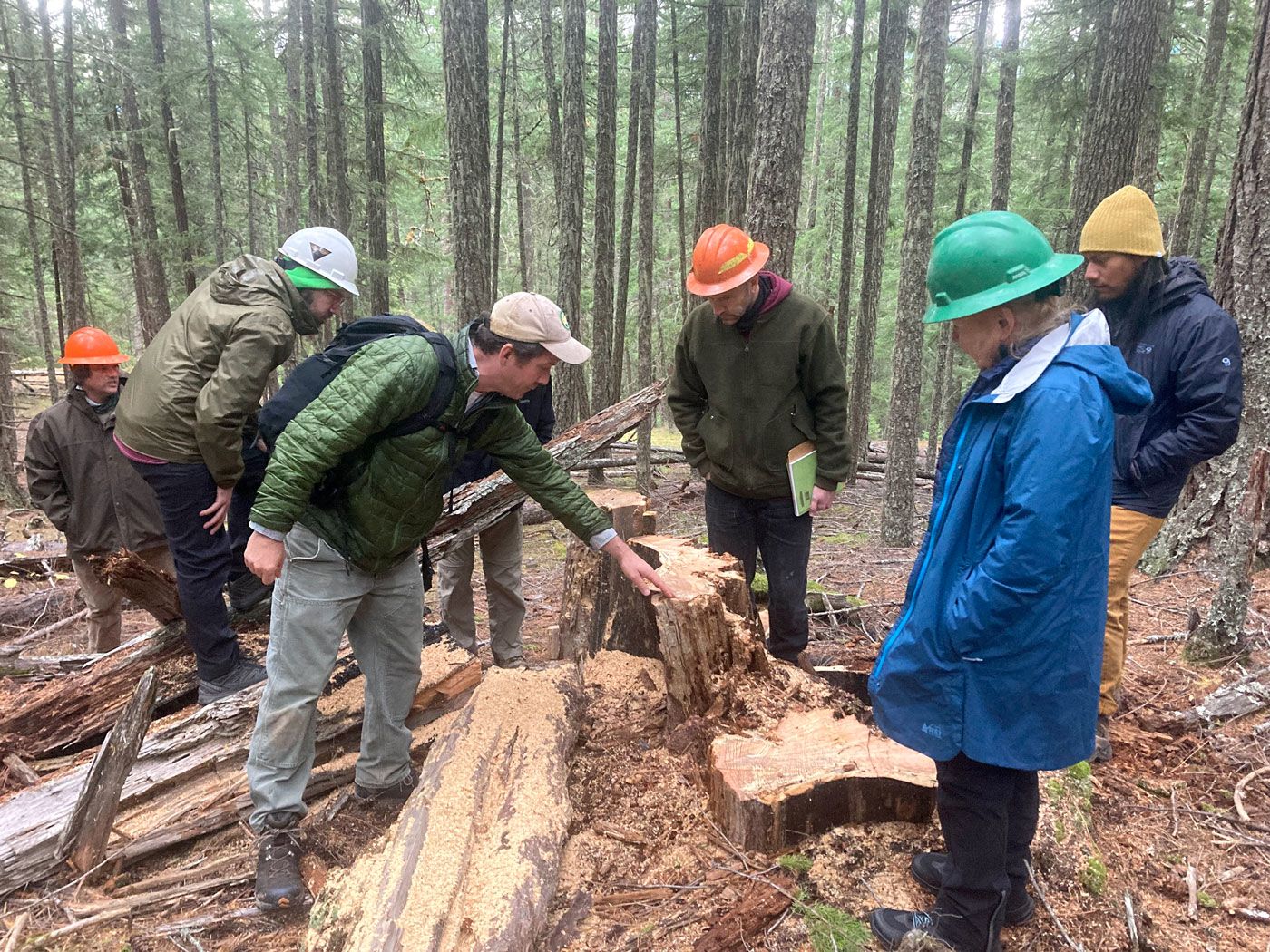
His team collected 667 wood samples from 36 sites on the west slopes of the Oregon Cascades, including areas within the Mount Hood and Willamette National Forests. They used chainsaws to cut the tops off old-growth stumps left over from previous clear-cutting and examined the scars preserved within the tree rings.
Just like how human skin covers a wound, wood heals over burns, Johnston said. The fire scars remain embedded in the tree for hundreds of years as it continues to grow.
Cross-dating the scars and rings to a federal database, the researchers reconstructed fire histories from as early as the 1100s.
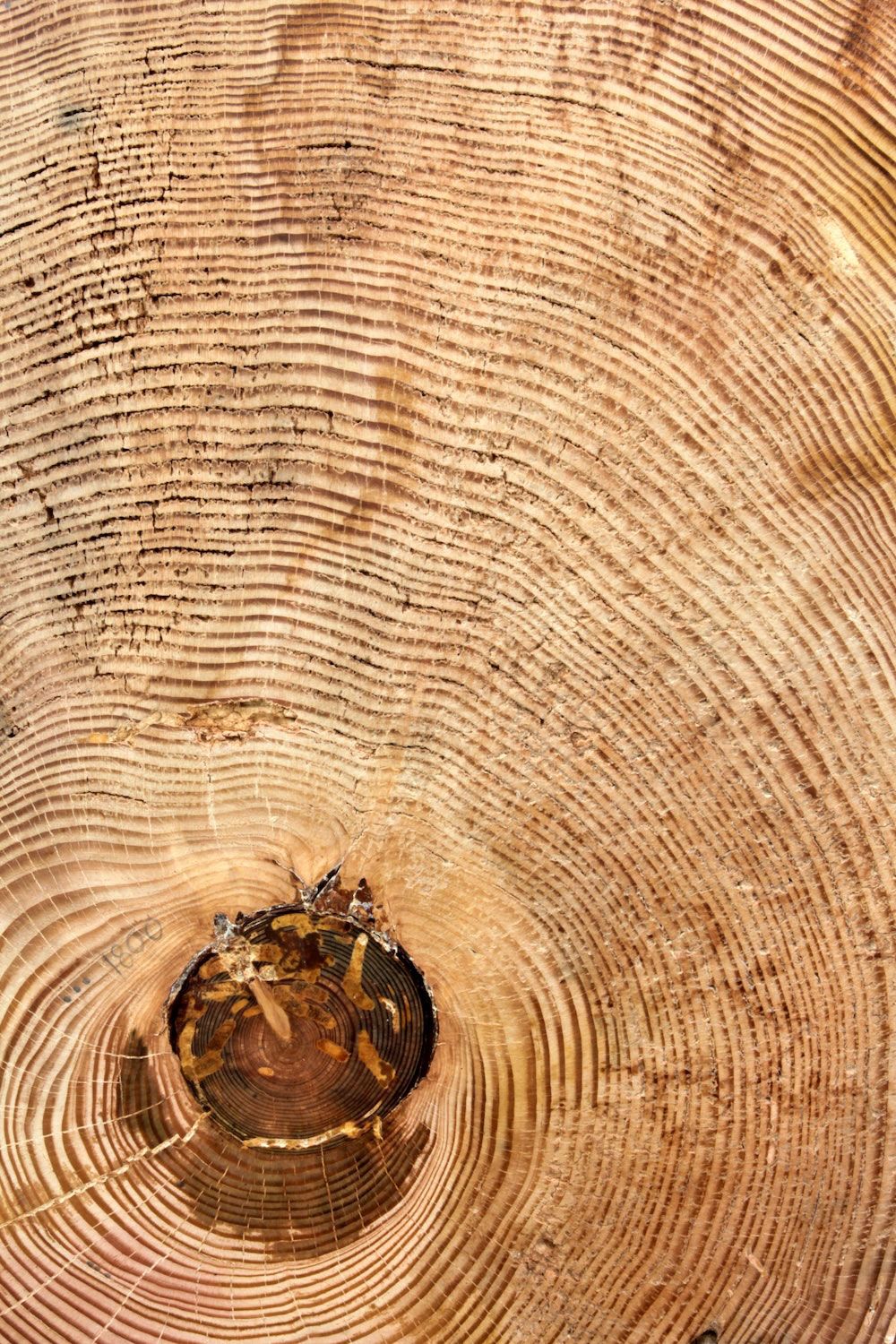
Fire scars are distinct lesions in tree rings that serve as living records of a forest's fire history.
While the researchers note they probably didn't capture every fire, the record revealed far more than what many scientists and managers working in Douglas fir forests likely anticipated, Johnston said. They found a total of 412 fire scars that documented 129 different fire years, suggesting it's fairly rare for the sites to go hundreds of years without fire.
Scientists like Johnston knew that fires had historically occurred in Western Oregon forests, including the use of small-scale cultural burns by Indigenous groups to help manage landscapes. But the frequency and scale of past fires documented in the tree rings surprised Johnston and his team.
"Fire is really an agent of forest complexity," Johnston said.
James Johnston samples the top of a Douglas fir stump, left over from previous clear-cutting.
Fire scars are distinct lesions in tree rings that serve as living records of a forest's fire history.
Reintroducing fire isn't so simple
The findings suggest that today's Douglas fir forests are substantially different from their historical conditions, in part because of the modern fire-exclusion policies introduced for timber production, Johnston said. That shift has implications for species like the northern spotted owl, which adapted to the complex forest structures shaped by fire.
But it's unlikely that we could recreate those historical conditions, Johnston said, because the forests have changed so much.
"There's been extensive clear-cut harvesting that's left behind forest structures that are unlike anything that existed historically," he said. "We also have warmer, drier and longer fire seasons. So a lot has changed over the last 100 years, which makes it hard to imagine that we can go back to the historical fire regime."
Rather than recreating the past, Johnston is working with local organizations, like the Southern Willamette Forest Collaborative, to develop approaches aimed at restoring forests' capacity to adapt to future change.
"Managers of public and private lands in Western Oregon are going to face tremendous challenges in the coming decades," Johnston said. "We're going to need to continue to study these systems and develop collaborations between community stakeholders, scientists and managers to plan new management strategies that sustain these unique ecosystems over time."
The work is supported by the U.S. Forest Service and the Oregon Department of Forestry.


