When fighting recently intensified near her neighbourhood in Aleppo, in northern Syria, Fatima and her family had to run.
Now eight months pregnant and sheltering in a makeshift camp, the mother of three said her biggest fear isn't the biting cold - it's what will happen if she goes into labour.
"I worry about my health, but I worry more about where to go if something happens," said Fatima. "Displacement is not just losing your home. It's losing your privacy, your safety and access to healthcare, especially as a woman."
Every step we took felt like it could be our last
She is one of tens of thousands of women and girls affected by the uptick in violence and insecurity around Aleppo in the past few weeks, which has forced large numbers to flee, disrupted essential services and shut down hospitals.
"We fled under bombardment, with nothing but our fear," Farida, 39, told the United Nations Population Fund (UNFPA) , which is the UN's sexual and reproductive health agency.
"Every step we took felt like it could be our last."
Unbearable cold
In Aleppo, some 58,000 are still displaced following recent clashes between the transitional Government's security forces and the mostly-Kurdish Syrian Democratic Forces (SDF), with insecurity spreading to surrounding areas.
To make matters worse, winter conditions have only deepened the suffering: thousands are now enduring freezing temperatures, sheltering in makeshift camps, former schools and unfinished buildings across the country.
Ruhan, a mother of three from Aleppo, fled with only what she could carry.
"The cold is unbearable. My biggest fear is keeping my children warm and safe," she told UNFPA aid workers, who provided her with reproductive health services, counselling and a dignity kit.
Delivering aid
More than 890,000 people had been newly displaced as of December 2025 in Syria, adding to almost seven million already displaced inside the country.
Fourteen years of conflict, climate shocks, and economic decline have left Syria's recovery fragile and uneven, with immense humanitarian needs and severely damaged healthcare systems.
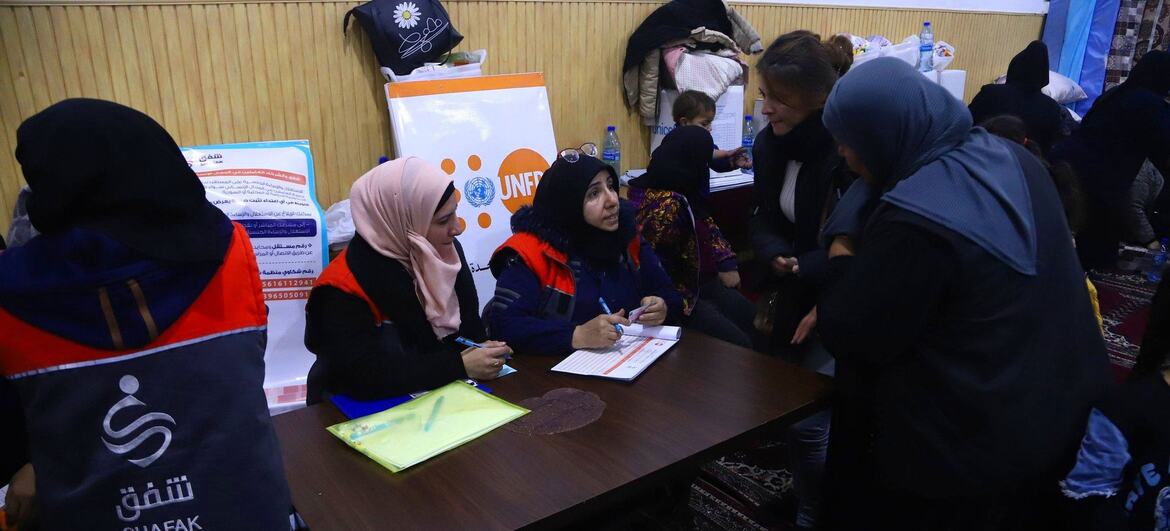
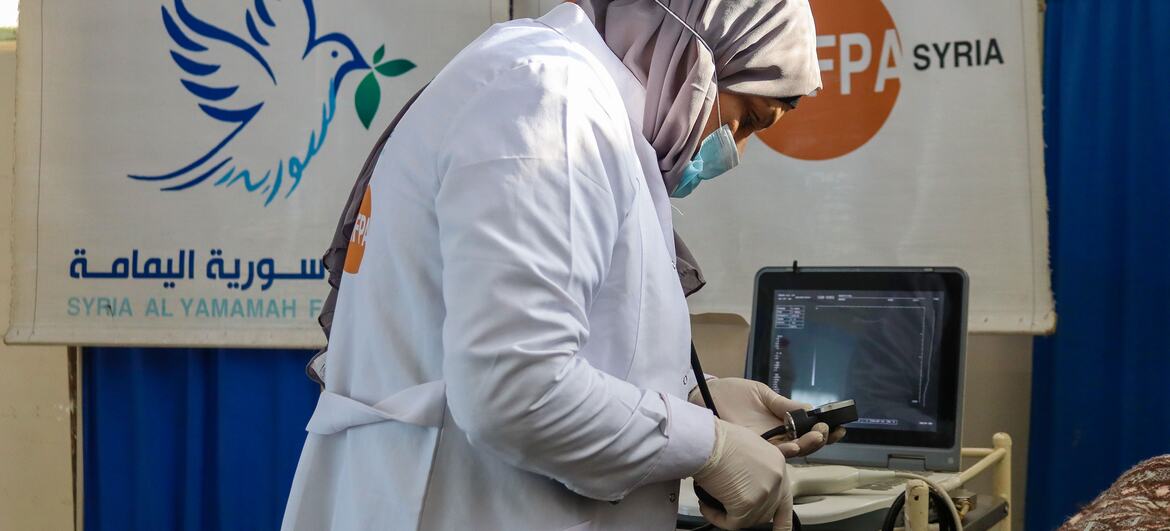
In response, UNFPA and its partners have sent mobile health teams to reach displaced communities with life-saving sexual and reproductive healthcare, dignity kits with essential hygiene items, and psychosocial counselling.
Around 400,000 pregnant women in Syria are struggling to access essential maternity services - a situation worsened by deep funding cuts which began last year that have further restricted access.