
A fragile political calm in Yemen is fraying, with renewed instability and aid restrictions deepening hunger, illness and displacement for millions of civilians, senior UN officials warned the Security Council on Wednesday.
Briefing ambassadors, UN Special Envoy for Yemen Hans Grundberg said recent political and security developments - particularly in the south - underscored how quickly stability could unravel without a credible, inclusive political process.
"Absent a comprehensive approach that addresses Yemen's many challenges in an integrated manner, rather than in isolation, the risk of recurrent and destabilising cycles will remain," Mr. Grundberg said .
Tensions in the south
While military de-escalation has been achieved in recent days, he cautioned that the security situation remains fragile, especially following rival deployments in southern governorates.
In December, forces affiliated with the separatist Southern Transitional Council sought to expand their presence in Hadramout and Al Mahra, while government-aligned forces, backed by Saudi Arabia, moved in early January to reassert control over key infrastructure.
Mr. Grundberg said the future of southern Yemen could not be determined "by any single actor or through force," urging Yemeni leaders to pursue dialogue.
He welcomed President Rashad al-Alimi's proposal to convene talks with a broad range of leaders in the south, calling it a potential step toward rebuilding a Yemen-wide political process under UN auspices.
Instability preys on economy
Political uncertainty is being felt most sharply in Yemen's economy, he added, with rising prices, unpaid salaries and faltering services eroding household resilience.
"Even short-lived political and security instability can trigger currency pressure, widen fiscal gaps, and stall reform efforts," Mr. Grundberg warned.
The economic strain is being compounded by weak institutions and irregular salary payments, particularly for public sector workers.
Mr. Grundberg urged Yemeni authorities to shield economic institutions -including the Central Bank - from political disputes, warning that erosion of confidence could further destabilise the country.
Severe humanitarian consequences
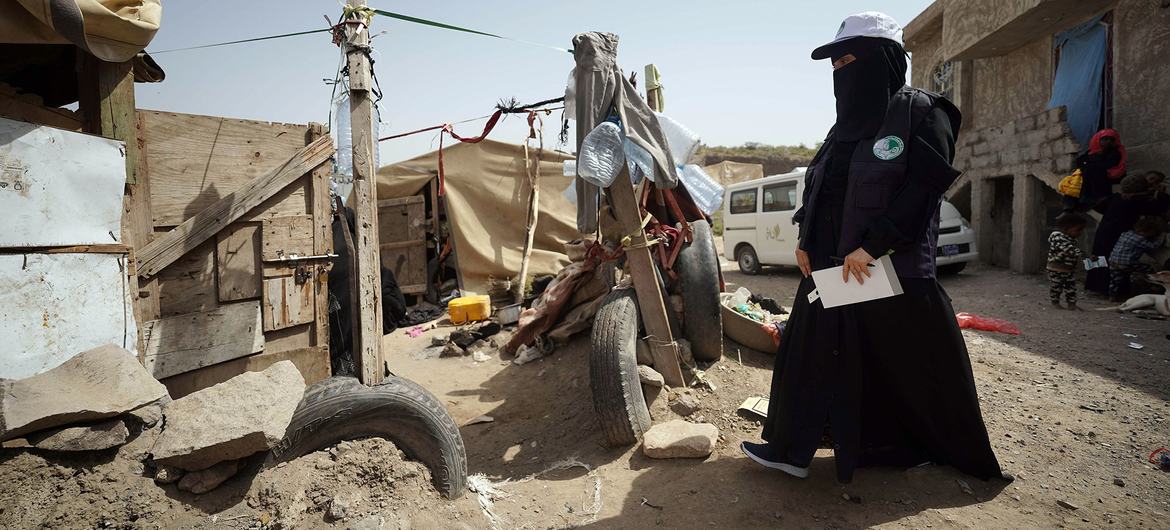
Ramesh Rajasingham, Director of the Humanitarian Sector for the UN aid coordination office ( OCHA ), said Yemen's crisis is worsening as needs rise, and humanitarian access has become more restricted amid funding shortfalls.
More than 18 million Yemenis - about half the population - will face acute food insecurity next month, while tens of thousands could fall into "catastrophic hunger," facing famine-like conditions, he warned.
The health system is also collapsing. Over 450 facilities have already closed and thousands more are at risk of losing funding. Vaccination programmes are also under threat and only two thirds of Yemen's children are fully immunised, largely due to lack of access in the north.
"As a result, millions of Yemeni children are vulnerable to deadly yet vaccine-preventable diseases, such as measles, diphtheria, cholera and polio," Mr. Rajasingham said.
Aid efforts restricted
Humanitarian operations are further constrained by the continued detention of 73 UN staff by the Houthi de facto authorities, Mr. Rajasingham said, calling for their immediate release. The detentions have severely restricted aid delivery in areas home to around 70 per cent of humanitarian needs nationwide.
Despite the challenges, aid continues where access allows. UN partners reached 3.4 million people with food assistance late last year and delivered emergency support during floods and disease outbreaks. But gains are fragile.
"Humanitarian action saves lives," Mr. Rajasingham said, "but when access is obstructed and funding falls away, those gains are quickly reversed."
Attacks in the Red Sea
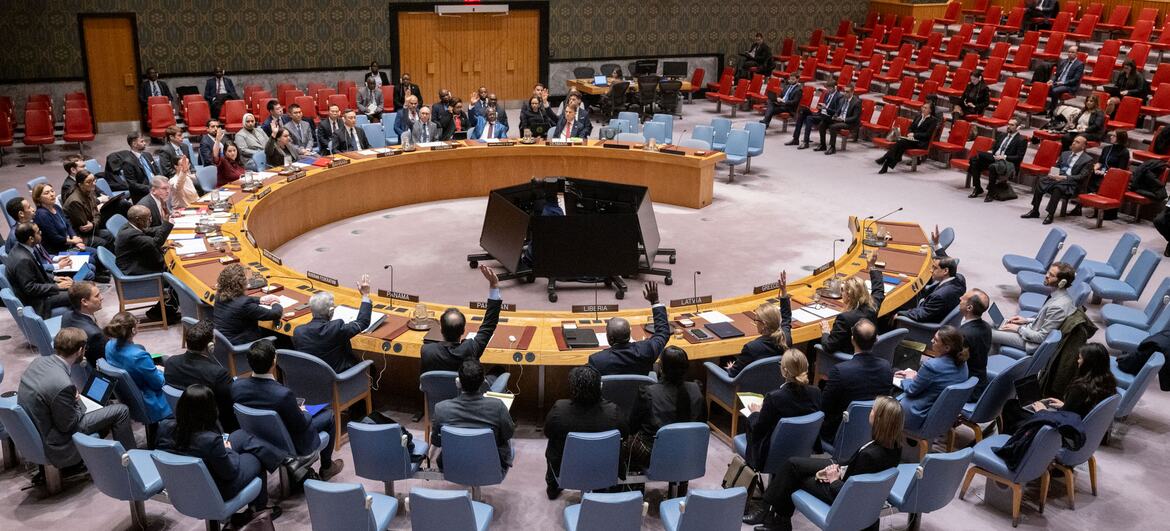
Earlier on Wednesday, the Security Council also voted to extend for six months, the monthly reporting requirement on attacks by the Houthi armed group - which controls much of Yemen - against merchant and commercial vessels in the Red Sea.
The resolution was adopted with 13 votes in favour, while Russia and China abstained.
The mandate was established in January 2024 amid a surge in Houthi attacks on international shipping linked to the conflict in Gaza.
It tasked the UN Secretary-General to provide regular updates on maritime security incidents, their humanitarian and economic impact, and implications for regional stability.


