A Japanese peace activist is hoping to promote global nuclear disarmament by keeping alive the stories of the atomic bomb survivors through the creation of a mobile museum.
Suzuka Nakamura from the southern Japanese city of Nagasaki, which along with Hiroshima, was targeted by an atomic bomb at the end of the Second World War, is determined to create the museum to bring the stories of hibakusha (atomic bomb survivors) to communities far beyond those two cities.
Ms. Nakamura, whose grandmother was a hibakusha, was selected as one of the 17 Young Leaders for the SDGs (Sustainable Development Goals) for 2025-2026 .
She spoke to UN News ahead of the International Day for Disarmament and
Non-Proliferation Awareness , marked annually on 5 March.
"There are more than 12,000 nuclear weapons globally. There is a possibility that everyone could be a victim of an atomic bomb.
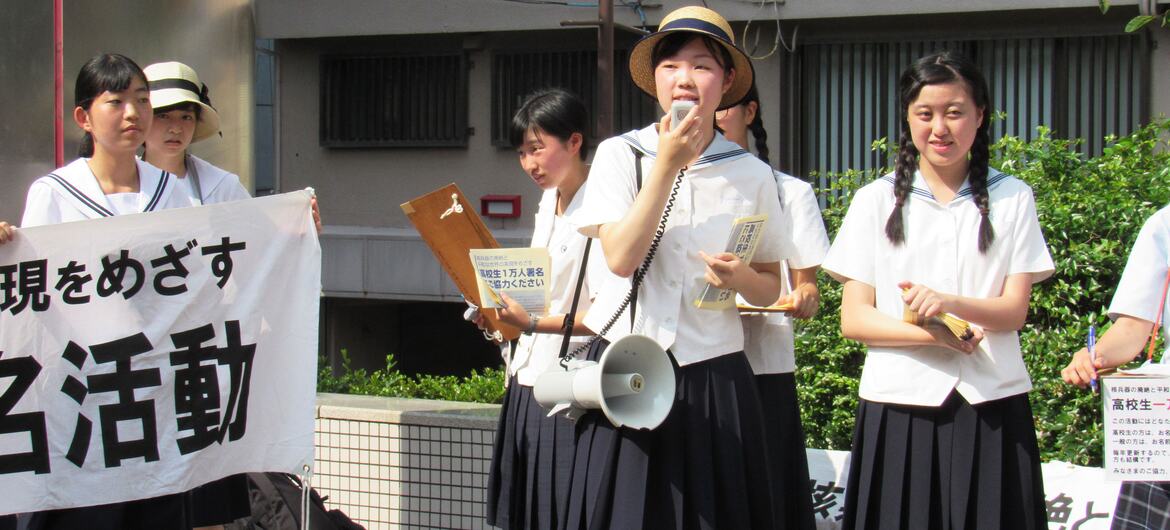
When I was a high school student, I started my career as a peace activist. In my hometown, I did a signature campaign and a lot of activities with hibakusha.
I really respect the hibakusha because they try to tell how cruel and terrible it is to experience an atomic bomb.
They want to make world peace by highlighting their own experiences. Their role in this world is huge because people tend to forget history. We need to remember the tragedy of this city and the history of what people experienced.
The challenge is how to keep these activities going as they are mainly organised by volunteers.
I thought if I could create new activities that would engage and inspire young people to participate then we could keep the message of the hibakusha relevant to my generation as well.
Mobile atomic bomb museum
When I entered university, I decided to make a community where young people could work for the elimination of nuclear weapons. After that, I wanted to make that my job.
Now, I am trying to develop a mobile atomic bomb museum to spread the message that the eradication of nuclear weapons is crucial. Since the anti-nuclear organization founded by hibakusha, Nihon Hidankyo received the Nobel Peace Prize in 2014, more visitors have come to Hiroshima and Nagasaki to see and learn what happened.
However, there is nowhere outside Hiroshima and Nagasaki where people can learn about this topic.
I thought if I could create a mobile museum which could reach across Japan and indeed the world, there could be more opportunities to discuss peace, human rights or anything else that is so essential for our life and society.
What I learned from hibakusha
The UN is an indispensable organization. It is where people from all over the world can gather to discuss and decide how we will live in the future.
So, as a Young Leader for the SDGs, I thought I could pursue solving this issue.
Being a Young Leader will enable me to create networks and connect with ideas from people in other countries.
There is no specific SDG goal that encompasses nuclear disarmament, although this is a cross-cutting issue through all the SDGs.
Quite simply, there can be no sustainable world with the existence of atomic bombs.
One thing I learned from hibakusha is patience. This issue is so huge that maybe I cannot solve it during my life.
We need patience so as not to stop doing this activity. We have to continue. We have to keep moving forward."
Visit UN Photo's collection Atomic bombs: The second the world changed here .