
A new fellowship program, funded through the Africa-Australia Partnership for Climate Responsive Agriculture, is supporting 100 African women scientists to lead climate change action in the context of agriculture. It's an effort designed to propagate impacts far beyond research institutions and into the daily realities of smallholder farmers.
The Women in Agriculture Leadership Program, implemented by the African Women in Agricultural Research and Development (AWARD), will pair female researchers with mentors and early-career scientists in a structured, multi-year leadership program. The program will engage two cohorts of female researchers from Egypt, Ghana, Morocco, Nigeria, Senegal and Sierra Leone.
Supported by a A$3.8 million investment, the initiative is recalibrating how agricultural research is shaped, communicated and applied in climate-stressed food systems.
'Australia is proud that ACIAR is at the forefront of supporting women in agricultural science, from the success of the Merryl Williams Fellowship in the Indo-Pacific to now extending that commitment to Africa,' said H.E. Jenny Da Rin, Australia's High Commissioner to Kenya. 'This is a continuation of a deliberate investment in leadership that strengthens careers and the entire agricultural system value chain.'
The fellowship comes at a critical moment. Climate shocks and resultant impacts on food systems are intensifying across Africa, yet women who play a central role in agricultural production remain underrepresented in the decision‑making processes that shape research agendas and funding priorities.
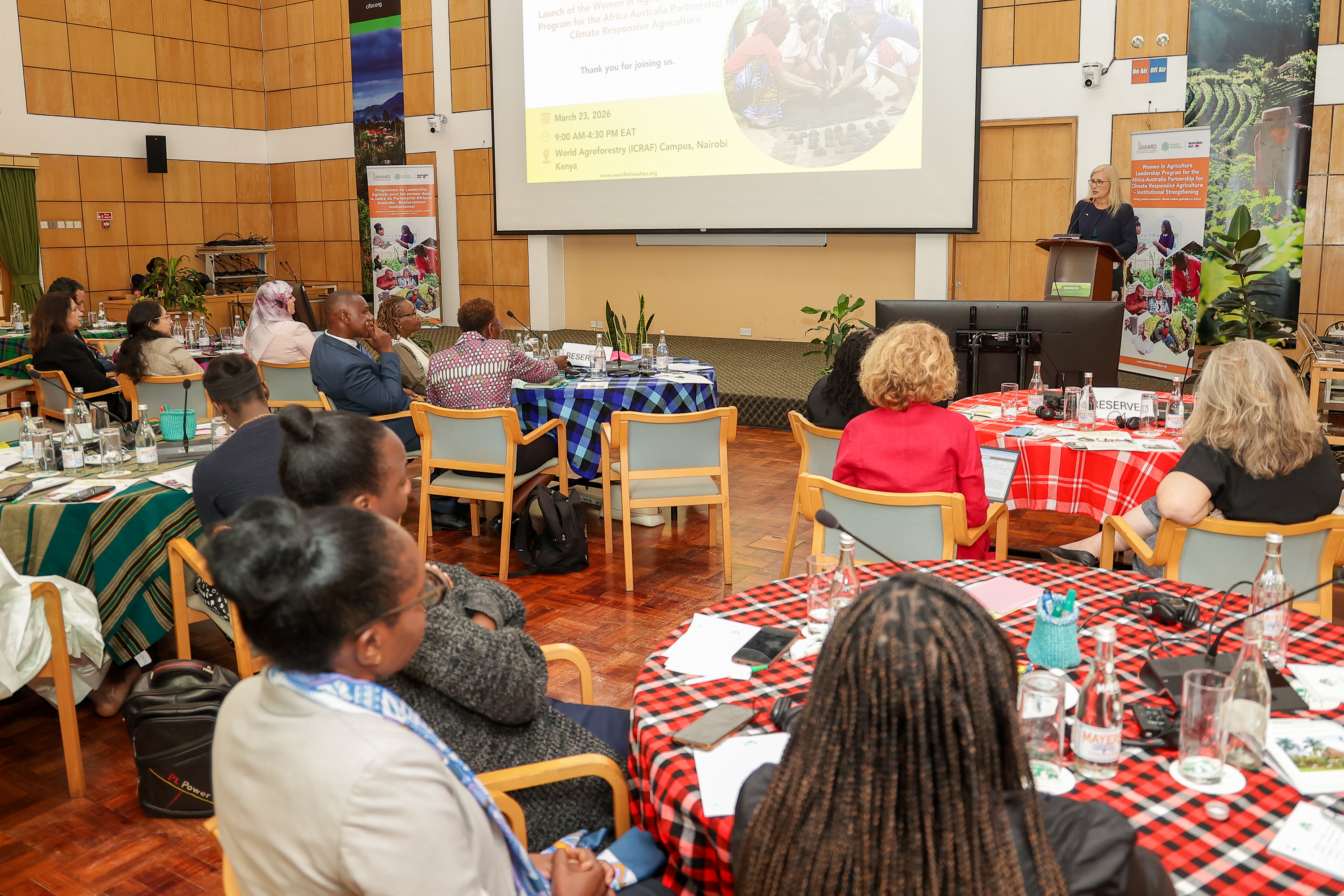
Mentorship in action
Participants will engage in program that blends leadership training, mentoring, technical courses and application together to address real world problems in Africa's food systems. Fellows will take part in modules on gender in climate change adaptation, science communication and proposal writing, as well as immersive leadership and negotiation workshops to achieve these outcomes.
They will also participate in storytelling training designed to sharpen their communication of research to policymakers, investors and farming communities.
Mentorship sits at the program's core. Each fellow is paired with a senior expert and, in turn, mentors an early-career researcher, creating a three-tier system that sustains intergenerational knowledge transfer. Across two cohorts, that structure will directly and indirectly benefit 300 professionals.
'The real shift occurs when women hold positions where decisions are made, what research gets funded, which solutions are prioritised, and whose realities are reflected,' said Dr Leah Ndungu, ACIAR's Regional Manager for Africa. 'That's when you start to see research outputs that are more practical, inclusive, and ultimately more realistic for farmers navigating climate pressure every day.'
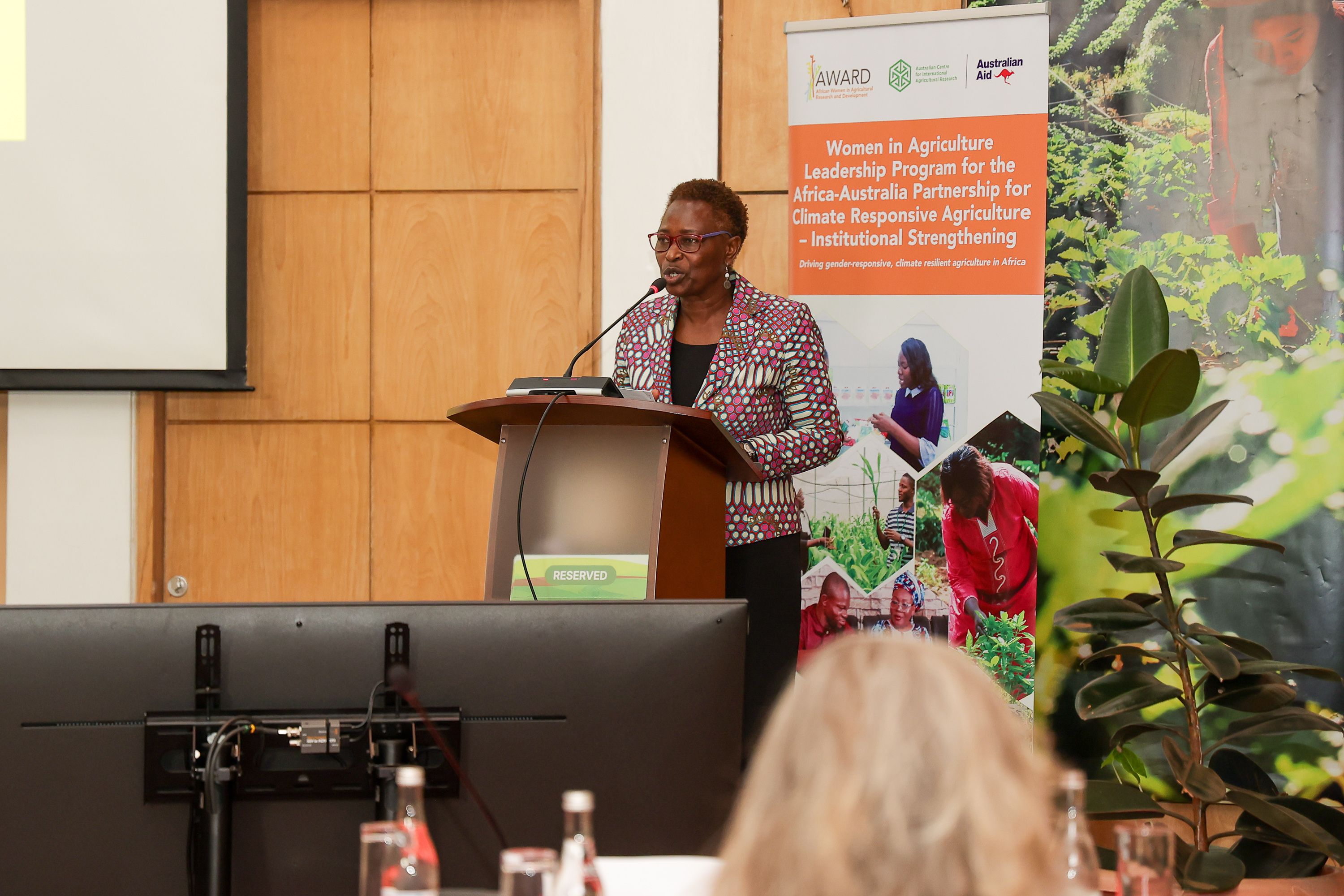
Developing lasting capacity in Africa
Beyond individual development, the program targets staff in national agriculture research institutions in each of the target countries. Workshops for senior leaders and tailored courses on integrating gender into agrifood systems aim to influence how organisations design policies and programs, allocate resources, and measure impact. Fellows will also collaborate across countries and with Australian scientists.
'AWARD has spent years demonstrating that when you invest in women scientists, the benefits extend beyond the individual, to institutions, to policies, and to farming communities,' said Dr Susan Kaaria, AWARD's Director.
'This program is deliberately designed to amplify that impact, by creating a space for women to make knowledge and research count, shape priorities and solutions, have their voices heard, and hold the fort for generations to come.'
Learn more about the Women in Agriculture Leadership Program.
Learn more about the Africa-Australia Partnership.


