
The Australian Institute of Marine Science (AIMS) and marine industry collaborators have deployed the final batch of aquaculture-reared young corals onto the Great Barrier Reef in the first year of a three-year program to test reef restorations methods..
The Pilot Deployments Program (PDP) is one of the world's largest reef restoration tests on a coral reef ecosystem, and it aims to determine a means to fast-track coral recovery on degraded or priority reefs, when needed.
The PDP has a two-fold mission: up-scale and trial reef restoration techniques while establishing the capacity of the marine industries and Indigenous rangers to undertake the restoration field work.
The results
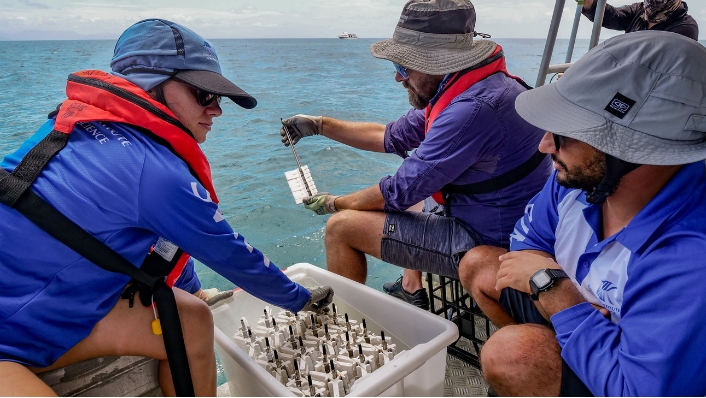
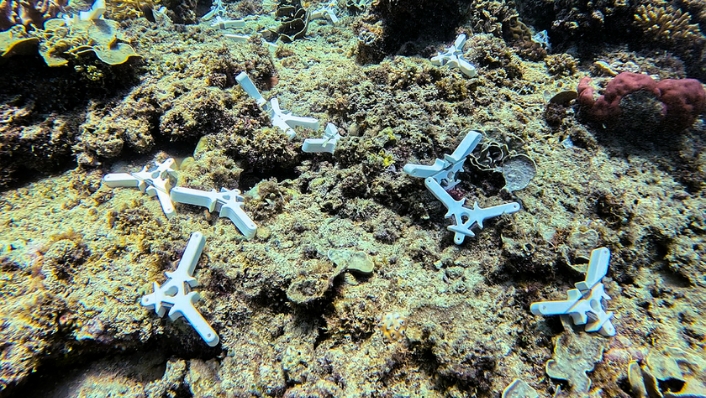
Despite the challenges of bad weather, unexpected early coral spawning and delays in finalising the development of some automated technology, PDP participants deployed a total of 44,608 seeding devices on three reefs off Cairns and in the Keppel Islands in 2025-26.
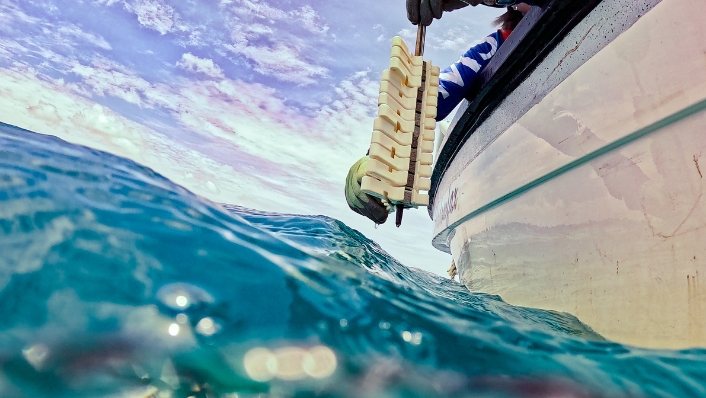
Up to 10 young corals were settled on each seeding device, and were deployed using 13 vessels from industries such as tourism, charter fishing and the coral harvest fishery.
Last November, Indigenous Rangers from eight Traditional Owner groups met on Woppaburra sea Country in the Keppel Islands to train in two advanced reef restoration techniques, as part of the Indigenous Futures Project , before deploying the devices back into the area's reefs.
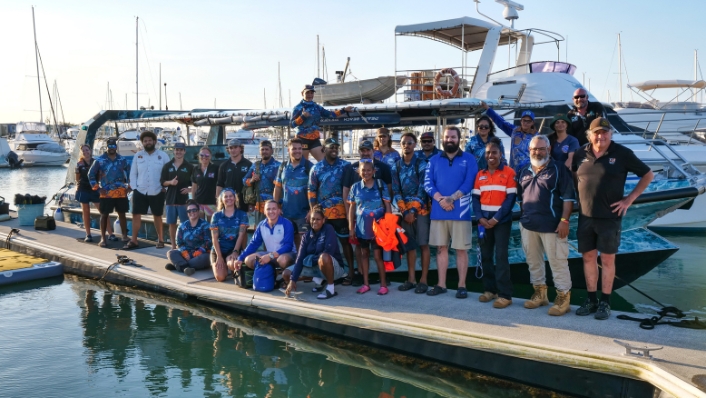
At the same time, corals were collected from the Keppel Islands, spawned in aquaculture tanks and their larvae reared in the National Sea Simulator (SeaSim) , before they were returned to their home sites.
During December and January, 14 community and industry groups joined PDP science and engineering teams to apply reef restoration techniques at scale on reefs off Cairns and Port Douglas.
The two innovative intervention methods used were:
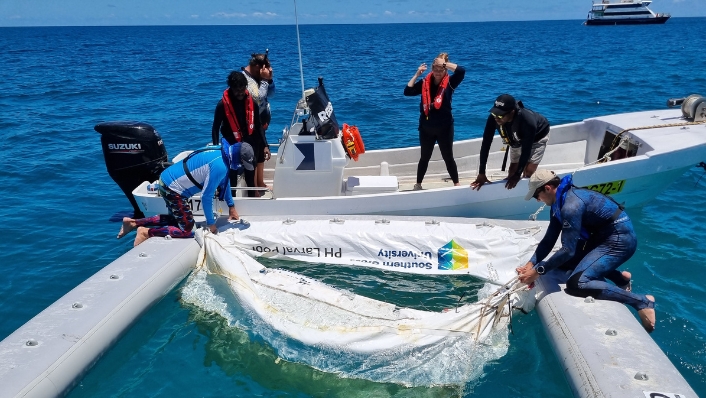
Slick Collection and Release: where genetically diverse coral spawn slicks are collected and resulting coral larvae delivered to target reefs to accelerate recovery.
Conservation Aquaculture: spawning wild-collected coral colonies in AIMS' National Sea Simulator (SeaSim) and two privately owned aquaculture facilities to produce juvenile corals for delivery to target reefs.
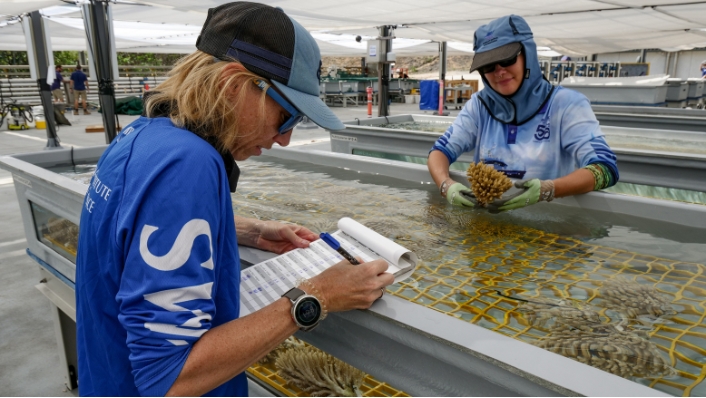
In total, about 130 people were trained in aspects of Slick Collection and Release restoration or Conservation Aquaculture. They collected an estimated 14.6 million coral eggs during spawning.
The final batch of coral devices from corals reared using Conservation Aquaculture were deployed in reefs off Cairns in January.
A complex undertaking
PDP Acting Director Dr Pirjo Haikola said it was a complex undertaking with many individual elements that were still being developed needing to come together.
"We only get one shot to test all the processes together each year, as the main spawning event happens once a year on the Great Barrier Reef," she said.
"Despite the challenges, we had a very positive response from our industry partners."
Dr Haikola said for largescale reef restoration to be successful it was imperative to partner with, and train, a critical mass of private operators.
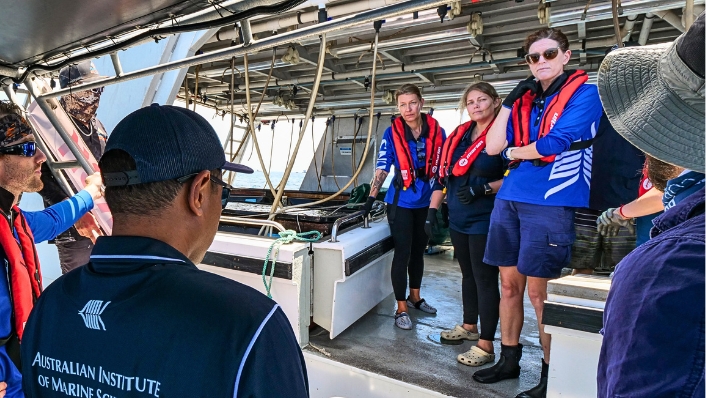
"In Slick Collection and Release operations we've trained people in various scientific aspects like coral spawn collection, egg counting, larval settlement as well as operational aspects like how to mobilise the larval pools, how to anchor them and how to safely operate them," she said.
"Many operators were surprised at how intensive it is, but they're really keen to continue working with us and they're interested in learning about all the different aspects of PDP.
"This year in the Conservation Aquaculture method we also mobilised two industry facilities to produce corals for the first time. This is a very exciting step towards ramping up the production in the coming years.
"During deployments we also trained people how to safely handle the seeding devices and the corals, and how to safely deploy them into the water. It's quite a precise process."
Dr Haikola said contingency planning was needed for every step of the process, particularly as elements such as weather and spawning could be unpredictable.
Another mammoth effort was the complex contractual arrangements and approvals needed.
Monitoring the corals
The trial reefs will be monitored to assess the effectiveness of the restoration methods in terms of coral survival, growth and response to stressors such as bleaching and competition with algae.
Industry and Indigenous rangers will be upskilled in monitoring activities, including the use of camera systems and diver-based monitoring techniques.
The PDP team is also undertaking a detailed review and assessment to improve performance in the next trial later this year.
The reef restoration methods were developed under the Reef Restoration and Adaptation Program (RRAP) , a collaboration of experts across Australia developing and testing novel scientific solutions to help the Great Barrier Reef and other coral reefs survive in the decades ahead, as the world endeavours to arrest global warming.
The Pilot Deployments Program is funded by the Australian Government's Reef Trust and led by the Australian Institute of Marine Science. The Reef Restoration and Adaptation Program (RRAP) is funded by the partnership between the Reef Trust and the Great Barrier Reef Foundation .
The use of the coral larval rearing pools is through AIMS' collaborations with:
- Professor Peter Harrison from Southern Cross University ; and
- SECORE International , whose pools are referred to as CRIBs (Coral Rearing In-situ Basins).


