
At least five civilians have been killed and some 30,000 people displaced following renewed fighting in Aleppo, Syria, prompting calls from the UN for immediate de-escalation and a return to political talks.
Clashes resumed on Tuesday between General Security Forces of the transition Government and the mainly Kurdish Syrian Democratic Forces (SDF), following a brief pause after the ceasefire announced in late December 2025.
Initial fighting near the Alleramoon roundabout - on the historic city's western outskirts - spread to the predominantly Kurdish neighbourhoods of Ash-Sheikh Maqsoud and Ashrafiyeh, with shelling also affecting surrounding government-controlled areas.
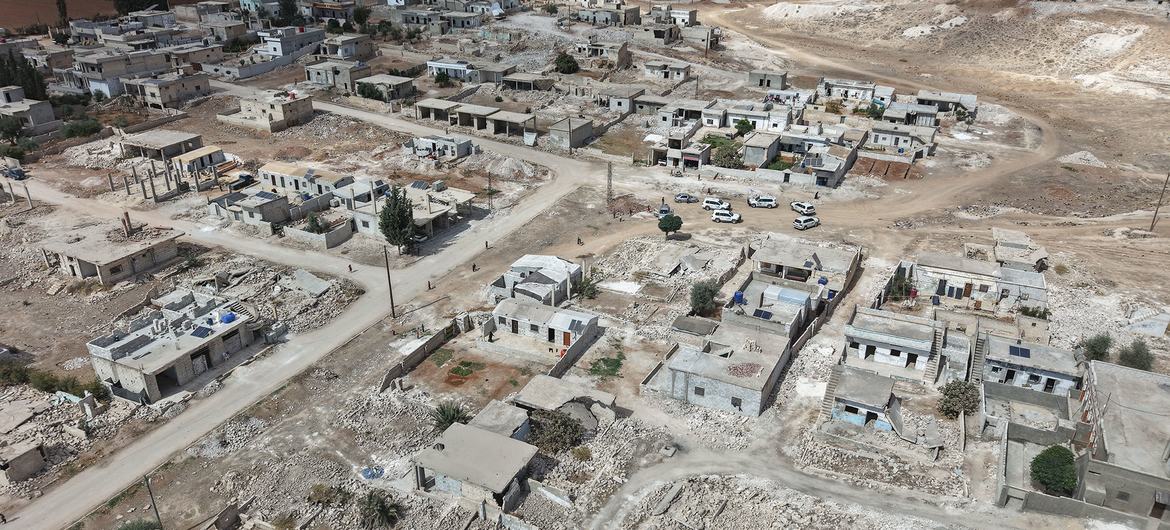
Significant damage has been reported to homes and public infrastructure, including healthcare. At least three major hospitals have ceased operations, while flights in and out of Aleppo International Airport have also been suspended since Tuesday.
Protect civilians, de-escalate now
The Secretary-General is alarmed by reports of civilian deaths and injuries after hostilities re-escalated earlier this week in the city's northeastern neighbourhoods, UN Spokesperson Stéphane Dujarric told reporters in New York on Wednesday.
"The United Nations reiterates that all parties have a clear obligation, under international humanitarian law, to protect civilians and civilian infrastructure," he said, urging all actors to "immediately de-escalate, exercise maximum restraint, and take all measures to prevent further harm to civilians."
The UN Office for the Coordination of Humanitarian Affairs ( OCHA ) estimates that approximately 30,000 people have been displaced, with more than 2,000 families relocating to Afrin district and around 1,100 people sheltering in nine collective centres inside Aleppo.
Thousands more fled Ashrafiyeh and Ash-Sheikh Maqsoud on Wednesday, seeking refuge with host communities.
Local authorities have designated some places of worship as temporary shelters, opened humanitarian corridors to allow civilians to evacuate, and mobilized public buses to transport displaced families.
Push to revive March agreement
The Secretary-General called on all parties to demonstrate flexibility and goodwill on both the military and political tracks and to resume negotiations to fully implement the 10 March agreement between the two sides.
Asked what concrete steps were needed, Mr. Dujarric said an agreement between the Government and the SDF on placing security forces under a unified national command would be a key measure, stressing the need for a state in which "all Syrians...would feel safe and protected."
The latest violence comes amid an uneasy transition following the fall of the Assad Government in December 2024.
Since then, flare-ups of violence in several parts of the country - including renewed sectarian attacks targeting predominantly Alawite coastal areas and Druze communities in Sweida and other governorates - have triggered new displacement and deepened fears among Syrians still recovering from nearly 14 years of war.
Worsening humanitarian conditions
Millions of Syrians remain dependent on aid, with many forced to spend another winter in tents or damaged homes.
According to OCHA, heavy snowstorms that hit northern Syria at the end of December affected around 158,000 internally displaced people across Aleppo, Idleb and Al-Hasakeh governorates.
Two infants died from extreme cold in displacement camps in northern Idlib, while thousands of shelters were damaged, leaving families exposed to freezing temperatures.
OCHA cautioned that without rapid scale-up, health risks - particularly for children, older people and those with chronic illnesses - will continue to rise, even as insecurity further constrains access and aid delivery.


