
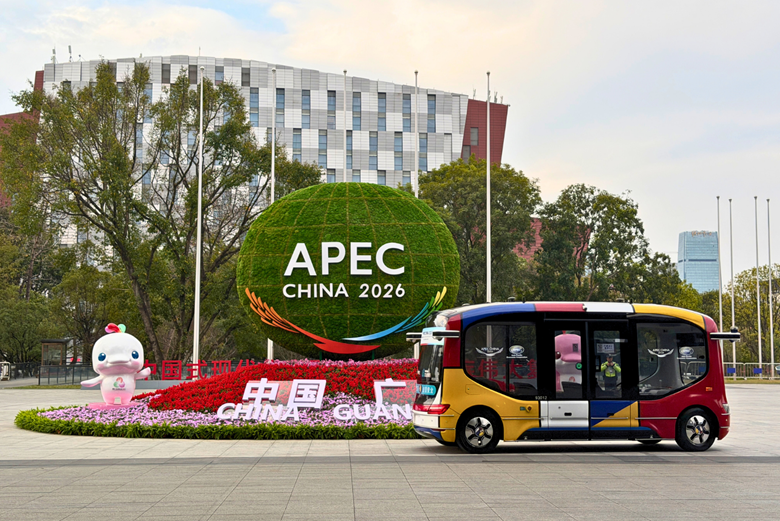
APEC is launching its 2026 agenda in Guangzhou as officials from the 21 member economies gather from 1 to 10 February for the First Senior Officials' Meeting and Related Meetings.
China, serving as host economy this year, has set the theme "Building an Asia-Pacific Community to Prosper Together" signaling its commitment to deepen regional integration and accelerate cooperation across the world's most dynamic economic region.
Approximately 60 meetings, workshops, symposia and committee sessions will take place over the 10-day cluster, covering the full breadth of APEC's policy work, from anti-corruption and digital transformation to services competitiveness, ocean sustainability, investment, standards and customs modernization. The discussions are expected to shape the region's collective priorities under China's three priorities for 2026: Openness, Innovation, Cooperation.
"APEC 2026 is an important opportunity for member economies to strengthen unity, deepen cooperation and advance shared prosperity for the region. China is ready to seize the opportunity to hosting the work together with all parties to advance the goal of Asia-Pacific community" said Ambassador Chen Xu, Chair of the APEC 2026 Senior Officials' Meeting.
"Our priorities, Openness, Innovation, and Cooperation, reflect the region's collective aspirations to enhance economic integration, embrace digital opportunities and jointly address pressing global and regional challenges," Ambassador Xu added.
Across this meeting cluster, several core APEC groups are convening, among a wide range of fora meeting throughout the week, to address policy challenges central to regional growth and resilience.
The Committee on Trade and Investment will discuss its priorities for 2026, including cooperation in support of multilateral trading system, trade facilitation and economic integration in the region. Through extensive dialogues, economies aim to build broader consensus and achieve tangible outcomes in upholding the spirit of open regionalism, advancing the Free Trade Area of the Asia Pacific (FTAAP) process, promoting paperless trade cooperation and cross-border e-commerce, and deepening cooperation in green and low-carbon transformation of industrial and supply chains.
The Friends of the Chair on Connectivity Meeting will enable member economies and workstreams to share initiatives and updates, follow up on the progress of the APEC Connectivity Blueprint (2015-2025) Final Review, and explore ways to deepen APEC connectivity cooperation in pursuit of a seamlessly connected, resilient and prosperous Asia-Pacific community.
The Anti-Corruption and Transparency Experts Working Group and its subsidiary network will convene to examine ways to bolster cross-border cooperation against bribery, corruption and illicit financial flows.
The Digital Economy Steering Group will advance work on data flows, digital tools, online safety and emerging technologies, especially artificial intelligence, reinforcing APEC's efforts to promote an enabling environment for the digital economy.
To support food security and strengthen agri-food systems, the Policy Partnership on Food Security will work with member economies to strengthen food system resilience through innovation and digital-driven approaches to enhance the regions' resilience across the food value chain, focusing on results-oriented cooperation, public-private collaboration and whole-of-system strategies to ensure long term food security across the region.
The Ocean and Fisheries Working Group will advance pathways to sustainable fisheries and aquaculture, marine ecosystem management and conservation, as well as ocean resilience enhancement, contributing to the sustainable development growth of the ocean and fisheries sectors.
Meanwhile, the Group on Services will progress discussions on the region's post-2025 services agenda, reflecting the sector's central role in productivity, competitiveness and economic growth in the region.
"These meetings help set the pace for the year as economies work together to align on the practical steps needed to strengthen growth, improve competitiveness and expand economic opportunity across the region," said Eduardo Pedrosa, Executive Director of the APEC Secretariat.
"The work taking place in Guangzhou, from trade, digital and services to food security and anti-corruption shows how economies are responding to global challenges with concrete, cooperative solutions," Pedrosa concluded.
The First APEC Senior Officials' Meeting and Related Meetings will culminate on 10 February when senior officials will further discuss how to build an Asia-Pacific community with a more open, innovative and cooperative future.


